Mole Removal

Close-up of a mole emerging from underground in a lawn, showcasing its large claws and pink nose.

How to Get Rid of Moles in Your Yard: Most Effective Methods for 2026

Most homeowners who call me have already spent money on a fix that didn’t work. Castor oil. A sonic spike. Repellent granules, reapplied every few weeks. The moles are still there, and the tunnels keep spreading. If you’re seeing raised ridges, fresh molehills, or dying grass patches across your Cincinnati-area lawn, moles are almost certainly […]

How to Get Rid of Moles in Your Yard: Most Effective Methods for 2026 Read More »

Numerous molehills spread across a green lawn in front of a red house, indicating mole activity in the yard.

Can Moles Damage Your House? A Foundation Guide for Cincinnati Homeowners

Raised ridges running along your home’s exterior wall trigger immediate concern about your home’s foundation. That reaction is understandable, but the fear most Cincinnati homeowners carry about moles chewing through structural materials is based on a biological misunderstanding worth correcting before spending money on the wrong fix. The Short Answer No, moles will not chew

Can Moles Damage Your House? A Foundation Guide for Cincinnati Homeowners Read More »

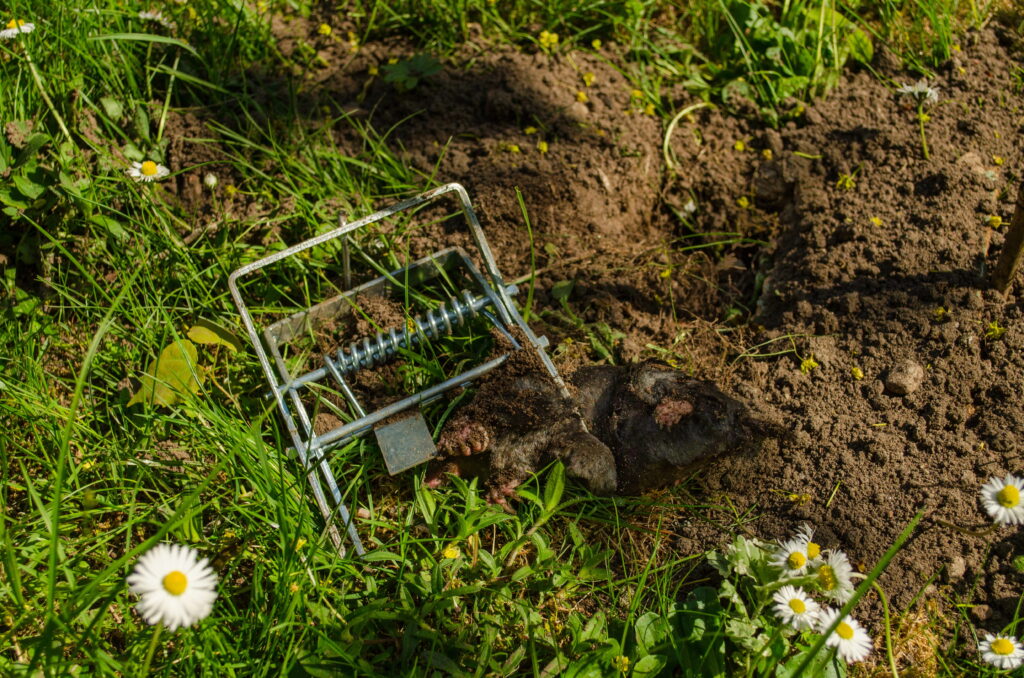
A metal scissor-style mole trap sits triggered in a garden next to a mole that has been successfully captured.

Mole Traps: What Works, What Doesn’t, and What Most People Get Wrong

If you’ve been watching your lawn or garden fall apart, you’re not alone. Raised ridges across the yard. A fresh mound near the driveway. Every homeowner has the same thought. Something has to work. Maybe you tried castor oil, mothballs, or solar-powered spikes. Previous attempts with various organic or home-based deterrents almost always end the

Mole Traps: What Works, What Doesn’t, and What Most People Get Wrong Read More »

what do moles eat? image

What Do Moles Eat? (And Why It Matters for Your Lawn)

Moles eat earthworms. That’s the short answer, and it’s the one most homeowners don’t expect. The eastern mole, the species behind nearly all residential lawn damage in the Midwest and Eastern U.S., is a strict insectivore. It isn’t gnawing on your tulip bulbs, nibbling grass roots, or digging up vegetable gardens. Earthworms make up 70

What Do Moles Eat? (And Why It Matters for Your Lawn) Read More »

A green lawn with multiple mole hills indicating mole activity.

What Do Mole Holes Look Like? How to Identify Mole Activity in Your Yard

You walk outside, and your lawn looks like a battlefield. Mounds of dirt scattered across the grass, soft ridges running in random directions, and patches of turf that feel spongy underfoot. These are classic signs of burrowing pests, and among all the critters that dig through residential yards, moles are the most likely culprits. Here’s

What Do Mole Holes Look Like? How to Identify Mole Activity in Your Yard Read More »

A mole emerging from a burrow in the soil, showcasing its pink nose and large claws.

When Are Moles Most Active? Daily and Seasonal Patterns Explained

Mole damage can seem sudden, often prompting frustrated homeowners to immediately look for proven strategies to reclaim their landscaping. One day, your lawn looks fine, and the next it’s covered in raised ridges and fresh mole mounds. But this activity isn’t random. Moles follow predictable patterns tied to soil moisture, temperature, and food availability. Understanding

When Are Moles Most Active? Daily and Seasonal Patterns Explained Read More »

Close-up of a mole emerging from a mound of soil, highlighting the appearance of this common burrowing pest.

Natural Mole Repellents: What They Can (and Can’t) Do for Mole Problems

Raised ridges crisscrossing your lawn and fresh dirt mounds appearing overnight. Sound familiar? If you’re looking for effective mole control that won’t harm your pets, kids, or garden soil, natural repellents seem like the obvious answer. Here’s what you need to know. Natural repellents work as a gradual but consistent solution that discourages mole activity

Natural Mole Repellents: What They Can (and Can’t) Do for Mole Problems Read More »