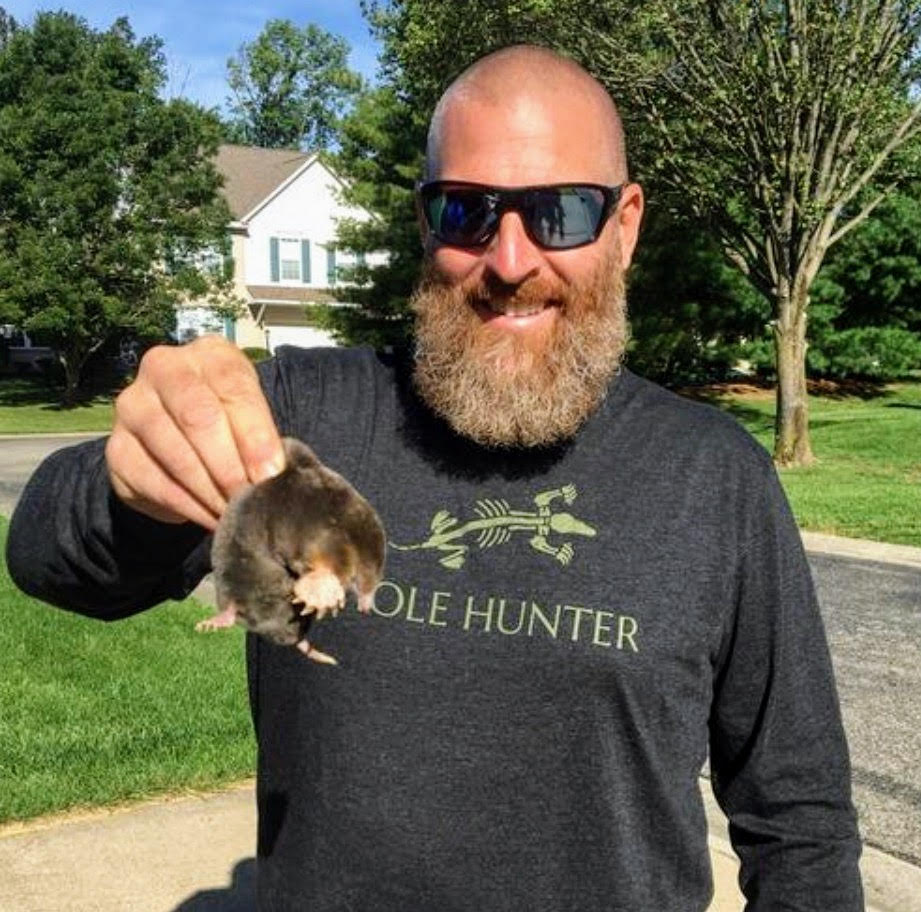
If you are standing in your backyard looking at raised ridges in the grass, volcano-shaped dirt mounds, or ground that collapses underfoot, here is the direct answer. That is a mole. Not a shrew.
Shrews get blamed for yard damage all the time, and they do not deserve it. They belong to the same order as moles, Eulipotyphla (insect-eating mammals, not rodents), but cannot dig tunnels. The physical equipment is not there. Moles are built specifically for underground excavation.
These two animals both play real ecological roles in the Greater Cincinnati region. Only one will destroy your lawn.
Identifying Moles: How the Eastern Mole Destroys a Lawn
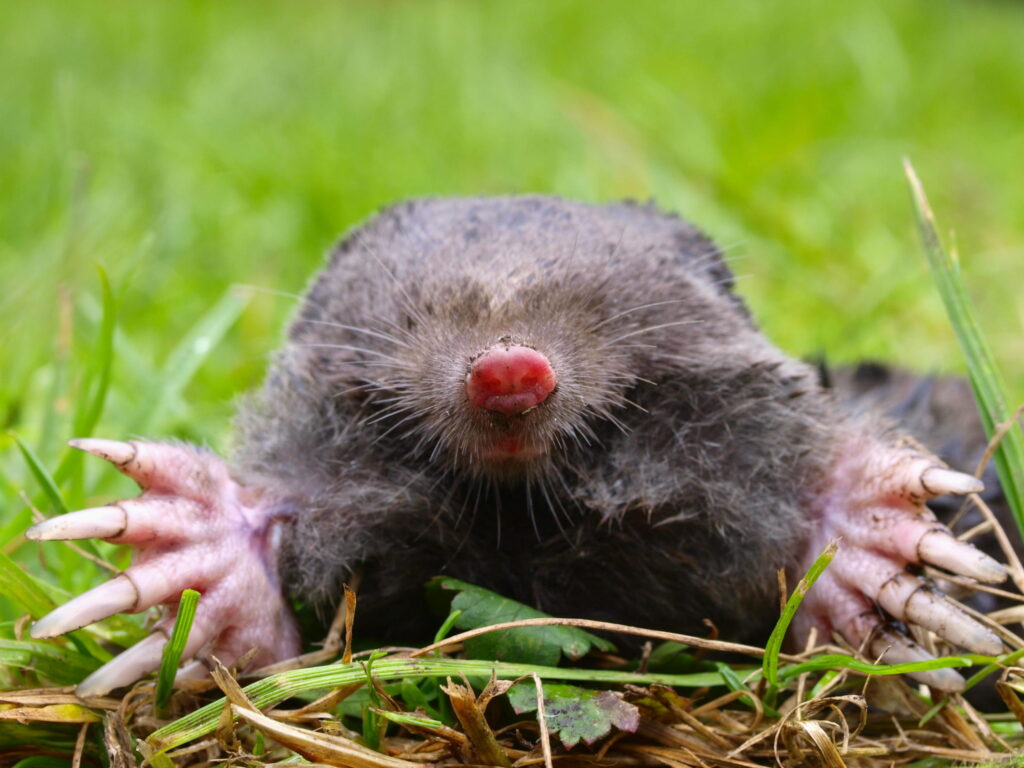
According to an Ohio State University Extension fact sheet on effective mole control, three mole species may occur in Ohio yards: the Eastern Mole, the Hairy-tailed Mole, and the Star-nosed Mole. Of these, the Eastern Mole (Scalopus aquaticus) is the most common in Ohio and across the central United States. Adults are roughly chipmunk-sized, reaching six to eight inches in body length, weighing three to six ounces, and covered in dark gray to dark brown fur.
The defining feature is the front feet, not the hind feet. Moles have massive, paddle-shaped front paws turned permanently outward, equipped with large claws for shearing through packed earth and plant root networks. In my 25 years of trapping in Greater Cincinnati, I’ve seen firsthand how moles tend to create underground tunnels at up to fifteen feet per hour.
Both moles and shrews have poor eyesight, but these underground diggers take it to an extreme with completely hidden eyes and no visible ears. Instead, they track earthworms through touch, smell, and vibration, often tearing up well-irrigated lawns where this food is most plentiful. Because these small mammals must eat up to their own body weight every day, they spend their entire lives below ground in a state of constant excavation.
The Star-Nosed Mole and Its Sensory Advantage
Less common in Cincinnati yards than the Eastern Mole, the Star-Nosed Mole illustrates something true of all mole species: their underground activity always leaves visible surface damage, whether they are digging shallow feeding runs or deep nesting chambers. Its star-shaped nose, lined with eleven pairs of fleshy sensory receptors, lets it find food faster than almost any other studied mammal. The result is raised tunnels, molehills, severed roots, and spongy ground.
What this means for your home: Moles naturally gravitate to well-irrigated lawns, leaving behind consistent signs of mole activity like volcano-shaped dirt mounds and raised feeding ridges. When you notice soft, spongy ground or brown grass lines, it means a mole is actively severing the root structure below to get to its next meal.
Identifying Shrews: Short-Tailed and Pygmy, and Why They Are Not the Problem
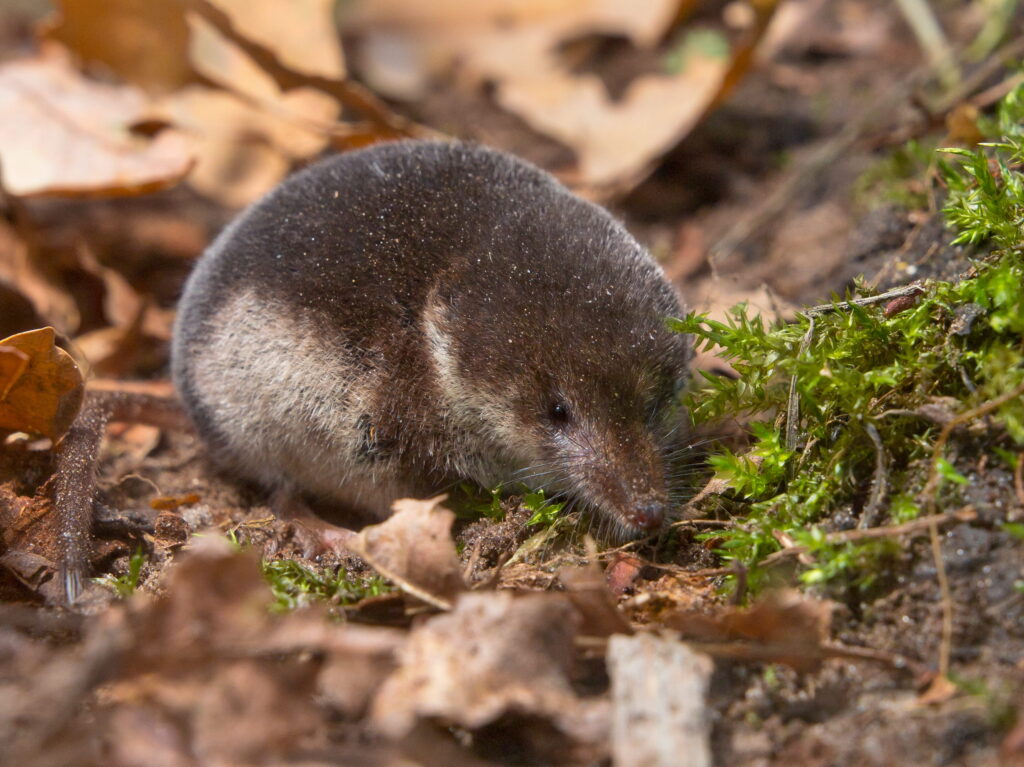
The Northern Short-Tailed Shrew and the Pygmy Shrew are the species most commonly found near residential areas in the Greater Cincinnati region. Neither can excavate compacted soil.
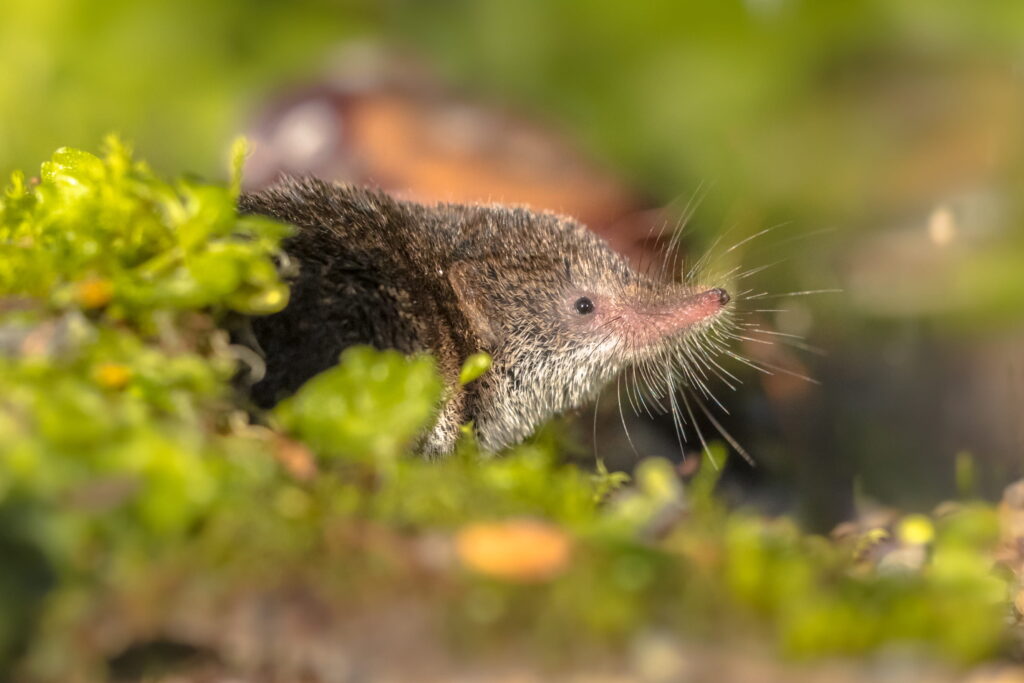
Most shrews are small animals measuring three to four inches in body length with a long tail and a pointed snout in motion. You can actually see their tiny eyes and ears, unlike a mole, which has everything completely hidden under thick fur. Their front paws are also small and delicate, looking a lot like the feet of a field mouse. Ground hunting in leaf litter, thatch, and dense cover is what they do best.
Shrews have a high metabolism and must eat frequently, sometimes every few hours, consuming up to one hundred percent of their own body weight daily. They eat insects, spiders, snails, small invertebrates, and even small vertebrates like mice or baby birds. Because they cannot dig, these tiny mammals occupy completely different habitats from moles. At most, they leave a surface hole about one inch wide with no structural turf damage.
The Pygmy Shrew
In my years of inspecting Greater Cincinnati yards, homeowners often show me a tiny Pygmy Shrew they found near their patio, worried it caused their turf damage. Weighing about as much as a United States dime, these shrews physically cannot dig or cause meaningful yard destruction. If one of these tiny surface-hunters accidentally enters your home, just contact a general wildlife service; they are not the ones tearing up your lawn.
Put simply, a shrew in your yard is controlling surface insect populations. The problem is below ground, and it belongs to the mole.
Moles and Shrews Side by Side
| Feature | Eastern Mole | Common Shrew Species |
|---|---|---|
| Body Length | 6 to 8 inches | 3 to 4 inches |
| Front Feet | Large claws, outward-facing | Small, delicate, like a field mouse |
| Habitat | Strictly underground | Above-ground, leaf litter, thatch |
| Eyes and Ears | Concealed beneath thick fur | Small but visible |
| Primary Diet | Earthworms, grubs | Insects, spiders, snails, and small vertebrates |
| Yard Damage | Severe tunneling, severed roots, molehills | None |
Shrew Mole Tunnels and What They Actually Mean
Here is why the shrew mole mix-up keeps happening.
Homeowners frequently find a small, dead, gray mammal on the patio, look out at a damaged lawn, and connect the two. In most cases, a cat killed the shrew and left it intact. Shrews carry musk glands that release a foul-smelling secretion the moment a predator bites down. The Northern Short-Tailed Shrew (Blarina brevicauda) is also venomous, causing a painful bite with localized swelling that causes most cats to drop the prey immediately.
The shrew was hunting above ground. The mole was digging below it. The cat found the visible one.
Shrews cannot build their own tunnels, but they use existing tunnels made by other animals. Once a mole has done the excavation work, shrews, voles, and other animals move through the system opportunistically. A shrew entering a hole in your lawn did not build that hole. The damage continues.
Voles do the same thing, but unlike shrews, they’ll actually eat the plants along the way, which is why voles get mistaken for moles just as often as shrews do.
What to Do Next
If the yard shows the signs, the answer is moles. We do not trap shrews. They cause no yard damage, and addressing them falls outside the scope of mole removal by design. If a shrew enters your home, seal gaps and cracks around the foundation, remove accessible food sources, and contact a general wildlife service.
But if your lawn is getting destroyed, you need a specialist. Professional removal is the fastest way to stop mole damage.
⭐⭐⭐⭐⭐
“Absolutely the best Mole Hunter. Came out to inspect property and within five minutes saw something moving reached into the soil and pulled out a large mole. They know what they are doing!”
Not sure what is tearing up your lawn?
The Mole Hunter offers homeowners across Greater Cincinnati a free, no-obligation inspection. Call (513) 613-2289 today to get your yard back.
Frequently Asked Questions
How can you tell a mole from a shrew?
The easiest way is to look at their front feet and your lawn. Moles have massive, outward-facing claws built specifically for heavy digging, while shrews have tiny, delicate feet similar to a field mouse. If your yard has volcano-shaped dirt mounds or spongy, raised ridges, you are dealing with a mole, as shrews do not cause turf damage.
What can be mistaken for a mole animal?
Meadow voles cause the most confusion when it comes to yard damage. While shrews are often falsely blamed because a neighborhood cat left one on the patio, voles will actually use abandoned mole tunnels. You can tell the difference by the damage: moles push up volcano-shaped dirt mounds, while voles leave narrow, grass-level surface runways and chew on plant stems near the base.
Is it safe to touch a shrew?
No. You should never handle a wild shrew. The Northern Short-Tailed Shrew, which is common in the Greater Cincinnati area, actually produces venomous saliva that causes intense pain and swelling if it bites you. They also release a highly foul-smelling musk when threatened. If you find one alive, do not pick it up; contact a general wildlife professional.