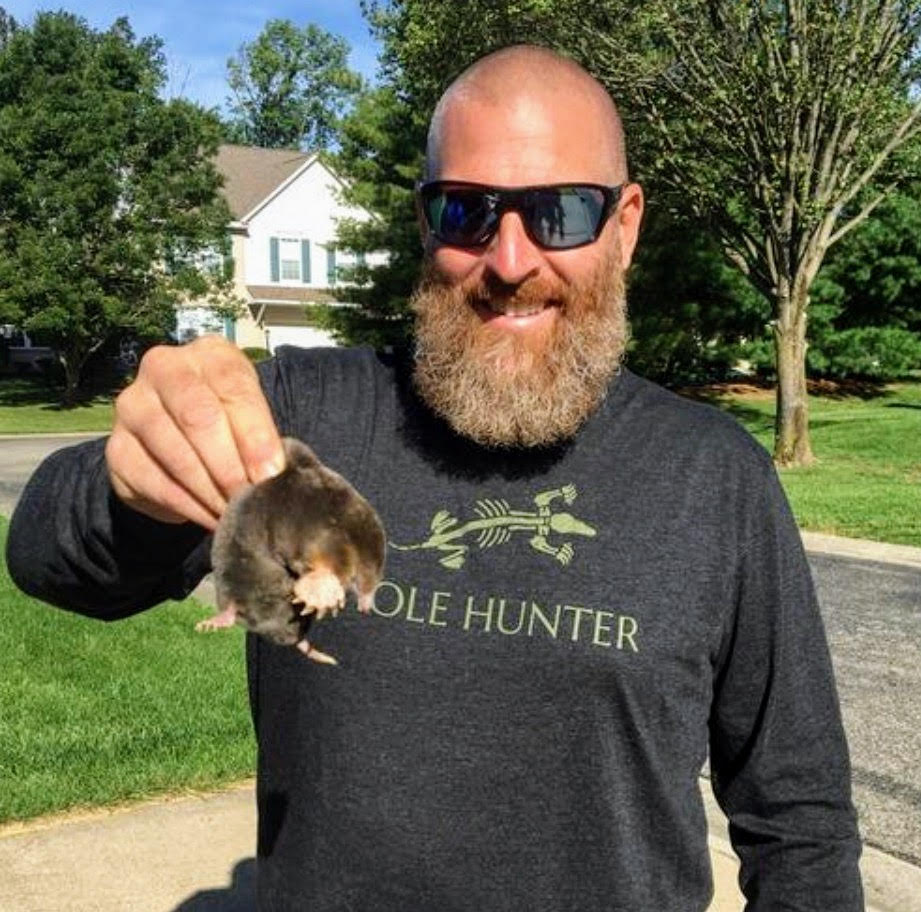
You’re standing in the aisle holding poison peanuts in one hand and worm-shaped bait in the other, trying to figure out which one will actually kill moles instead of just sitting in the dirt. Maybe you already bought Talpirid two weeks ago, and you’re still finding new mounds every morning. Skip the tips and tricks: worm baits work under the right conditions, and grain-based poisons never do, no matter how you use them.
What’s Actually Sold as Mole Bait
Moles aren’t rodents, but their bait sits right next to poisons made for rats, mice, and other burrowing animals like voles and gophers, so anyone shopping by instinct instead of active ingredient grabs the wrong box.
Bait worms (Talpirid worms are the best-known) use bromethalin, a neurotoxin molded to look and feel like an earthworm; Tomcat’s mole killer uses that active ingredient at the identical 0.025 percent concentration. Poison peanuts and grain pellets, including the Victor brand stocked since 1898, use zinc phosphide. Gel baits use warfarin, an anticoagulant meant to coat the mole’s fur during grooming, while gas and smoke cartridges burn sodium nitrate and sulfur to try to fill the tunnel with fumes.
Does Talpirid Actually Work?
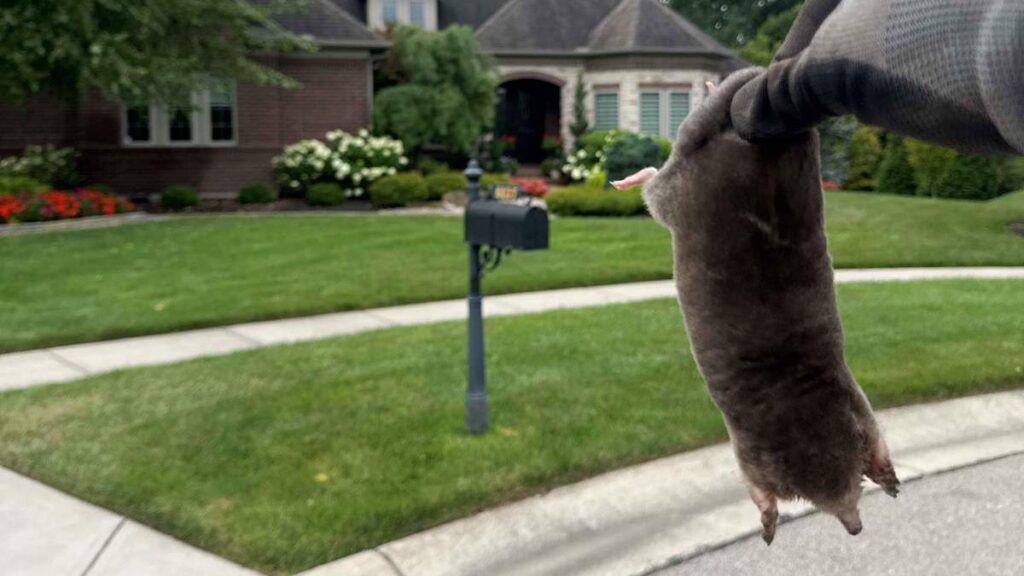
Talpirid’s bromethalin worms are made to mimic a live earthworm, because that’s what a mole is built to eat. Bell Laboratories markets the bait as scientifically proven to kill moles, and its own EPA-registered label notes that more than 90 percent of a mole’s daily diet is earthworms and grubs. The bait is designed so a mole takes it the same way it takes the real thing, and the manufacturer reports it works: a single feeding delivers a lethal dose, and death follows within 24 to 72 hours. That’s a manufacturer’s claim, not an independent field study — but it’s defensible because the mechanism holds up. The bait genuinely gets eaten when a mole encounters it. The real question was never whether a mole will eat the worm. It’s whether the worm ever reaches a tunnel the mole is still using.
The gap between that lab result and your backyard comes down to placement and depth. A mole digs up to 18 feet of tunnel an hour, and most of that network is dead-end feeding runways dug once, eaten through, and abandoned. Drop bait into one of those and nothing happens.
Identifying a genuinely active mole tunnel is the skill that determines whether any bait has a chance. You can’t tell an active runway from a dead one by looking at the surface hole. The guys who trap moles for a living see this constantly on jobs from Anderson Township to Blue Ash: a homeowner baited every visible hill in the sod and never touched the one active highway tunnel along the fence line.
Poison peanuts don’t even get that far. Moles feed mostly on earthworms and grubs, and Purdue University’s Plant and Pest Diagnostic Lab is direct about why grain-based baits hold zero attraction for a digestive process built around that diet: moles aren’t rodents like rats and mice, so poison peanuts and grain pellets built for rodents never register as food.
A mole reads a zinc phosphide peanut as debris, not food; it’s nothing like what moles actually eat, and it never gets touched.
Why Scent Ruins Bait Before It Gets Eaten
Moles are functionally blind and navigate by touch and smell, using thousands of tactile receptors called Eimer’s organs to read texture and vibration in total darkness. That’s why moles barely use their eyes at all, and it’s also why scent does the work their eyes can’t.
Handle a bait worm with bare hands, and you leave scent behind; a mole meeting that smell in its own tunnel reads it as a predator warning and routes around it. Professionals wear gloves for this exact reason.
Why Are There Still Mounds After You Used Poison?
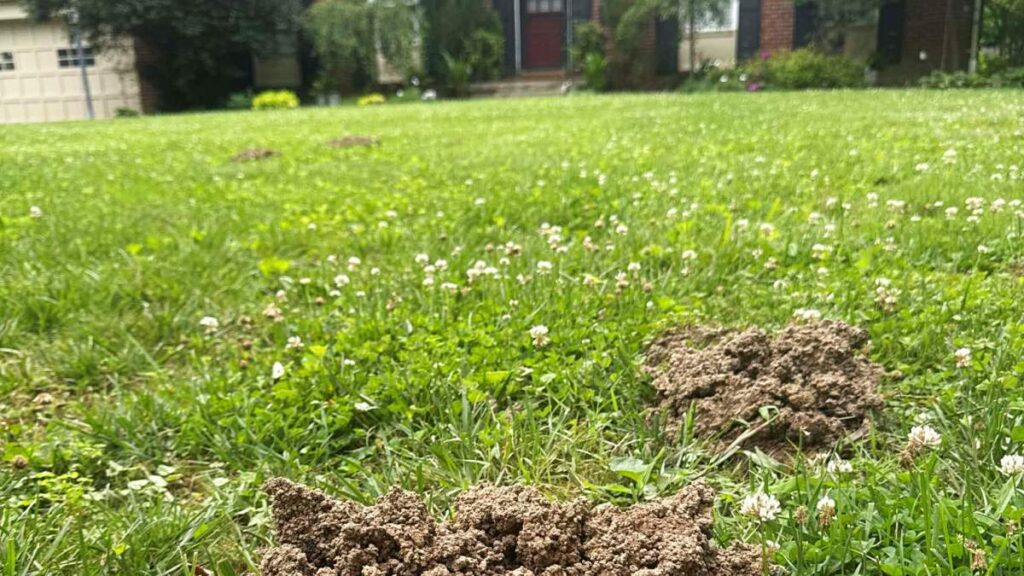
A poisoned mole dies underground and stays there, so you can’t confirm the bait worked. The mole moved to an unbaited section of the lawn, or a new mole moved in to replace it within days, and you have no way to tell which happened. A trap solves that problem directly: it produces the animal, so you know instead of guessing.
Gas and Smoke Cartridges Have a Physics Problem
Soil is porous, and tunnel systems are long and branching, so gas dissipates upward before reaching the deeper runs. Moles detect the pressure change fast and respond by pushing a dirt plug into the tunnel to cover the gas or by digging a new escape shaft to the surface. Either way, the mole survives, and the reason has as much to do with how a mole’s lungs and blood handle stale air as it does with the soil around it.
Why Juicy Fruit Gum and Mothballs Don’t Work
Moles don’t eat gum any more than they eat grain, since it isn’t food and never gets touched. Mothballs do work by scent, releasing naphthalene vapor meant to drive away pests, but moles route around any odor source rather than retreat from it and simply dig past. Vinegar runs into the exact same wall: it can’t get rid of ground moles any better than mothballs do, since a mole just digs around whatever smell it meets.
There’s also a legal problem: mothballs are registered pesticides restricted by federal law to sealed containers, and scattering them outdoors violates that label under the Federal Insecticide, Fungicide, and Rodenticide Act (FIFRA). That kind of off-label use counts as pesticide misuse under state law and can carry fines.
Is Mole Poison Safe Around Dogs and Kids?
No, mole poison is not safe around dogs and kids, and bromethalin has no pharmacological antidote, a fact confirmed directly on the product’s own safety data sheet. A cat reaches a lethal dose around 0.54 mg per kilogram, and a dog’s threshold sits higher at 3.7 to 4.7 mg per kilogram, but small breeds and puppies stay at real risk from a single worm. Treatment means repeated activated charcoal every six to eight hours, since the toxin recirculates through the liver, and severe cases need IV lipid therapy at an emergency vet.
Zinc phosphide carries a different hazard. If a dog eats a poisoned peanut and a vet induces vomiting, the expelled stomach contents release phosphine gas, and that’s dangerous enough that clinics induce vomiting outdoors to protect the people in the room. Secondary poisoning reaches other animals too, since a hawk or owl that eats a poisoned mole gets poisoned itself.
If bait is already down and you have a dog
- Watch for 48 hours and call an emergency vet at the first sign of wobbliness or vomiting.
- Dispose of unused bait per the label — not in a trash can a dog can dig into.
- A bait worm under two inches of dirt is within digging range; there’s no “probably fine” window.
- Bromethalin has no antidote, so speed matters more than waiting to see symptoms.
A free yard inspection still makes sense whether or not the bait worked.
What Gets Rid of Moles for Good
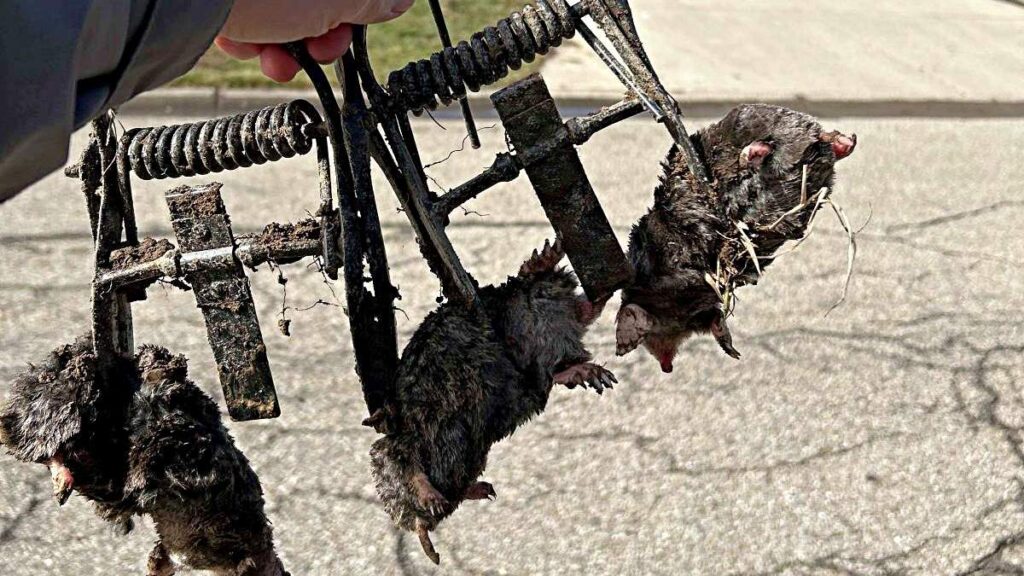
Trapping in a confirmed active tunnel gives you results and physical proof, with none of the pet risk of a chemical you can’t control underground. Collapse a short section of tunnel and mark it with a small stick, then wait 24 to 48 hours to see if it’s pushed back open; if it is, that run is active. Traps placed correctly, scissor-jaw or harpoon style rather than the snap traps built for mice, work on that mechanical principle no matter how deep the clay runs, and they catch the animal instead of leaving you to guess.
“We used the service and they solved our mole problem. Brad was our technician and he was awesome, friendly, professional and very knowledgeable!”
How the Methods Stack Up
| Method | How It Works | Price | Proof of Success | Pet & Child Safety |
|---|---|---|---|---|
| Bromethalin worms (Talpirid) | Neurotoxin in an earthworm-shaped bait | Retail bait, budget-friendly per box | None; dies out of sight underground | Severe risk; no antidote, dogs dig it up |
| Zinc phosphide peanuts | Produces gas once swallowed | Retail bait, budget-friendly per bag | None; moles rarely eat it | High risk if ingested; hazardous vet emesis |
| Gas/smoke cartridges | Fills the tunnel with fumes | Retail bait, low-cost per pack | None; gas escapes early | Moderate risk; fire hazard above ground |
| Mothballs/chewing gum | Folk remedy, no real mechanism against moles | Household items, minimal cost | None | Illegal outdoor use |
| Professional trapping Best option |
Mechanical trigger in an active tunnel | Free inspection, quote after | Definitive; animal recovered | Low risk; no chemicals below grade |
Why This Matters More in Cincinnati
The Eastern mole causes nearly every molehill in this region, from Loveland to West Chester and everywhere in between. Greater Cincinnati’s Silt Loam soil has a clay fragipan at 22 to 36 inches, according to the USDA’s official soil series description, that traps moisture horizontally rather than allowing it to drain.
That structure is why abandoned tunnels here don’t collapse on their own, making an active run harder to spot than in the sandy soil most national mole content is written for. September and October bring the heaviest surface activity as cooling temperatures push earthworms up, which is when homeowners discover the damage that sends them to the poison aisle.
Whether you haven’t bought anything yet or you’re watching your dog around a tunnel you baited two weeks ago, a free on-site inspection tells you what’s actually active before you spend another dollar guessing wrong.