Moles breathe through their nose and lungs, exactly like we do. A mole tunnel seals off from the surface, and the trapped air goes stale fast: thin on oxygen, thick with the carbon dioxide a mole produces as it digs.
If you’re standing over a fresh ridge in your Cincinnati yard with a box of gas cartridges or a garden hose, you want to know if you can cut off the mole’s air supply. We’ve walked Loveland, Mason, Milford, and other Cincinnati-area lawns for 25-plus years. The answer is no, and the biology behind a mole’s burrowing habits explains why.
What’s Actually in the Air Inside an Eastern Mole Tunnel?
Surface air contains 21 percent oxygen. A study published in BMC Evolutionary Biology found burrow oxygen levels in eastern moles drop to 14.3 percent, with carbon dioxide climbing to 5.5 percent against well under 1 percent at the surface.
Smithsonian Magazine notes that a person sealed in a room starts feeling light-headed around 15 percent oxygen. Moles live daily with lower oxygen levels than that, as a normal part of life underground.
A tunnel is a closed loop, so a digging mole keeps pulling exhaled air back into its lungs, what the study’s lead author, Kevin Campbell of the University of Manitoba, called “the requirement to re-breathe their own expired air.” Nothing flushes that air out: every breath the mole lets go hangs in the run around it, and the only fresh air coming in is whatever seeps slowly through the soil. Picture breathing into a paper bag on a loop that never ends: that’s the air moles inhale on every dig.
The Biochemical Adaptation Behind Mole Blood
A lot of information online gets this backward, including Google’s own AI summary for this question. Campbell’s team found that eastern mole hemoglobin has a lower affinity for oxygen than most mammals’ hemoglobin. It was an unexpected result, contradicting what past research on other mammals would predict.
All hemoglobin carries oxygen through the bloodstream, but eastern mole hemoglobin handles the job differently. The protein is insensitive to DPG, a molecule that normally controls how tightly hemoglobin grips oxygen, and eastern mole red blood cells carry almost none of it.
With no DPG in the way, the spot where it would normally latch on opens up, and carbon dioxide grabs it. A mole’s body delivers oxygen the way ours does. On the trip back, mole blood returns carrying carbon dioxide away from working muscles in bigger loads than ours, and during a hard burst of digging, that matters more than oxygen intake. This is how a mole can inhale air it has already exhaled without carbon dioxide poisoning stopping it mid-dig. The study results point to one conclusion: moles don’t carry more oxygen; they carry away more carbon dioxide.
High-altitude animals deal with thin air too, and their usual fix is more oxygen in the blood: more red blood cells, or blood with a higher affinity for oxygen, so it grips harder. The eastern mole went a different way. Its answer is built into the blood protein itself, which suits one of the burrowing animals that never leave the stale air. The data set behind this covers eastern moles, the species digging up Ohio yards.
What this means for your yard: A mole built to clear carbon dioxide while it digs in stale air isn’t going to be rattled by a little more bad air from a smoke cartridge. That’s exactly why the DIY gassing methods below don’t work the way the box promises.
Where Does Fresh Air Come From in a Sealed Molehill?
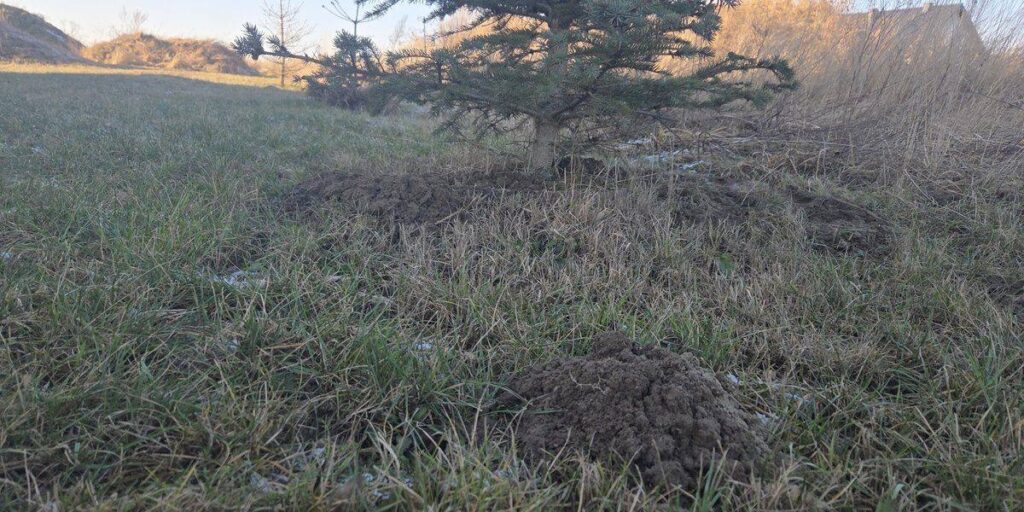
A molehill is just the soil a mole pushed up out of the way, sealed shut with no hole on top, something we confirm every time we check an active mound for signs of life. Moles don’t build ventilation shafts into their tunnels.
Fresh air reaches the tunnels by seeping through the pore spaces in the surrounding soil, the same porosity that lets rainwater soak in. That’s also why any gas pushed into a run leaks back out through the soil around it.
Why Cincinnati’s Wet Clay Makes Tunnel Air Worse
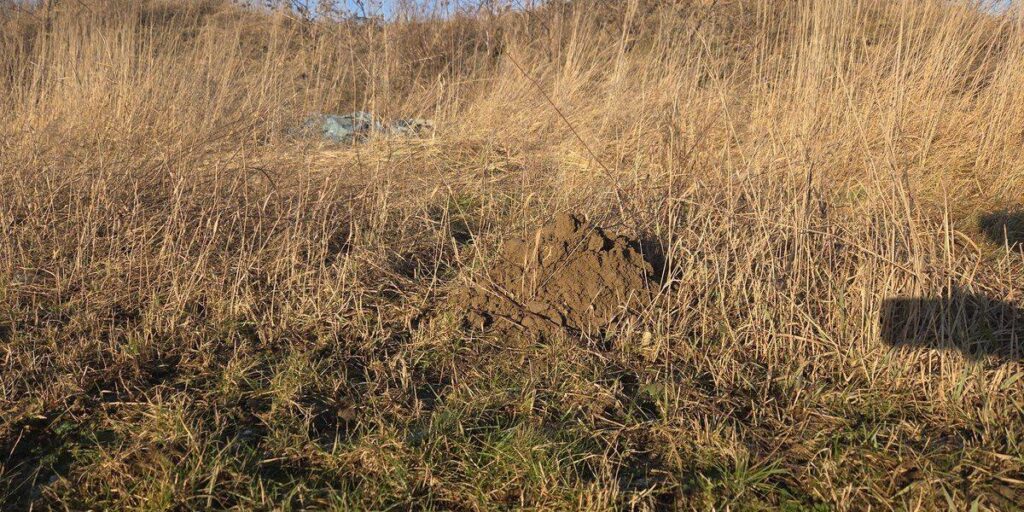
Air moves through soil pores; water fills those pores and crowds the air out. The USDA’s official soil survey for the Cincinnati series lists a dense clay fragipan sitting 22 to 36 inches down, a layer that holds water above it after heavy rain.
This past summer gave Ohio plenty of water to hold. The State Climate Office of Ohio’s Summer Review, covering June through August 2026, reported 15 to 30 inches of rain across southern Ohio, with the heaviest totals north of Cincinnati after late-August storms and departures of 12 to 16 inches above normal in the wettest spots.
The smell of fresh-turned Cincinnati clay after one of those storms is unmistakable, heavy and a little sour. The moles in Hamilton, Warren, and Clermont County yards came through that soaked summer fine.
Do Smoke Bombs or Gas Cartridges Work on Moles?
A field test described in the Proceedings of the 20th Vertebrate Pest Conference found that a single smoke cartridge reached a maximum of about 18 feet into mole tunnels. The same paper estimates that one mole’s tunnel network runs roughly 3,600 feet. That smoke data came from unpublished testing by a researcher working for a bait manufacturer, so treat it as a reported field result rather than a settled number. Even so, the distance between an 18-foot smoke reach and a 3,600-foot tunnel network is real.
Penn State Extension states fumigants are “largely ineffective since moles can detect gases and quickly wall off the treated tunnels.” That same gas-and-smoke chemistry gets the full treatment on our page about mole poison, and the short version holds here too.
| Method | What the Method Assumes | What Actually Happens Underground | Source |
|---|---|---|---|
| Smoke bombs / gas cartridges | Gas fills the whole tunnel network | Smoke reaches roughly 18 feet; moles detect and wall off the run | Poché, 2002; Penn State Extension |
| Car exhaust | Exhaust can be routed into a tunnel to gas it out | Gas dissipates through porous soil; exhaust near a home is a carbon monoxide risk to people and pets | General safety caution: OSU W-11 on home remedies broadly |
| Flooding with a hose | Water drowns the mole in place | Moles swim and relocate to another part of the system | Nebraska Extension G1538 |
| Stomping or plugging the run | Flattening the ridge cuts off air | No air loss occurs; an active tunnel reopens within a day or two | OSU W-11 |
| Trapping | A body-gripping trap in an active run removes the mole | The only method here that physically removes the animal | OSU W-11 |
Nebraska Extension calls gas cartridges “occasionally effective.” Missouri’s Department of Conservation says they “can be effective when placed in the deep burrows but are not effective in the surface feeding tunnels.” The ridges most homeowners see are surface feeding tunnels, where a cartridge does nothing, and Nebraska adds that fumigants are “usually ineffective where soils are porous and dry, or where there are extensive feeding tunnels near the surface of the soil.”
Can You Drown a Mole by Flooding the Tunnel?
Flooding fails for a different reason: moles can swim. The eastern mole’s scientific name, Scalopus aquaticus, comes from early naturalists who assumed it spent time in water. A hose run into a tunnel pushes the mole into another section of its own network, or into the yard next door.
Running a car or any engine into the ground near your house doesn’t fix the tunnel problem either, and it carries a real carbon monoxide risk to anyone nearby. It falls into the home-remedy category the Ohio State University Extension W-11 fact sheet already warns about: measures that “may relieve frustrations” but have little actual value, with some chemicals and explosives illegal to use.
Should You Stomp Down Mole Tunnels?
Stomping a ridge flat won’t cut off the mole’s air or hurt it. It’s only a test, but a useful one: a run pushed back up within 24 to 48 hours confirms an active tunnel.
What We See in Cincinnati-Area Yards After Cartridges or a Hose
The pattern after cartridges or a hose looks the same from yard to yard: a section of run sealed or plugged right around the treatment, with a new ridge branching around that stretch and fresh mounds showing up elsewhere on the property within days. We hear this a lot from folks around Loveland, Mason, and Milford before they call us in.
Subterranean Life Below the Frost Line
Moles don’t hibernate, and mole activity carries on through late winter, just deeper, below the frost line, where they handle it without trouble. Georgia DNR places eastern mole permanent burrows at about 6 to just over 23 inches below the surface.
None of this digging is cheap. Georgia DNR notes that an eastern mole eats 25 to 40 percent or more of its body weight in a single day. It can also tunnel 18 feet of new ground an hour in soft soil, a heavy workload to run on stale air, and exactly the demand the carbon-dioxide-clearing blood exists to meet.
What About the Star-Nosed Mole’s Air Bubbles?
Kenneth Catania at Vanderbilt showed that star-nosed moles blow small air bubbles underwater and re-inhale them, five to ten times a second. That’s how they smell prey underwater; it isn’t an air supply.
Star-nosed moles turn up in Ohio, mostly in wet ground near streams and ponds. The species actually digging up a Cincinnati lawn is the eastern mole, a completely different animal. The naked mole-rat, an East African rodent known for tolerating low-oxygen environments, isn’t a mole and has nothing to do with what’s in your yard.
Ohio DNR describes eastern moles as having pinhead-sized eyes covered by a thin layer of skin, just enough to detect light in a life spent entirely underground.
What Actually Works
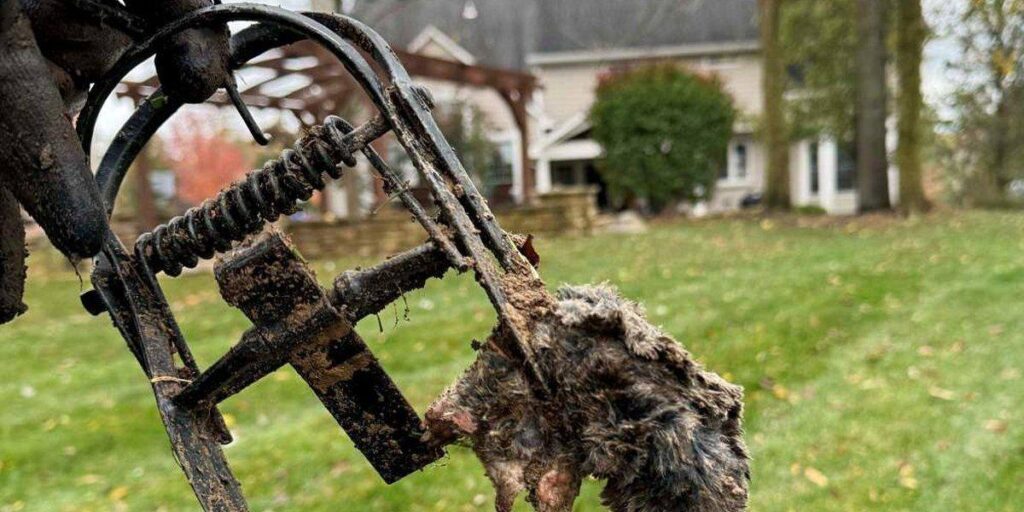
A mole is built to live on bad air, so the fix that works is a trap. Ohio State University Extension states: “Trapping is the most effective and practical method of mole control.” A mechanical trap, set in a run, confirmed active and checked on a regular schedule, physically removes the animal, and the mole in the trap is your proof it’s gone.
Sometimes the evidence says the mole has already moved on, and the right call is to wait before setting a trap at all.
"Jeff was out immediately and actually recommended not to install a trap plan yet based on evidence that the mole may have left our property. Sure enough, we had no additional lawn damage. Jeff was spot on with his assessment and we really appreciated his candor and professionalism. We know to call The Mole Hunter if we ever have another problem."
We’ve spent 25-plus years reading these tunnels across Greater Cincinnati, and the yards that quiet down are the ones where someone stopped gassing or flooding the problem and started trapping it. If you’re looking at fresh ridges and want to skip straight to what works, The Mole Hunter’s on-site inspection is free, and you can reach us directly at (513) 613-2289.