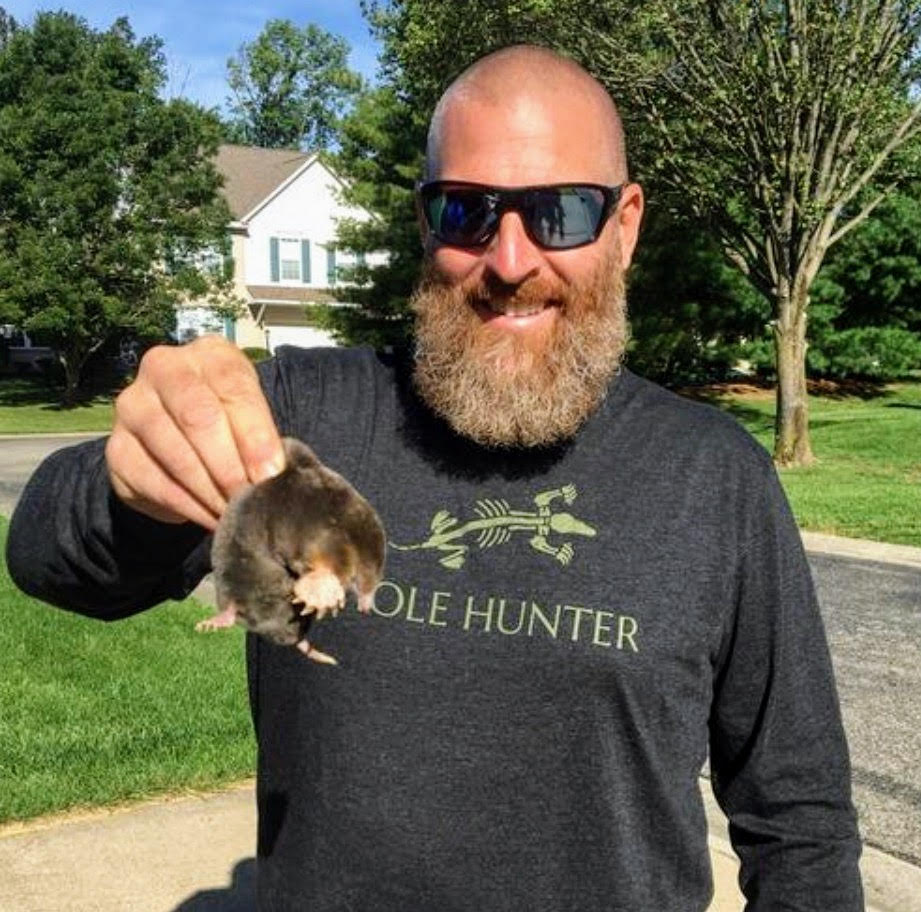
No, a mole isn’t a rodent. It’s a mammal, but it belongs to a different order, Eulipotyphla, the insect-eating group that also covers shrews and hedgehogs. Rodents sit in order Rodentia: mice, rats, squirrels, voles, and gophers.
So what kind of animal is a mole, then? A specialized digger built for insects, not grain or garden plants, which is exactly why so many products marketed for a mole problem never touch it.
Yes, Moles Are Mammals
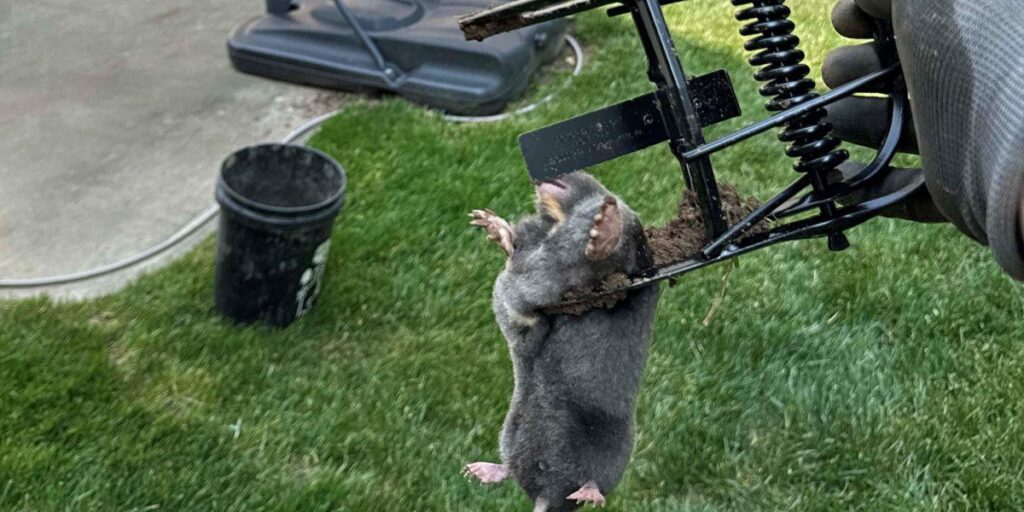
Are moles mammals? Yes, on every count that matters: fur, warm blood, live birth, and mammary glands for nursing young. They don’t lay eggs. Reproduction happens once a year.
Gestation lasts about five to six weeks, and a female delivers two to six hairless young in a nest chamber inside her tunnel system. Litters arrive mid-April through May, according to Ohio State University Extension.
What Makes an Animal a Rodent
Rodents are defined by their teeth. Every rodent has a single pair of upper and a single pair of lower incisors that never stop growing. Behind them sits a gap called a diastema, then flat cheek teeth for grinding. No rodent has canine teeth. Rodentia is the largest mammal order alive, with over 40 percent of all mammal species, per the University of Michigan’s Animal Diversity Web.
What Makes a Mole Different, Starting With the Teeth
An eastern mole, the species behind nearly every mound I trap across the greater Cincinnati area, carries 36 teeth: three upper and two lower incisors per side, one upper canine, three premolars, and three molars. The “44 teeth” figure online comes from Old World species like the European mole, not the one under Ohio lawns. Its canine and sharp cheek teeth grab and shear soft-bodied prey, matched to the earthworms and grubs it lives on.
The practical upshot: a mole’s mouth is built to grab and shear, which is exactly why rodent-shaped bait sits untouched in an active tunnel.
Body Length, Color, and Head: What a Mole Looks Like
An eastern mole runs about 6 to 8 inches in body length, nose to tail, roughly the size of a chipmunk, according to Ohio State University Extension. A small head tapers to a bare, mobile snout, with paddle-like front feet turned outward for digging and fur that runs gray to black. The eyes are covered by skin, which is why people assume a mole is totally blind, though it can still sense shifts between light and dark. The absence of external ears is the clearest field marker there is; the ear openings sit hidden under that fur, and that same bare, nerve-packed snout is how a mole detects earthworms and insect larvae moving through soil nearby.
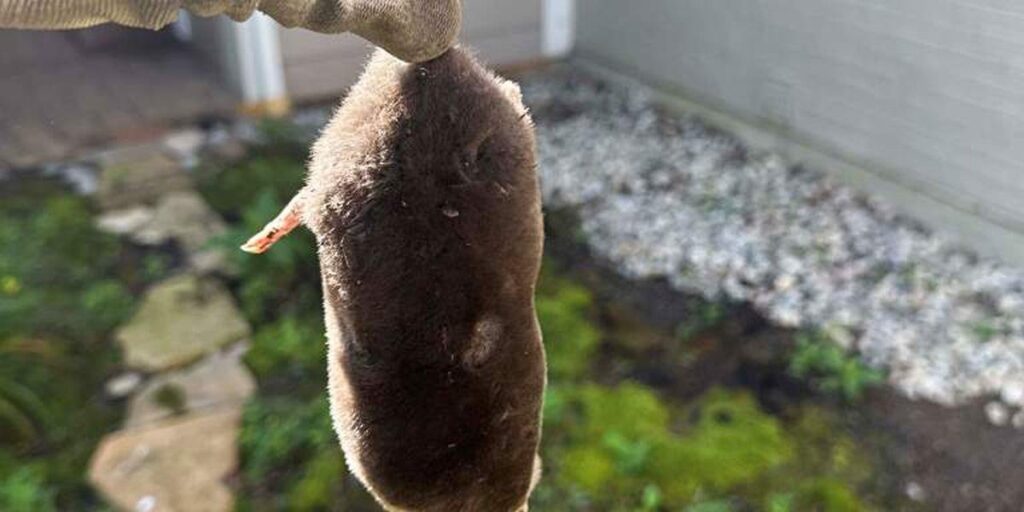
Ohio State University Extension puts a mole’s digging force at up to 32 times its own body weight, and in moist soil, it can push out a new shallow feeding tunnel at up to 18 feet an hour, according to Georgia’s Department of Natural Resources. Root or bulb damage happens only because that force tunnels straight through them.
Why that force matters here: one mole, working alone overnight, can leave enough fresh ridge across your grass to make you think you’re dealing with a whole colony.
Diet Is the Real Difference
A mole eats earthworms first, then grubs, beetle larvae, ants, centipedes, and other soil invertebrates. Daily intake runs 25 to 40 percent or more of its body weight. Over a year, a 5-ounce mole works through 45 to 50 pounds of worms and insects. The full list of what’s on the menu is on TMH’s diet page.
What that means for your plants: none of that diet includes grass roots or bulbs on purpose, so a dying plant next to a tunnel is almost always collateral damage from the digging itself.
Who Moles Are Related To
Shrews are a mole’s closest relative, followed by hedgehogs and the solenodons of the Caribbean, all grouped under Eulipotyphla, a name that replaced the older, now-retired “Insectivora.” The mole family itself is Talpidae. On the mammal family tree, moles sit on a branch with bats, carnivores, and hoofed animals, according to the Mammal Diversity Database’s current classification. Rodents sit on a separate branch with rabbits and primates: you’re more closely related to a mouse than a mole is.
Why People Mix This Up
A lot of the confusion over whether moles are rodents traces back to how these animals look and how stores sell the products meant to deal with them.
Voles are rodents, and they’re the ones worth worrying about if something’s chewing on bulbs or bark. They run surface trails instead of digging mounds and move into a mole’s old tunnels to reach roots. For the complete rundown on telling the two apart, see TMH’s moles-versus-voles comparison.
Gophers are rodents too, though rare in greater Cincinnati; what gets called a “gopher mound” here is almost always a mole’s work. A gopher mound is fan-shaped with a plugged hole on one side, while a molehill is small, round, and symmetrical, shaped like a tiny volcano. If you want to compare the two side by side, the gopher breakdown on TMH’s site lays it out.
Shrews are mouse-sized, with a pointed snout, and they borrow mole tunnels to hunt insects of their own. If what’s digging looks mouse-sized rather than mole-sized, telling a shrew from a mole comes down to a few quick details.
Is a Naked Mole-Rat Really a Mole?
A naked mole-rat is an East African rodent with no connection to the mole in your yard, though it dominates image searches for “mole” and trains people to picture a hairless rodent, when the mole in the ground is a small, furred insectivore. Home improvement stores add to the confusion, filing mole products under “animal and rodent control” next to mouse traps and rat bait.
Why the Distinction Matters in Your Yard
Will Rodent Bait Kill a Mole?
Rodent bait won’t touch a mole; it physically can’t eat it. Grain and peanut-style poison baits target seed and plant eaters, and a mole’s teeth can’t process either one. Rutgers Cooperative Extension confirms poison peanuts are ineffective, since insects and earthworms make up a mole’s diet. I’ve walked into more yards than I can count where the homeowner had already sunk money into bait from the hardware store that the mole never touched.
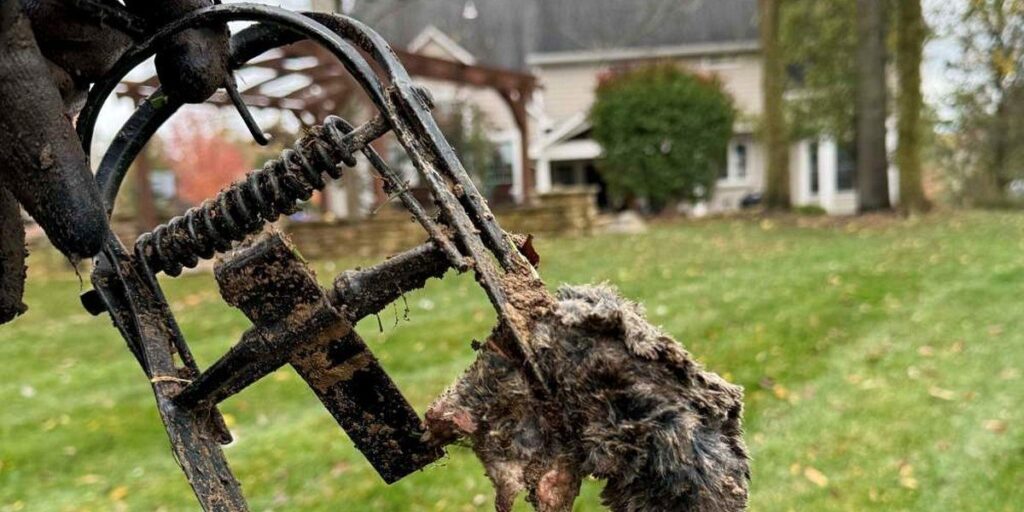
A mole just tunnels a few inches around a smell or a noise instead of giving up its tunnel system. Ohio State University Extension found that castor oil, mothballs, ultrasonic stakes, and vibrating spikes have little value in controlling moles. Snap traps and sealing entry points do nothing for an animal living entirely inside its own tunnel system. A mechanical trap set in an active tunnel is the method OSU Extension calls most effective.
Grub control misses the target too: earthworms make up the bulk of a mole’s diet, and killing grubs leaves the worm population untouched, which Iowa State Extension lists as a non-solution.
Do Moles Carry Diseases Like Rats?
Moles carry far less disease risk than rats or mice, because they rarely contact people or pets. The Centers for Disease Control and Prevention (CDC) notes that rabies transmission from small insectivores to humans is rare and requires an unusual cross-species event. Moles don’t enter homes or raid food storage, and they don’t nest in walls or den in attics, the way house mice and rats do.
Getting the ID Right Decides the Fix
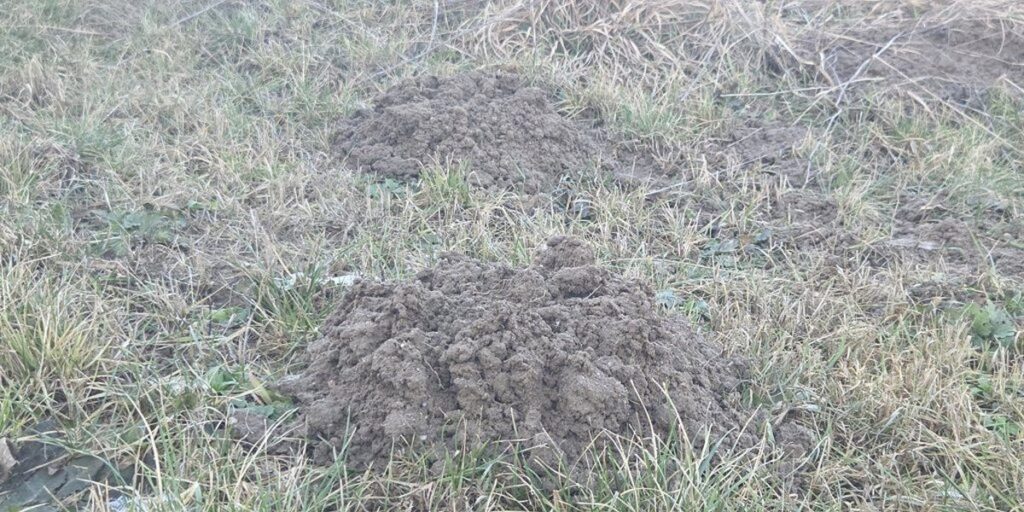
Identification decides the response, since vole damage and mole damage need different treatment. Chewed bark, bulbs, roots, or garden plants point to a vole using an old mole tunnel. Round, symmetrical mounds and raised ridges in the middle of the lawn, with no visible entry point, mean a mole did the digging. “Vermin” isn’t a scientific term, just a catch-all for anything damaging property; whatever you call it, trapping is what works on a specialized insect-eater like this.
The Eastern Mole Is the Cincinnati Answer
Three mole species turn up in Ohio yards, according to Ohio State University Extension: eastern, hairy-tailed, and star-nosed. The eastern mole is responsible for close to every mound I see across greater Cincinnati, and the other two rarely turn up at all. All three get the full treatment on TMH’s species page.
A single yard holds one mole, occasionally two or three. Moles are solitary animals, defending their own tunnel system alone outside a short breeding window, with activity peaking in spring and fall right after rain. The State Climate Office of Ohio’s August 2026 update recorded that month as the wettest August on record for the state. Wet soil pushes earthworms up, moles follow the food, and shallow tunneling spikes across lawns and fields through southwest Ohio.
At a Glance: Six Animals, One Yard
| Animal | Order | Rodent? | Teeth | Main Food | Eats Plants/Roots? | What It Means for You |
|---|---|---|---|---|---|---|
| Eastern mole | Eulipotyphla | No | 36, sharp canine, no gap | Earthworms, grubs | No (root damage is incidental) | Rodent bait won’t work; the tunnel needs to be trapped |
| Shrew | Eulipotyphla | No | Small, pointed | Insects, spiders | No | Often mistaken for a mouse, still not rodent bait territory |
| Vole | Rodentia | Yes | Ever-growing incisors, gap | Grass, bark, bulbs | Yes | A genuine rodent problem, with a different fix entirely |
| Pocket gopher | Rodentia | Yes | Ever-growing incisors | Roots, tubers | Yes | Rare locally, a fan-shaped, plugged mound is the tell |
| House mouse | Rodentia | Yes | Incisors, gap, flat molars | Seeds, grains | Yes | Standard rodent bait and snap traps apply |
| Naked mole-rat | Rodentia | Yes | Large incisors | Roots, tubers | Yes | East African rodent, not found in US yards at all |
If what’s in your yard doesn’t match the first row, you’re not dealing with a mole, and that changes the approach.
Here’s what one Cincinnati-area customer said after I got the right solution in place.
"Reasonable price. I called last week. They had someone out setting up Traps same day within a week caught three moles. They send you a detailed assessment after every visit with pictures included, highly recommend!"
Not Sure What You're Dealing With?
That question matters more than the taxonomy. I offer a free on-site inspection to identify what's digging: mole, vole, or something else, before you spend another dollar on the wrong product. Schedule a free inspection or call (513) 613-2289.