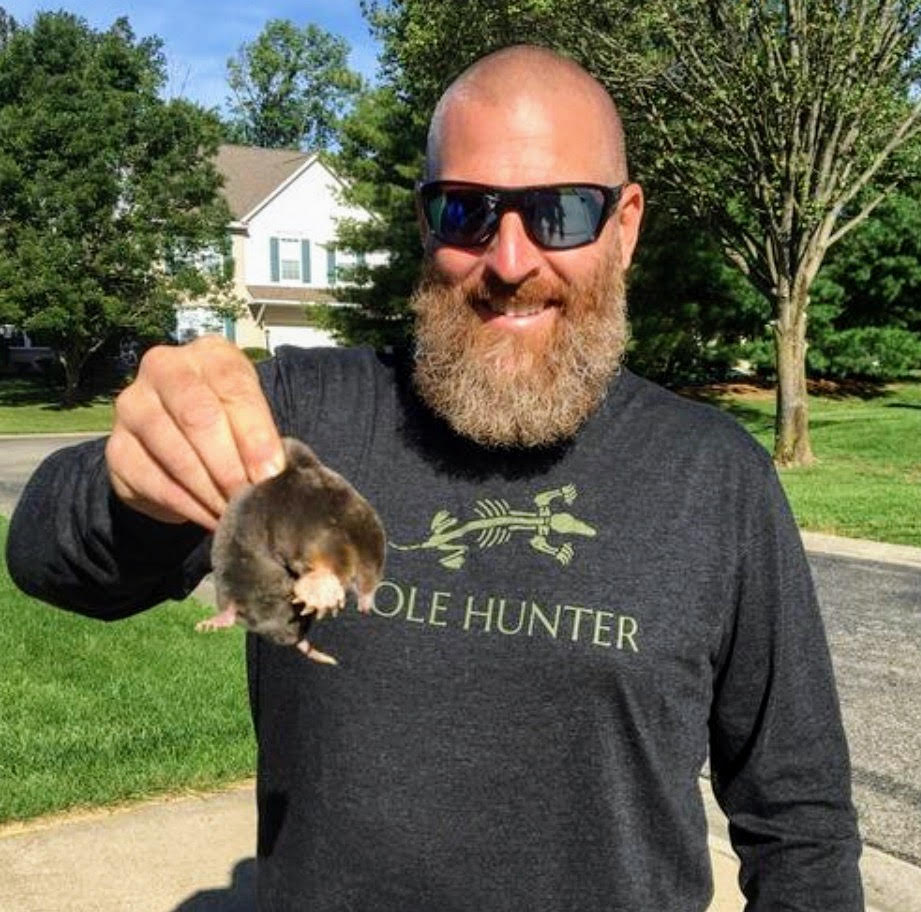
Found holes in yard turf that weren’t there last weekend? Before you blame a mole, check two things: is there a mound, and can you see into the hole?
That check answers “What is digging holes in my yard?” in seconds. In plenty of Loveland and Mason yards, the digging comes from another animal entirely, and a mole hunt won’t fix it.
Do Moles Make Holes You Can See Into?
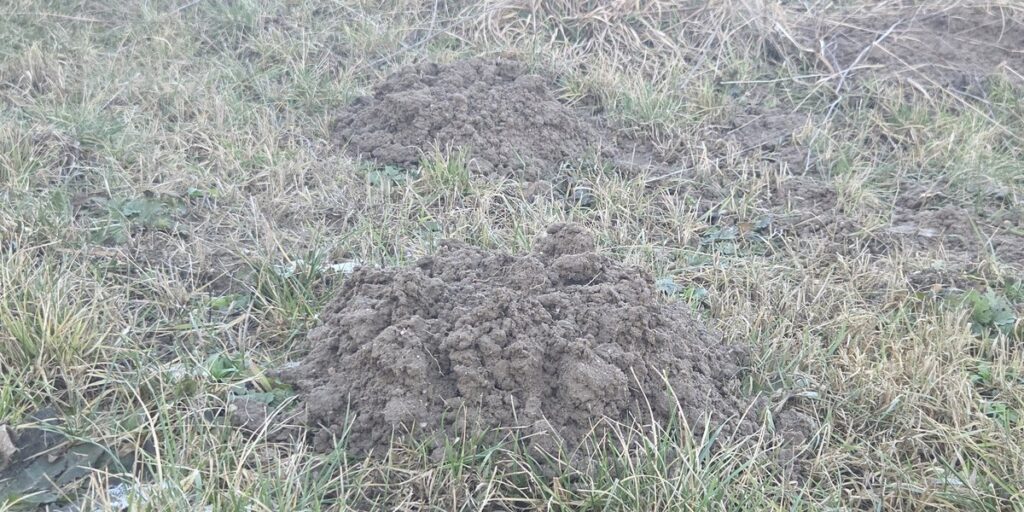
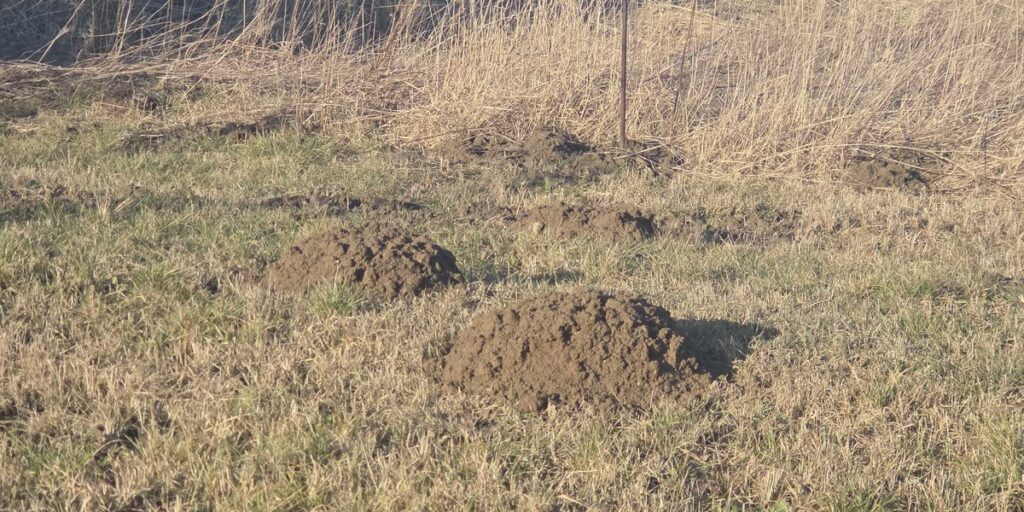
Moles create mounds that stay sealed. A mole plugs the shaft with soil as it pushes dirt to the surface, and Virginia Cooperative Extension notes that moles patrol their tunnels and close any openings they find. What you see is a molehill. It’s a pile of soil shaped like a small volcano, and the tunnel runs right under its center.
A sealed, centered mound in a Cincinnati yard belongs to a mole. Raised ridges running across the turf confirm it. Step on a fresh ridge and it caves in under your heel.
Mole damage typically peaks in early spring, after the snow melts. Activity picks up again in fall, especially after rain softens the ground.
If you can look down into an open hole, a different animal dug it or moved into a mole’s tunnel.
Small Holes in Yard, Sorted by Size
Hole diameter and the soil around the opening help you determine the culprit behind lawn holes. The chart covers the small ones and the big ones.
| Hole or Mark | Soil Around It | Other Signs | Likely Animal | Next Step |
|---|---|---|---|---|
| Sealed volcano mound, no opening | Piled high and closed | Raised ridges in the lawn | Mole | Free inspection and trapping |
| Dime to golf-ball size, clean edges | Little or none | Worn runways through the grass | Vole | Licensed wildlife control operator |
| Silver-dollar size, clean and round | None at the entrance | Beside patios or foundations | Chipmunk | Licensed wildlife control operator |
| 3 to 4 inches, cone-shaped | Minimal, turf pressed flat | New patch dug each night | Skunk | Wildlife control operator, plus a grub check |
| Sod strips peeled or flipped | Torn turf, no clean hole | Hand-sized patches or larger | Raccoon | Wildlife control operator, plus a grub check |
| Around 8 inches or larger | Dirt “porch” at the entrance | Active by day near sheds or fences | Groundhog | Licensed wildlife control operator |
Vole Holes
Vole holes tend to run from dime-sized to golf-ball size, with little soil at the edge. Voles clip narrow surface runways through the grass down to bare dirt, and small holes strung along those vole runways confirm a vole.
Chipmunk Holes
Chipmunk entrance holes are about the size of a silver dollar and perfectly clean, with no dirt piled at the opening. Chipmunks carry the soil off in their cheek pouches and dig beside patios and foundations.
Groundhog Hole
A groundhog hole is the big one, with a porch of loose dirt spread across the entrance. Groundhogs dig under sheds and along fence lines, and they’re active in daylight, when you can catch one near its den.
Shallow Holes From Animals Digging for Grubs
Overnight digging, whether it’s torn sod or small cone-shaped holes in the grass, comes from skunks or raccoons hunting white grubs. These turf pests are a rich food source. Ohio’s most abundant grubs are Japanese beetle and masked chafer larvae. They feed in the thatch layer of dead stems under the grass, chew through the roots below it, and burrow deep into the soil for winter.
Skunk Holes in Lawn
Skunks dig shallow holes in a cone shape and pull out one grub at a time. The grass around these individual holes stays pressed flat. A skunk works a fresh patch every night.
Raccoon Digging Up Lawn
Raccoon digging up lawn turf looks rougher. Raccoons peel back whole strips of sod or flip them upside down. Birds hunt the same grubs by day and leave small, shallow pecked holes.
According to Ohio State University Extension’s 2026 guide to white grubs, animal digging is often the first sign of grub activity. Badly damaged turf pulls back like a carpet because the grubs have cut its roots. For annual grub species, OSU treats more than 10 grubs per square foot as the point where action is needed, and that line moves with turf type and growing conditions.
Grub treatment won’t get rid of a mole, and the research on moles and grub control backs that up.
Why Are There Holes in My Yard but No Mounds?
Holes in yard but no mounds mean the digger isn’t a mole, because small rodents and skunks leave open holes and never build a sealed pile. It’s the most common case where a homeowner suspects moles and finds other animals at work. Match the holes in your yard against the size chart before calling anyone.
Two other animals get blamed for lawn holes. Pocket gophers don’t live in Ohio, and a gopher’s kidney-shaped mound looks nothing like a mole’s.
Shrews don’t push up ridges or mounds, and this side-by-side comparison of shrews and moles shows why a dead one on the porch doesn’t end a mole problem.
Ground-Nesting Bees and Other Small Round Holes
Solitary bees and ground-nesting wasps dig small round holes in bare, dry soil. They lay eggs in cells below ground and leave the grass alone.
Cicada killers are the biggest of these diggers. Ohio State’s Buckeye Yard and Garden onLine calls them the largest native wasp in Ohio. Females dig burrows in bare, sunny, well-drained soil and stock them with paralyzed cicadas, and several burrows often sit close together. The males buzz anyone who wanders near but can’t sting, and the females rarely do.
Squirrels dig small, shallow holes in fall to stash nuts, then dig again to find those buried nuts. Near wet ground in southwest Ohio, burrowing crayfish push up mud chimneys.
Earthworm castings show up after rain as little piles of soil the worms have digested, and they mean healthy ground.
Can Moles and Voles Be in the Same Yard?
Moles and voles do share yards, which explains damage that looks like one animal did all of it. UConn Extension’s guide to managing moles notes that other burrowing animals, including voles and shrews, occasionally use mole tunnels.
Once inside, a vole follows the mole’s run to plant roots and bulbs, then chews its own exit hole through the ridge. An open hole cut through the roof of a ridge, beside plants wilting from chewed roots, is the combination to watch for.
Moles feed mainly on earthworms, grubs and other soil-dwelling insects, and rarely eat roots. Virginia Cooperative Extension also puts most of the root and bulb damage blamed on moles down to voles. In a shared yard, we trap the mole and a licensed wildlife control operator takes care of the vole. You can see how the damage and the fix differ between the two.
How to Confirm What’s Digging Holes Before You Call
Flatten a ridge or fill a hole, then check back in 24 to 48 hours. If the ridge has risen again, the mole is still using that run, and a hole that’s been dug back open tells you the same about whatever made it.
Next, note when the digging happens. Fresh damage that appears overnight belongs to one of the night diggers in the chart, and a groundhog is the one you’re most likely to catch at work in daylight, near its den. Worn runways in the grass confirm the presence of voles.
If skunks or raccoons look likely, peel back a 1-foot square of sod near the damage and count the grubs. If raised ridges are present, our guide to spotting fresh mole tunnels and mounds walks through each sign.
What to Do Next, Based on What You Found
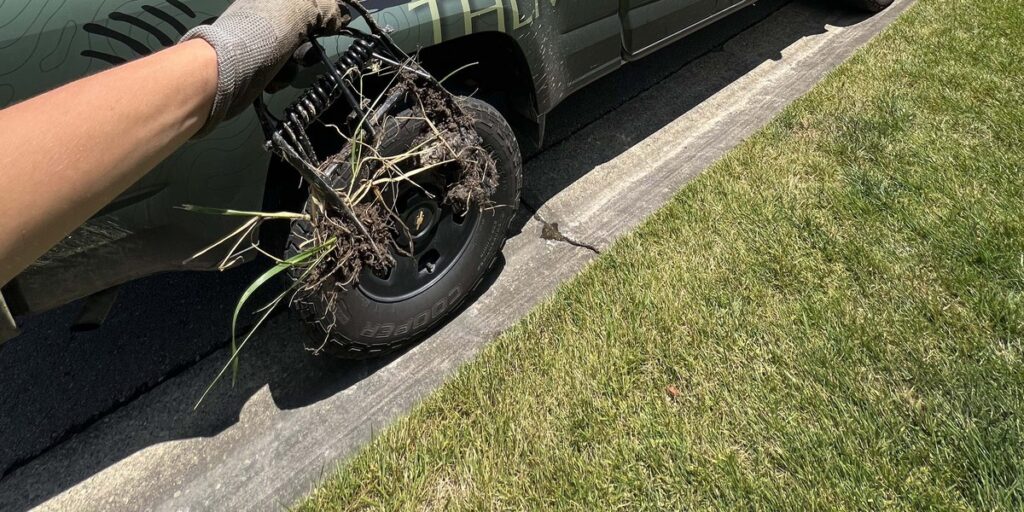
Sealed volcano mounds and raised ridges mean a mole. UConn Extension calls trapping the most reliable method of mole control, and trapping is all we do. Every job starts with a free inspection where we find the active runs. Traps go only where we’ve confirmed activity. We check them every 5 to 7 days and send a photo report after each visit.
Yards that back up to woods or a field collect old tunnels the mole has already left. If none of your runs are active, we’ll tell you, and you won’t pay for traps you don’t need.
You can request your free mole inspection online.
Prefer to talk it through first? Call (513) 613-2289.
We only handle moles. Groundhogs and other large diggers go to a licensed wildlife control operator. For grubs, a lawn care provider can sample the soil and treat the infestation.