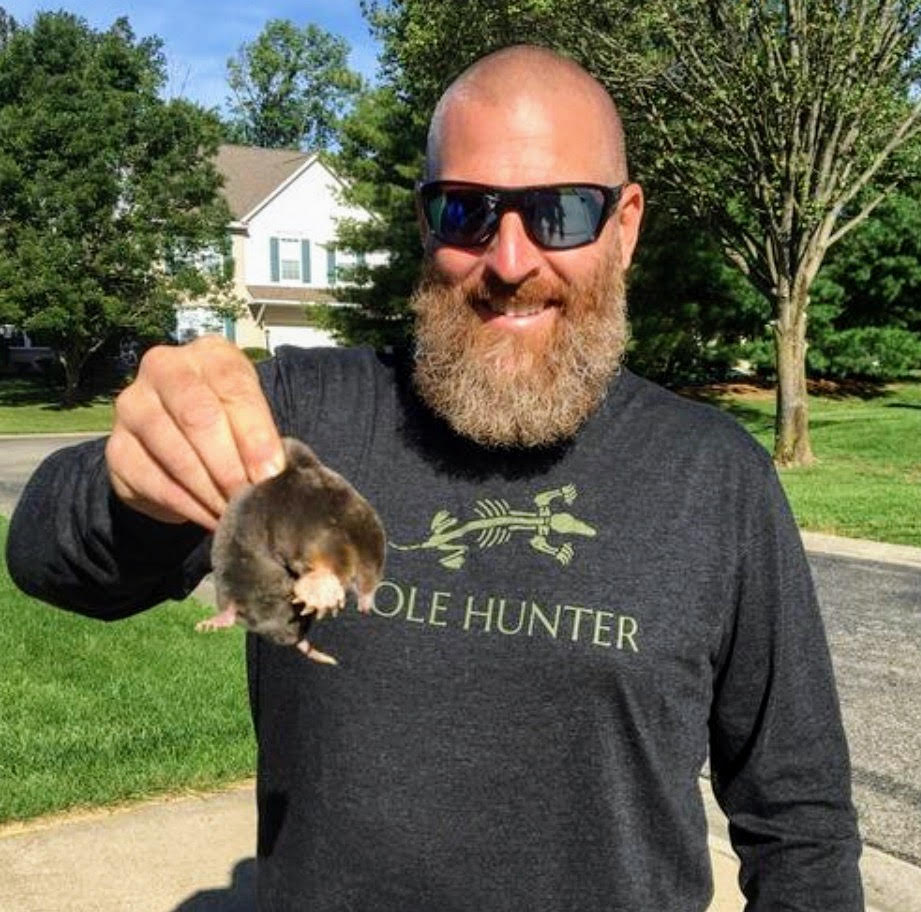
Grub control for moles doesn’t work because moles live mainly on earthworms, and taking out the grubs leaves their main food supply in place. Milky spore has the same problem, plus a second one. Its only commercial strain targets Japanese beetle grubs, while Ohio lawns also hold masked chafer grubs that it can’t touch.
Will Killing Grubs Get Rid of Moles?
Wiping out every grub leaves the earthworms, the bulk of a mole’s diet, so it stays put. Purdue University’s Plant and Pest Diagnostic Lab calls the grubs-cause-moles idea an old wives’ tale in its 2023 guidance on moles in lawns.
The University of Missouri’s Integrated Pest Management (IPM) program points out that grubs aren’t present in late winter and early spring, right when mole tunneling starts.
Do moles eat grubs? They’ll eat grubs and other insects when they run into them. Georgia DNR puts a mole’s appetite at 25 to 40% or more of its body weight a day, and only earthworms come in big enough numbers to cover that. You’ll find the full menu in our guide to everything moles feed on.
Researchers Courtney and Barnes (2002) counted an average of 0.26 grubs per lawn in turf samplWhy Grub Control Won’t Get Rid of Mes from yards with active moles. They sampled in early June and noted they could have missed some grubs, but that’s close to none.
Does Milky Spore for Moles Actually Work?
Milky spore won’t stop a mole, as its commercial strain infects only Japanese beetle grubs and never touches the worms. The bacterium, Paenibacillus popilliae, causes milky disease in white grubs (the plump, C-shaped beetle larvae under your turf), turning their insides milky white before they die.
Ohio State University Extension’s March 2026 white grub fact sheet notes that most beetle species have their own strain of the bacterium. Milky spore also takes about four weeks to kill an infected larva.
Ohio’s Other Common Grub: The Masked Chafer
OSU lists Japanese beetles and masked chafers as Ohio’s most abundant white grubs, and milky spore misses the masked chafer. Masked chafer grubs chew turf roots just like Japanese beetle grubs. The adults fly at night and stay out of sight.
Japanese beetles feed on leaves and ripening fruit in daylight, and they get the blame for any larva homeowners dig up. Be aware that the two look alike to the naked eye. OSU says the pattern that tells them apart is easiest to see under a microscope. Spreading milky spore means guessing which one you have.
What the Field Trials Found
Redmond and Potter tested commercial milky spore on two golf courses over several years. It neither raised milky disease levels nor reduced grub numbers (Journal of Economic Entomology, 1995). Cornell University’s biological control guide adds that in some regions, milky disease showed up in about 0.2% of field-collected Japanese beetle grubs in later sampling, down from 41.5% in 1946.
Cornell also notes that infected grubs ate as many roots as healthy ones. Even a perfect result against Japanese beetles would leave the earthworms untouched.
Is Milky Spore Safe for Pets?
Yes. Cornell’s guide calls commercial preparations safe for people and other vertebrates, which includes dogs and cats.
Why Mole Activity Stops After Treatment, Then Comes Back
When mole activity stops after a treatment and later returns, either the product knocked back your earthworms or the season pushed the digging deeper into the ground. That short quiet spell is why so many neighbors swear grub control gets rid of moles.
The Earthworm Side Effect
Some grub control products kill earthworms, which Missouri’s IPM program calls the mole’s primary food source. The program reports that many of these insecticides cut earthworm numbers by up to 70%, and some products hit them harder still. Moles leave in search of food and return once the earthworms recover.
Individual studies show the damage swings widely by active ingredient:
- One labeled application of carbaryl, sold as Sevin, cut earthworms by 60 to 99% for at least 20 weeks (Potter et al., Journal of Economic Entomology, 1990).
- In a separate trial, a clothianidin and bifenthrin combination suppressed earthworms more than carbaryl did, while chlorantraniliprole had little or no impact (Larson, Redmond, and Potter, Pest Management Science, 2012).
Earthworms loosen the dense clay under Greater Cincinnati lawns and break down thatch. Killing them to move a mole along damages your soil.
Dry Summers Send Moles Down
When that clay dries out in summer, earthworms and soil-dwelling insects move deeper, and moles follow. Many lawns get a grub treatment during that hot stretch, and the product gets credit for the quiet yard. In reality, the digging just moved below the surface.
Anyone who has pushed a shovel into a Mason backyard in August knows how hard that clay gets. When fall soil cools and holds moisture again, the worms and moles come back up.
Repellents get the same false credit. Here’s why castor oil doesn’t remove moles.
Can Grub Killer Make Mole Damage Worse?
Grub killer hasn’t been proven to increase mole tunneling, but it costs you a season. Meanwhile, the mole works its deeper tunnels and keeps pushing up volcano-shaped mounds after the surface ridges fade.
The Grub-Shaped Bait on the Garden Center Shelf
A search for “grub killer for moles” also turns up grub-shaped mole poison, which does nothing about the real ones in your lawn. We break down what poison bait really does to moles in a separate post.
How to Tell Grub Damage From Mole Damage
Some lawns and garden beds have moles and grubs at once, and each problem needs its own fix.
Grub damage resembles drought. Tug on a dead, spongy patch. According to OSU, grub-damaged turf peels back like carpet, with the grubs in the dirt underneath. OSU also names animal digging as a common first sign, with skunks and raccoons leaving holes as they dig for bugs.
Mole damage shows up as raised ridges and molehills. The roots stay intact, though grass above a ridge browns when its roots dry out in the tunnel’s air pocket. If you’re still unsure, compare your yard against the telltale signs a mole leaves behind.
We trap moles and don’t treat grubs. If tugging the turf turns up real grub damage, OSU’s fact sheet or a lawn care provider will help you decide what to do.
Grub Control vs. Trapping: A Side-by-Side Comparison
| Option | What it targets | Effect on moles | Effect on earthworms | Proof the mole is gone |
|---|---|---|---|---|
| Milky spore | Japanese beetle grubs only | Food supply stays in place | Unaffected | None |
| Carbaryl or clothianidin plus bifenthrin | White grubs | Moles leave while earthworms are down, then return | Heavy losses | None |
| Chlorantraniliprole | White grubs | Keep feeding on intact earthworms | Little or no impact | None |
| Trapping in an active run | The mole itself | Removes the mole | Left in place | A caught mole |
What Works for Controlling Moles in Greater Cincinnati
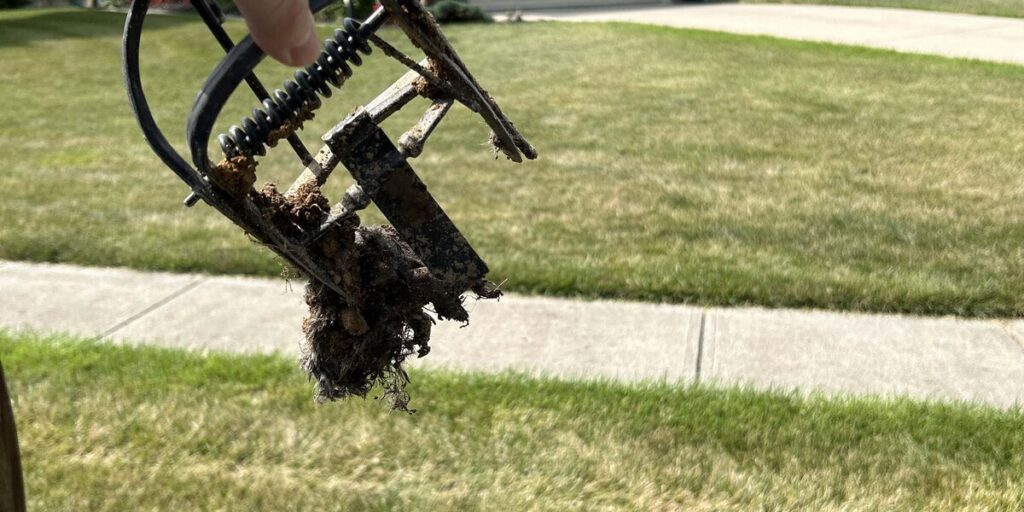
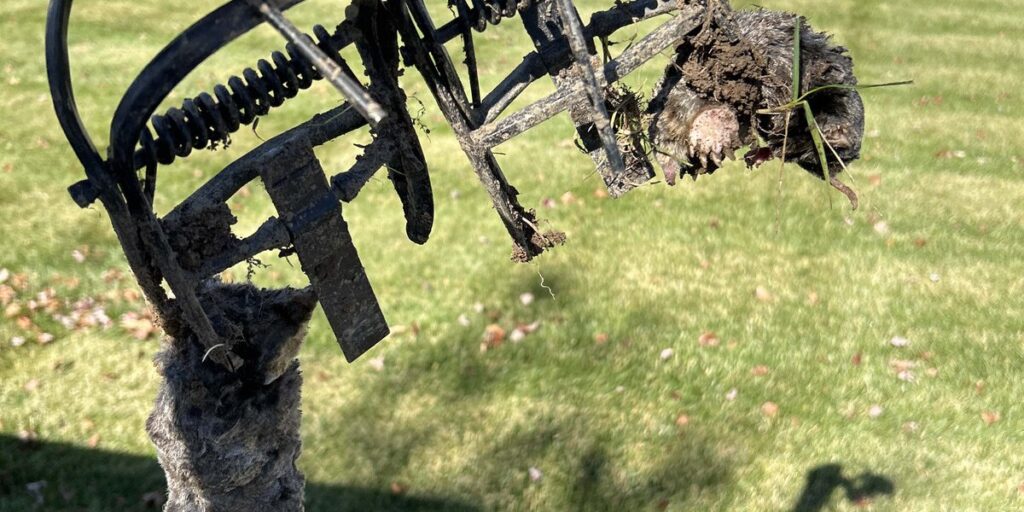
Trapping in a confirmed active tunnel removes the mole and leaves your earthworms alone.
Placement decides success. Purdue’s lab pairs scissor traps with deeper runs and harpoon traps with tunnels near the surface. We set traps only in runs that show fresh activity.
Missouri’s program calls trapping the most economical method of mole control. Once a mole is gone, others move into good earthworm territory. That’s why we won’t promise a yard stays mole-free for good.
Our process starts with a free on-site inspection to find which tunnels are in use. Traps go into those runs, and we check them every 5 to 7 days. You get a photo report after each visit showing what we found.
Once the mole is out, you can start repairing the ridges and molehills it left behind.
If you’ve spent money on grub treatments and the ridges keep coming back, let’s find where the mole is working. Book a free mole inspection or call us at (513) 613-2289.