You can learn exactly how to set mole traps, but the trap itself isn’t the problem. Most of the time, the hardware is fine. The problem is where it’s sitting.
Walk any yard with mole damage, and you’ll find traps shoved into surface ridges, placed on mounds, or sitting in tunnels the mole stopped using weeks ago. The animal never came back. It was done with that ground.
Placement in a verified active travel run is what separates a catch from a wasted week. That’s the whole skill.
Two Tunnel Types and the Mole Damage They Create
Moles are busy diggers. One mole can build an extensive tunnel system across a yard, and most of the mole’s tunnel system is temporary feeding infrastructure already abandoned by the time you find it. Knowing which runs matter is the first step.
The two most common types serve entirely different purposes. Confusing them is exactly why DIY trapping fails. The right trap for a deep run is a separate decision. Where to set it is what this article covers.
| Surface Feeding Runs | Deep Travel Tunnels | |
|---|---|---|
| Depth | 1 to 4 inches | 6 to 18 inches |
| Shape | Winding, irregular | Straight, direct |
| Duration of use | Abandoned after one pass | Used daily, repeatedly |
| Visible from the surface | Yes, raised ridges in the grass | No surface sign |
| Worth trapping? | No | Yes |
Surface Feeding Tunnels
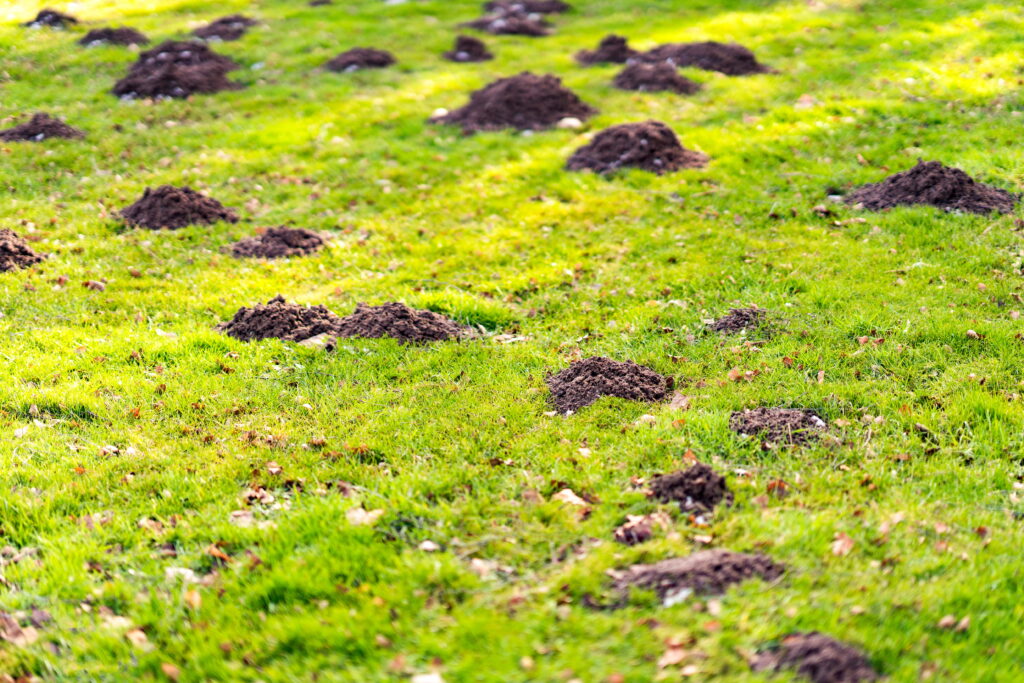
Surface feeding runs are the raised ridges pressed up through your lawn. They sit in the root zone of the grass, which is why the turf yellows and collapses along those winding strips.
A single mole can excavate up to 150 feet of these surface tunnels in a day when the soil is moist, and worms or grubs are nearby. Tunnels built that fast are temporary hunting corridors, nothing more.
The food runs out quickly, and the mole creates fresh damage somewhere else before you’ve noticed the first strip. Most feeding runs are abandoned after a single pass. Setting a trap here is waiting in a room that’s already been emptied.
Deep Travel Runs
Deep travel tunnels are the mole’s permanent burrow system, invisible from above. In SW Ohio’s heavy Clermont clay (the dense, glacially deposited soil that dominates from Loveland to Anderson Township to Mason), these settle between twelve and eighteen inches deep, just above the fragipan, a dense, near-impermeable subsoil layer that makes deeper digging too costly for the mole to sustain.
Unlike the erratic surface ridges, deep runs are straight and purposeful. They serve as the main routes connecting feeding areas across a yard, and the mole passes through them multiple times a day. These are the only tunnels where a trap belongs. In SW Ohio yards, the confirmed active tunnel is almost always along a structural boundary: a fence line, concrete edging, a foundation wall, ten to fourteen inches down in the clay.
Before you start probing, reading what different surface patterns are actually signaling will save you from testing the wrong tunnels entirely.
Why Mole Hills Are the Wrong Place for a Trap
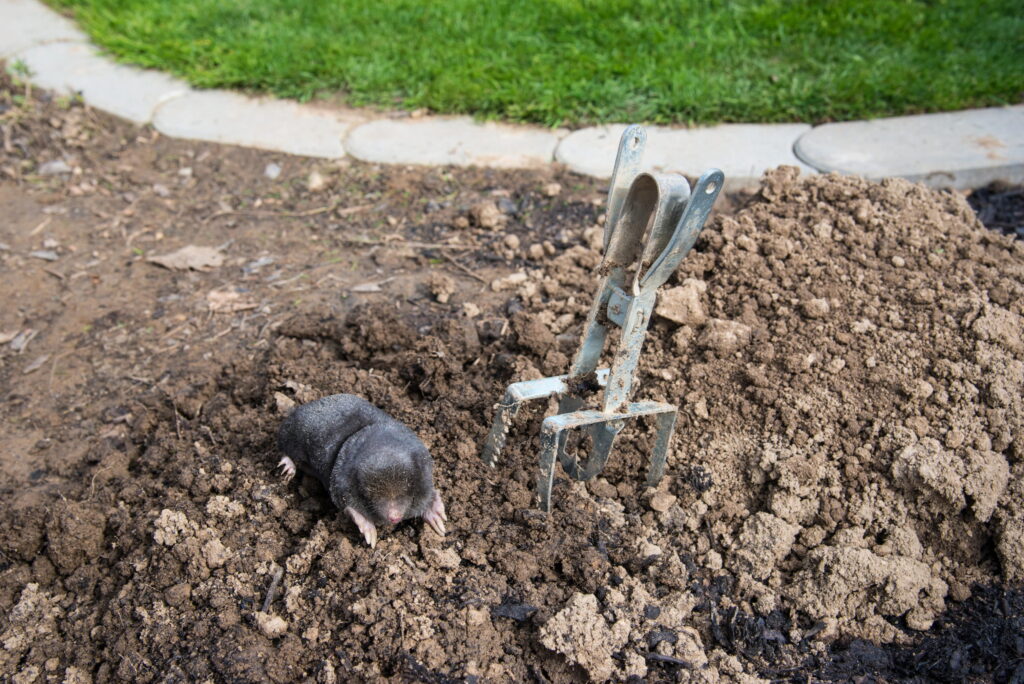
After surface ridges, the most common error is setting a trap directly on a mole hill.
Mole hills look like entry points. They’re not. They’re vertical exhaust shafts (narrow vents the mole uses to push excavated dirt to the surface while building the deep tunnel below). When a mole digs through clay, the animal transports soil horizontally through the tunnel and pushes it straight up through a narrow hole. That conical pile of loose soil is the exhaust vent, not a door.
Once the load is cleared, the mole plugs the shaft from below with packed soil to seal out light, air, and predators. The trap belongs in the horizontal traveling run connecting to that shaft, not inside the shaft itself.
How to Find an Active Mole Tunnel
Before any trap goes in the ground, the tunnel has to be confirmed active. Assuming a deep run is occupied is still guessing.
The Stomp Test
Poke along a fence line or sidewalk edge to locate a deep run. Press down a six-to-twelve-inch section of a suspected tunnel with your boot. Mark the spot with a flag or stake so you can find it again in a uniform lawn. Leave it for twenty-four hours.
If the tunnel has been pushed back up, the mole hit a blockage in its regular route and cleared it. That active mole tunnel is where the trap goes. Set it there and nowhere else. If the section is still flat after forty-eight hours, the route is inactive. Move on and test somewhere else.
Why Ohio Clay Makes This Easier
SW Ohio’s heavy clay doesn’t collapse on its own. That’s a genuine advantage here.
I first noticed this while maintaining grounds at a local country club near Loveland back in 1995. Clermont clay holds its shape in a way that sandy or loamy soil never does. A live run has a specific firmness underfoot that a dead tunnel just doesn’t have. In clay this dense, when a flattened section pushes back up the next day, that’s not random settling. That’s the mole.
In sandier soil elsewhere, you’d second-guess it. Not here. Confirming activity confirms occupancy. It doesn’t guarantee a catch. How you set the trap determines the outcome.
What this means for your yard: In Greater Cincinnati’s Clermont clay, the stomp test is more reliable than in most of the country. If a flattened active tunnel pushes back up here, act on it immediately.
How to Place the Trap Properly in an Active Run
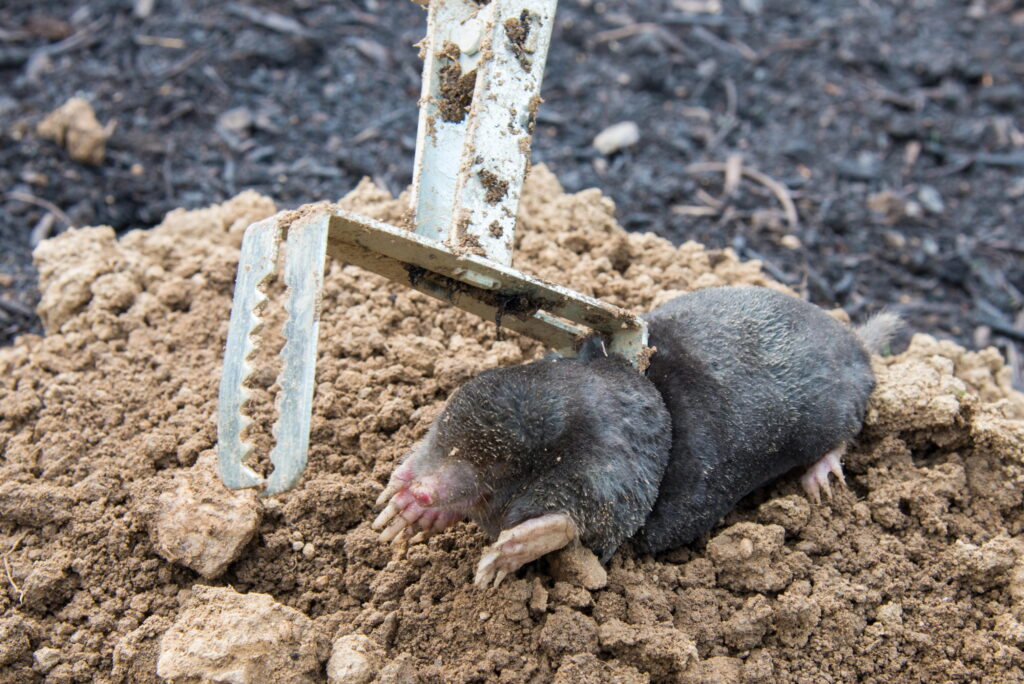
Once you have a confirmed active deep run, here’s how to set the trap correctly.
Working Inside the Mole’s Tunnel
Dig down to the tunnel floor with a narrow trowel, opening a section exactly as wide as the trap mechanism. Clear out every loose pebble, clod, and root from the void. Debris absorbs spring energy or jams the jaws mid-fire. In SW Ohio clay, pre-cut a clear path for the jaws before setting. Dense clay slows a firing trap just enough for the mole to sense it and back out.
Pack a firm plug of fine, moist dirt into the center of the tunnel floor, directly under where the trigger pan (the pressure plate the mole pushes against to fire the trap) will rest. Moles push through blockages by instinct. When the animal hits the plug, it pushes up to clear it. The mole triggers the mechanism through direct upward pressure against the trigger pan.
Without the plug, the trigger mechanism has nothing to press against. This single step accounts for more failed sets than anything else.
What this means for your yard: The soil plug is missing or too loose in most failed sets in SW Ohio. The tunnel floor is dense and easy to rush past. Take sixty seconds to pack it firmly. It changes the outcome.
Alignment, Sealing, and Coverage
Align the trap perfectly in line with the tunnel direction. A diagonal angle means the mole contacts the frame before reaching the trigger and digs around the device entirely.
Once set, never leave the trap open or the excavation unsealed. Moles are sensitive to light and air movement inside the tunnel. Any gap introduces exactly those changes, and the mole detects the disruption and abandons that section. Backfill the void with loose, debris-free soil up to turf level. Full backfill restores the sealed environment the mole expects and prevents accidental contact with children or pets.
Check the trap every twenty-four hours. Moles are most active in the morning and evening, but they don’t run a predictable schedule.
Trapping Moles: Volume, Timing, and When to Relocate
Give any location a strict forty-eight to seventy-two-hour window. If the trap fires but catches nothing, re-examine the plug and seal, then try one more reset. If there’s still no activity after the full window, that spot is done. Pull the trap and move it to a freshly confirmed run.
Mole activity shifts with soil moisture and ground conditions throughout the season, as the Ohio State University Extension has documented for Ohio. Two traps placed in the wrong runs won’t control moles any better than one set correctly. More traps only help when they’re concentrated in the right places. Effective trapping puts three to five in tight clusters at the crossings of verified active runs, all within a thirty-foot area. A mole working the other side of a fence line or foundation has a regular route there. That’s exactly where to set your traps.
In Greater Cincinnati, spring rains are your best window. Wet soil drives earthworm activity high in the Clermont clay, pulling moles into consistent, high-frequency routes through the main runs. Get traps into confirmed active tunnels in March or April, and you’re working with the season, not waiting it out.
Why This Takes Practice
Finding permanent mole runs means looking past surface damage to visualize an invisible underground layout. Moles leave no surface markers for their main corridors. Knowing exactly where to set a trap takes years of learning how soil, drainage, and structural boundaries shape these hidden routes.
That spatial awareness is not sold in hardware stores. If you are stuck with empty traps, placement is the issue. I have spent over 25 years trapping moles, dating back to managing Loveland golf courses in 1995. Today, my team and I solve mole problems for homeowners across Cincinnati, Lebanon, and Milford.
I am incredibly proud of the results we deliver. Here is what one of our recent clients had to say:
⭐⭐⭐⭐⭐
Elaine Fite
Highly Recommend The Mole Hunter – Especially Service Tech, Lance Tipton. Excellent Customer Service. Everyone I have worked with has been very kind and knowledgeable. The Customer form that is sent to you for each visit is very detailed along with any pictures of the mole(s) being removed. We are making such progress in our yard that I have extended the contract.
If you are tired of empty traps and ready for professional mole trapping in Southwest Ohio, let my team take over. Give me a call at (513) 654-5079. You do not have to fight this battle alone. I will find the run.
Frequently Asked Questions
How do you find the main mole tunnel?
Look for a straight or gently curving ridge running alongside a fence, sidewalk, or foundation edge. Once spotted, run the stomp test and return the next day. A repaired section confirms the active tunnel is worth trapping. Irregular, winding ridges across the open lawn are surface feeding runs and poor trap locations.
What is the best time of year to trap moles in Greater Cincinnati?
Spring and fall yield the best results because heavy seasonal rains saturate the heavy clay, driving earthworms and mole traffic toward the surface. During hot summers, the clay bakes hard, forcing worms and moles deep underground where surface damage disappears entirely. While many homeowners assume the moles left, the animals are simply operating exclusively within invisible, deep, permanent runs.
Will grub control products get rid of moles in my yard?
Grub treatments fail to eliminate moles because the primary food source driving mole activity in Ohio’s dense clay soils is earthworms. The earthworm population runs too deep and consistently for a surface grub treatment to force the moles to relocate. Trapping is the only method with consistent results, and if you have already tried treating for grubs without success, reach out to me directly to get the issue resolved.