That raised line snaking through your grass is a mole feeding tunnel. I’ve walked yards across Loveland and Anderson Township where a homeowner points at the same two things: a squishy ridge in the lawn, and a few feet away, a dirt mound. Both are mole tracks, two different signatures from the same animal working underground.
One shows you where it’s been eating. The other shows you where it dumped the extra soil.
The Two Signs Every Mole Track Leaves Behind
My inspection routine is identical on every job. There are only two things to look for.
Raised Ridges: The Squishy Lines in Your Grass
Surface ridges, sometimes called raised seams, are what most homeowners notice first. They’re long, raised lines of turf that wander across the lawn, usually just a few inches wide.
Walk across one, and it gives slightly underfoot. That soft give comes from loosely packed soil sitting just below the surface, pushed up as the mole tunnels along, actively searching for its next meal.
These ridges aren’t random. Moles easily navigate moist ground, so the lines tend to follow garden beds, flower beds, and fence lines, anywhere the earth stays soft. Cincinnati’s clay-heavy soil holds moisture longer than sandier ground, which is part of why this region keeps me busy.
Mole Hills: The Dirt Mounds That Pile Up
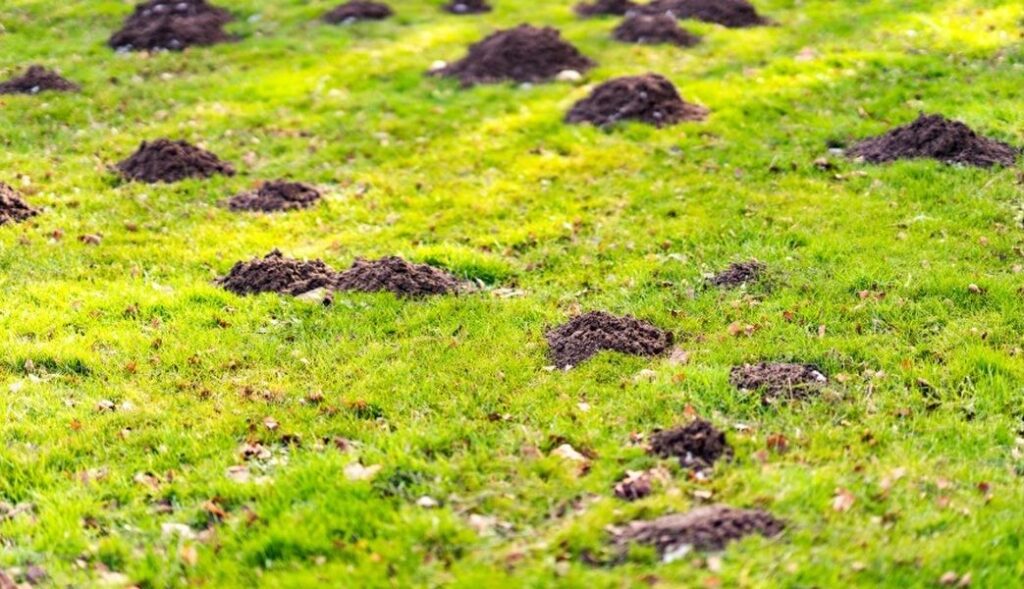
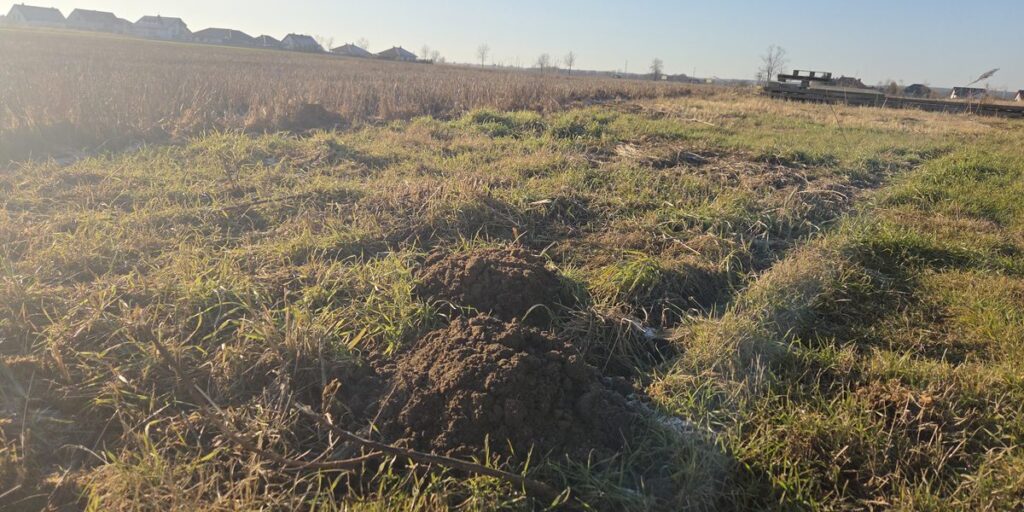
The second sign is the mole hill, a compact mound of upturned earth that shows up alone or in a loose cluster of small mounds. These form when a mole pushes soil up from a deeper, more permanent tunnel rather than a shallow feeding tunnel.
These mounds can grow several inches high and multiply fast across a shaded, moist part of the yard.
Is the Tunnel Still Active?
Here’s the test I use on every inspection. Stomp a section of the ridge flat with your foot. Check it again in 24 to 48 hours.
If it’s pushed back up, that section is still being worked. If it stays flat, the mole has moved on. Ridges that keep reappearing after flattening are one of the clearest signs of a mole’s presence on the property.
What Mole Damage Usually Rides Along With the Tracks
Ridges and hills rarely show up alone. Watch for soft, spongy spots underfoot, sometimes whole sections of a bed that feel like they might give way.
Brown or yellowing grass running directly above the tunnel line is another cue, caused by root disruption underneath, as the shallow tunnels disturb the soil the grass depends on.
Mole Tracks or Vole Runways?
Moles and voles get confused constantly, and sorting them out early saves you money on the wrong fix. Moles are insectivores that primarily eat insects and other small invertebrates, working entirely underground. Voles are rodents that carve visible runways at grass level and chew on plant roots and vegetation as they go.
| Animal | What It Leaves Behind | Above or Below Ground |
|---|---|---|
|
🐾 Mole
|
Raised ridges and dirt mounds with a sealed surface | ⬇️ Works entirely below ground, almost never seen in the open |
|
🌱 Vole
|
Flattened surface trails you can see from above | ⬆️ Moves at ground level, visible to the eye |
What's Actually Digging All This?
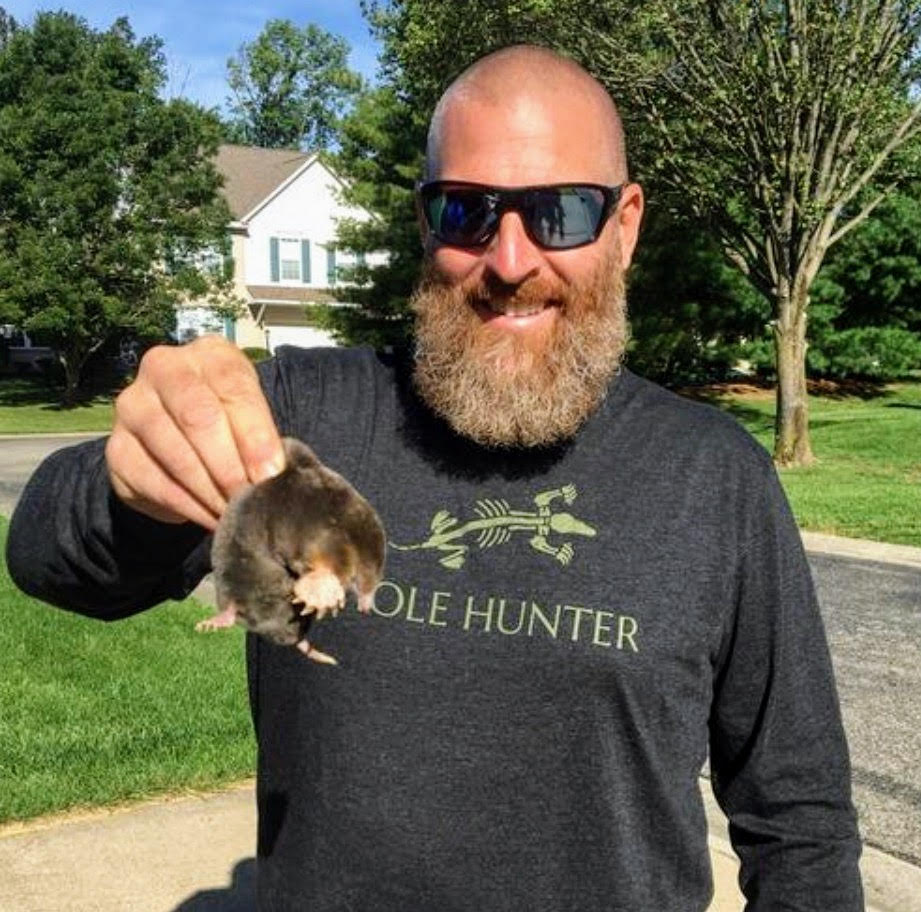
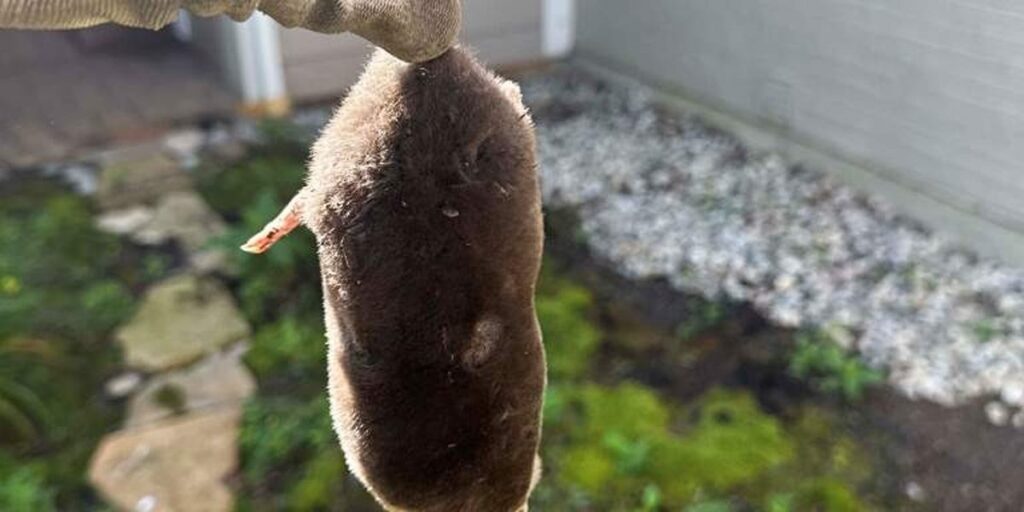
The eastern mole is behind almost every yard, showing these signs. It's built for the job, with large feet and wide forepaws made for pushing through soil.
Moles feed mainly on earthworms and insects, per Ohio State University Extension. Because of that diet, grub control products do so little to solve a mole problem. Even a yard with zero grubs still has plenty of earthworms to keep a mole fed.
The damage you see comes from the mole digging through the yard in search of food. Your plants and landscaping stay untouched.
They build two kinds of tunnels. Shallow tunnels are the ones you feel underfoot, dug fresh as the mole searches for food that day. Those tunnels get reused season after season, forming large networks under the yard.
Mole activity picks up in spring and fall. In my experience around Cincinnati, that usually means late March into April, once the ground thaws after a wet winter and worms start moving toward the surface again. That pattern repeats in October, especially after the first substantial fall rains. Older, established lawns tend to see the worst of it, since mature root systems and consistent soil moisture hold earthworm populations that keep moles working those yards year after year.
Why Does a Single Mole Cause So Much Damage So Fast?
One mole can dig 18 feet of new tunnel in a single hour, a more efficient way of covering ground than most homeowners expect. A small ridge you spot on Monday can wind halfway across the front yard by the weekend, all from one animal working alone below the soil surface.
These aren't shy critters that vanish for good. Actual mole footprints are a rare sight since almost all of a mole's activity happens inside its own underground tunnel systems, but the ridges and mounds it leaves behind tell you exactly where it's been.
Do Castor Oil or Repellents Get Rid of Moles?
Castor oil and sonic spikes show up constantly online, but neither one addresses where moles actually live and feed. They wash out or fade fast, and they don't touch the tunnel system underneath.
If you're dealing with an active population, these products just give the mole more time to build out its tunnel network while you wait for something that isn't working.
What to Do Next
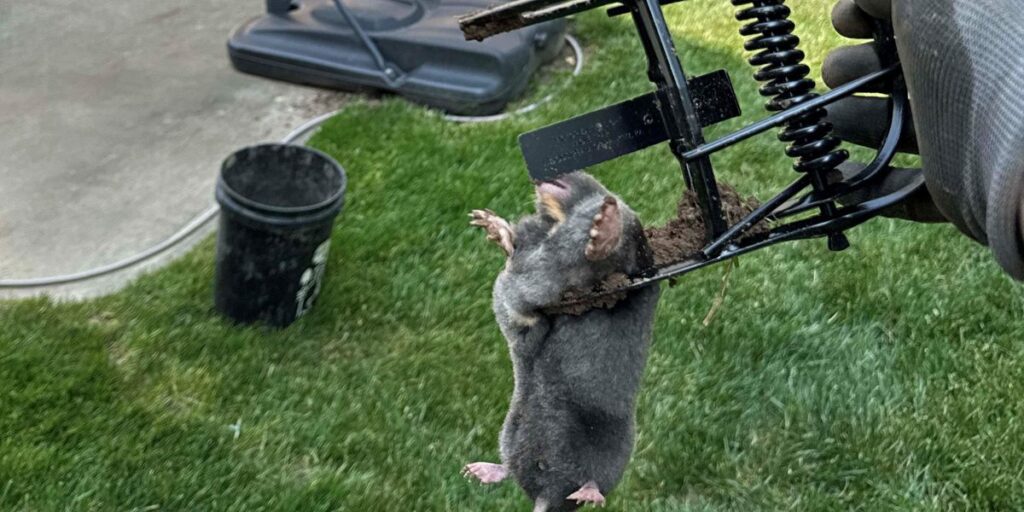
Reading the signs in your own yard is the easy part. Fresh ridges reappearing after you flatten them, or new mounds popping up faster than you can rake them down, both point to a population active enough to need real intervention.
My guide to spotting mole activity in your yard walks through the broader warning signs if you want the full picture first.
⭐⭐⭐⭐⭐
"The Mole Hunter is an awesome company! They quickly identified my needs and devised a strategy. I live on an acre and the moles had created so much damage that they had to set over 25 traps at first. Over the course of seven months they captured more than 20 moles and scared the rest away. Our property looks amazing! Lance Tipton was our weekly technician and he was so diligent and always willing to take time to answer any questions that I had. A huge thumbs up to Lance. Tom Martin was able to attend to my yard during the weeks when Lance was unavailable, and he was just as meticulous in his trap setting and mole removal. Amanda works in the office and she was always polite and understanding of my situation and very helpful whenever I had questions. All three demonstrate what quality service looks like and get my highest recommendation. I live near the woods so I'm sure this won't be the only time I will encounter mole activity. But now I know who to call and can rely on a company that knows their stuff. Thank you Mole Hunter!"
When you're ready to deal with the problem directly, I handle mole removal and prevention myself and offer a free on-site inspection to see exactly what's going on under your lawn. Call (513) 613-2289 and I'll take a look.