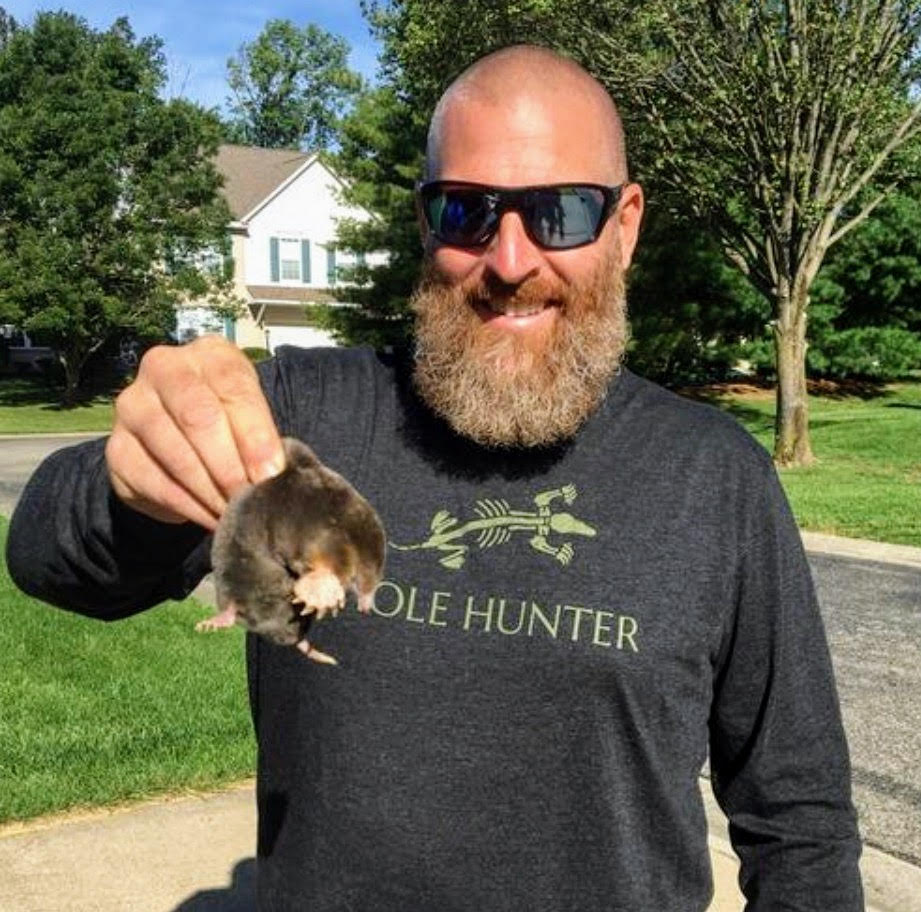
The appeal of a mole deterrent is obvious. No traps, no dead animals, and a forty-dollar bag of granules you can spread on a Saturday morning. The product promises the mole in your lawn will smell the castor oil, find it disagreeable, and leave. Clean, effortless, humane.
Here’s what actually happens: the mole tunnels six feet to the left.
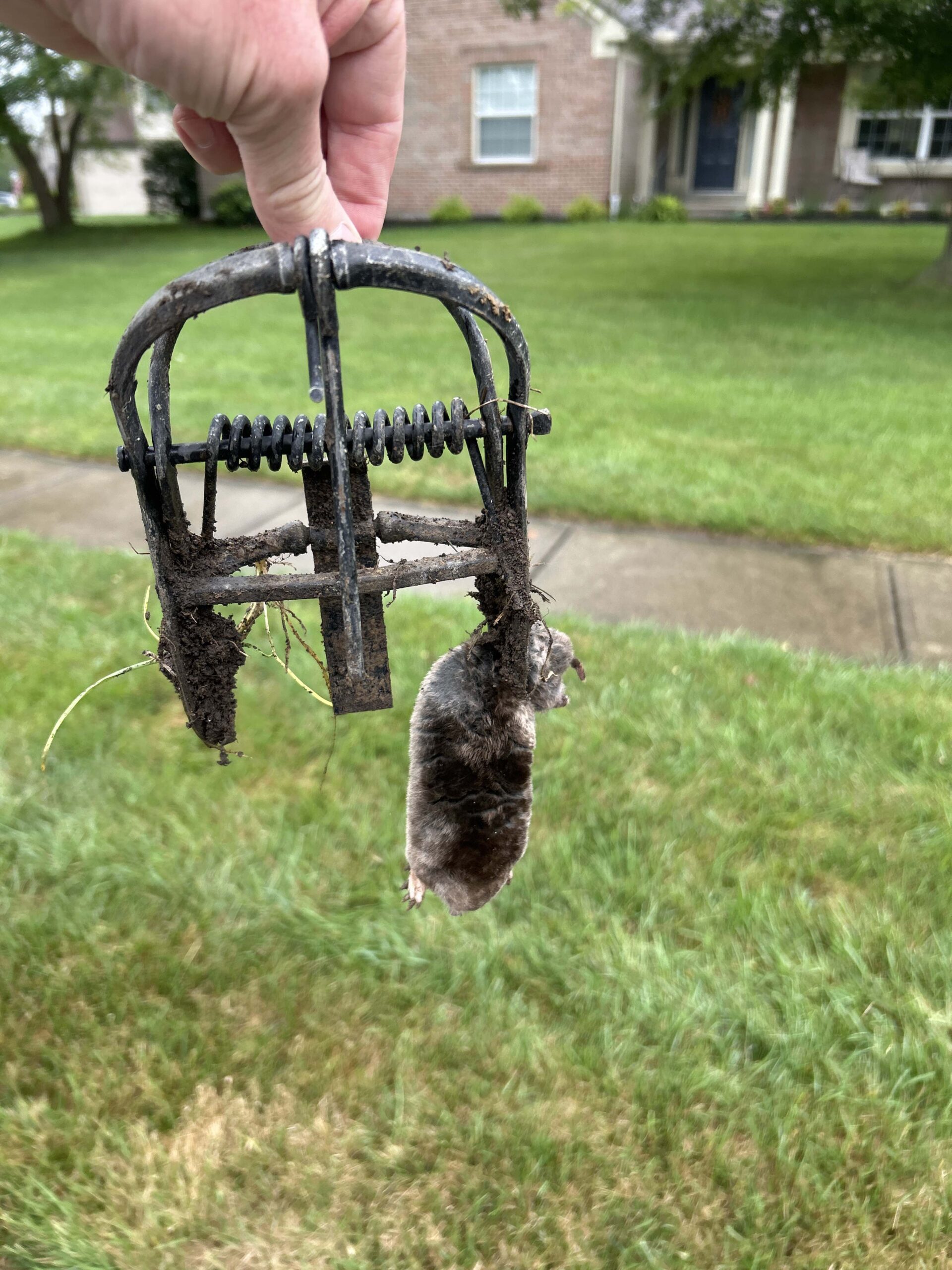
Every mole deterrent and castor oil mole product promises results, but professional trapping is the only method that gives Cincinnati homeowners a dead mole and a lawn that can finally heal.
The mole isn’t gone. It’s annoyed, temporarily, and it’s back the moment the next heavy rain washes your chemical barrier into the storm drain. Every day spent on repellents is another day of active tunnel damage to your lawn, garden beds, flower beds, shrubs, and bulbs.
Understanding why these products fail is the only way to actually deter moles for good.
Why Castor Oil Mole Repellents Don’t Work
The core assumption behind every scent-based mole deterrent is wrong.
Repellent manufacturers assume moles rely on smell to navigate underground. Saturate the soil with something odorous, the logic goes, and the mole will go elsewhere.
It doesn’t work that way. Moles navigate almost entirely through touch. Their snouts are packed with touch-sensing nerve clusters called Eimer’s organs (specialized receptors that work like a fingertip reading Braille at high speed), built to detect texture, pressure, and vibration. Scent barely registers.
After 25 years of watching castor oil fail, this is the thing I always come back to: you’re trying to blind an animal that doesn’t use its eyes by turning off the light.
Castor oil does irritate the soil surface, but to a mole navigating entirely by touch, that’s a minor inconvenience it pushes right past. The effectiveness of these products is functionally zero.
The Same Problem Applies to Other Burrowing Pests
These products are marketed broadly for other burrowing pests and rodents, including voles and gophers. A vole repellent and a mole repellent share the same fatal flaw: neither removes the animal.
Moving a pest is not the same as removing one. If you want to see every non-trapping approach homeowners try before calling me, I’ve covered each one in detail.
The Displacement Problem: Repellents Move Moles, They Don’t Remove Them
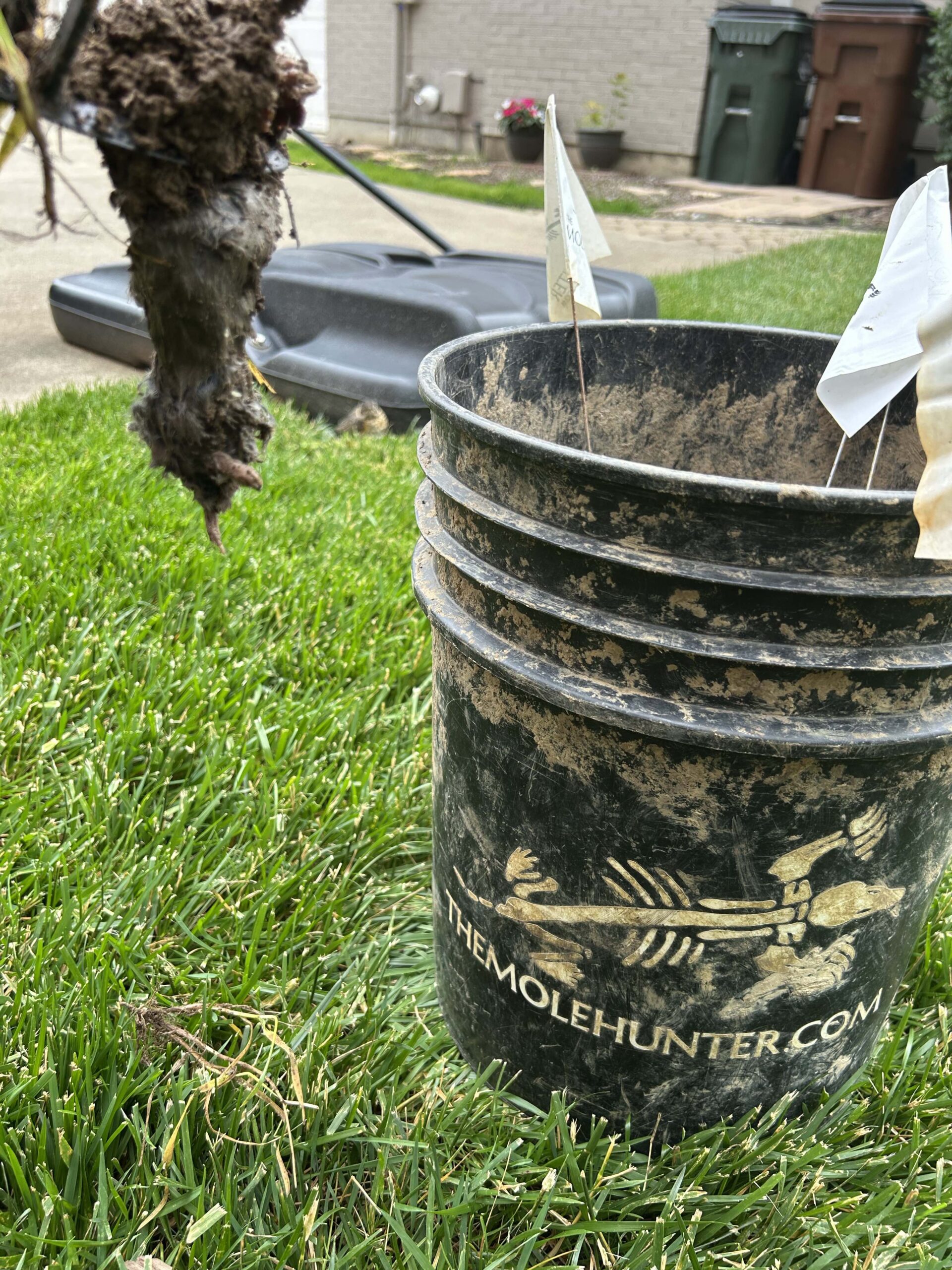
Even when castor oil creates enough discomfort to temporarily shift mole activity, the result is displacement, not removal.
Field research documented this directly. Researchers saw near-surface tunneling stop briefly after application, but only during dry conditions. When heavy thunderstorms produced over three inches of rain, the oil diluted and mole activity aggressively resumed on treated sites.
Within five days, fresh tunneling appeared on a previously undisturbed adjacent section of lawn. The mole didn’t leave. It shuffled a few feet and kept working.
Why Cincinnati Yards Are Especially Vulnerable
I see this in yards across Mason, Indian Hill, and Loveland every spring. Greater Cincinnati’s heavy April through June rain events don’t just dilute the repellent. The wet soil pulls earthworms up into the shallow root zone, drawing moles into a feeding frenzy right where your turf lives. If you want to understand when moles are most active across the season, that pattern is covered in detail.
The deep permanent tunnels sit well below the reach of any topical spray or granule. Those underground runs stay fully intact.
The moment the oil washes away, the mole uses its existing burrow network to recolonize the treated area.
If the repellent pushes the mole past your property line, you’ve handed the problem to your neighbor, and it comes back when the chemical wears off. Trapping is the only method that removes the mole from the local ecosystem entirely.
The Grub Treatment Myth
Treating a lawn for grubs will not deter moles. Earthworms make up the vast majority of a mole’s daily diet, often 70 to 90 percent. Grubs are a minor seasonal item.
For the full breakdown, the deep dive on what moles actually hunt and eat covers the research. Applying a grub-killing insecticide destroys a side dish. The main food source, a dense worm population living in the clay-heavy soils of Hamilton and Warren Counties, stays completely untouched.
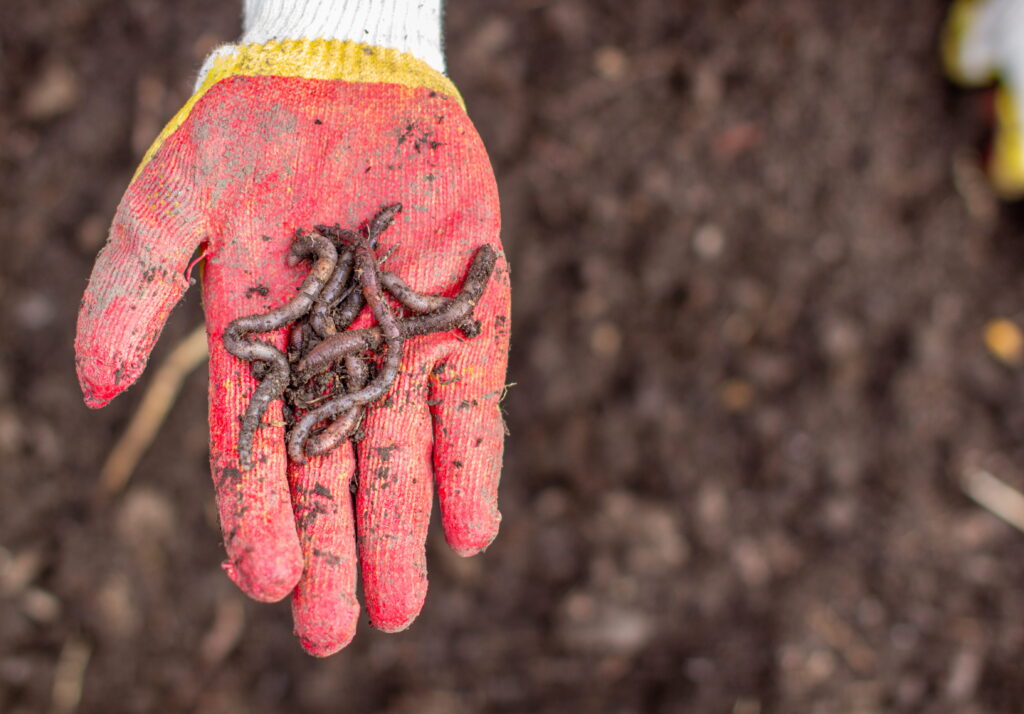
Those heavy clay-loam soils hold moisture exceptionally well, keeping earthworm populations active year-round. No grub treatment touches that buffet.
Grub treatments don’t just fail. They buy the mole time to establish deeper tunnel systems that are harder to remove later.
Using grub insecticides for mole control may also violate federal pesticide label law, which restricts off-label use against wildlife. The poisons are dangerous to pets and other animals in the yard.
How Every “Solution” Actually Performs: A Comparison
Every method homeowners try makes some kind of promise. Here’s how those promises hold up against the one thing that matters: verifiable proof the mole is gone.
| Method | Mechanism | Works Long-Term? | Proof of Removal? |
|---|---|---|---|
| Castor oil repellent | Taste and digestive irritation | ✗ No. The mole displaces and returns after rain. | None. |
| Spray or granular repellents | Scent-based deterrent | ✗ No. Requires constant reapplication. | None. |
| Vibration devices / ultrasonic stakes | Soil vibration disruption | ✗ No. Moles habituate within days. | None. |
| Grub treatment/poisons | Removes grubs from the root zone | ✗ No. Earthworms are what they’re hunting. | None. |
| Physical trapping ✓ Only Method That Works | Mechanical removal from the active tunnel | ✓ Yes. Confirmed removal per visit. | ✓ Yes. Photo documentation of every visit. |
Every commercial alternative leaves the mole alive, leaves the main food source intact, and gives you zero evidence that your money made any difference. If you want the full breakdown of exactly why moles ignore vibration devices within days, I’ve covered the physics and biology there.
The One Thing No Repellent Can Give You: Proof
This is the core problem with every mole deterrent. When the surface damage stops for a week, you have no idea why.
Did the castor oil work? Did the mole shift to a deeper tunnel during a dry spell? Did it move to your neighbor’s yard? The repellent can’t tell you. It leaves you guessing while the tunnel system beneath your lawn stays fully intact.
Mole activity naturally shifts from one part of a lawn to another based on soil moisture and food supply. That temporary lull after applying a product is often just natural mole movement. This is exactly why I read the evidence before setting a single trap.
⭐⭐⭐⭐⭐
“Jeff was out immediately and actually recommended not to install a trap plan yet based on evidence that the mole may have left our property. Sure enough, we had no additional lawn damage. Jeff was spot on with his assessment and we really appreciated his candor and professionalism. We know to call The Mole Hunter if we ever have another problem.”
That’s the difference between selling a service and solving a problem. A bag of granules can’t read your yard. I can.
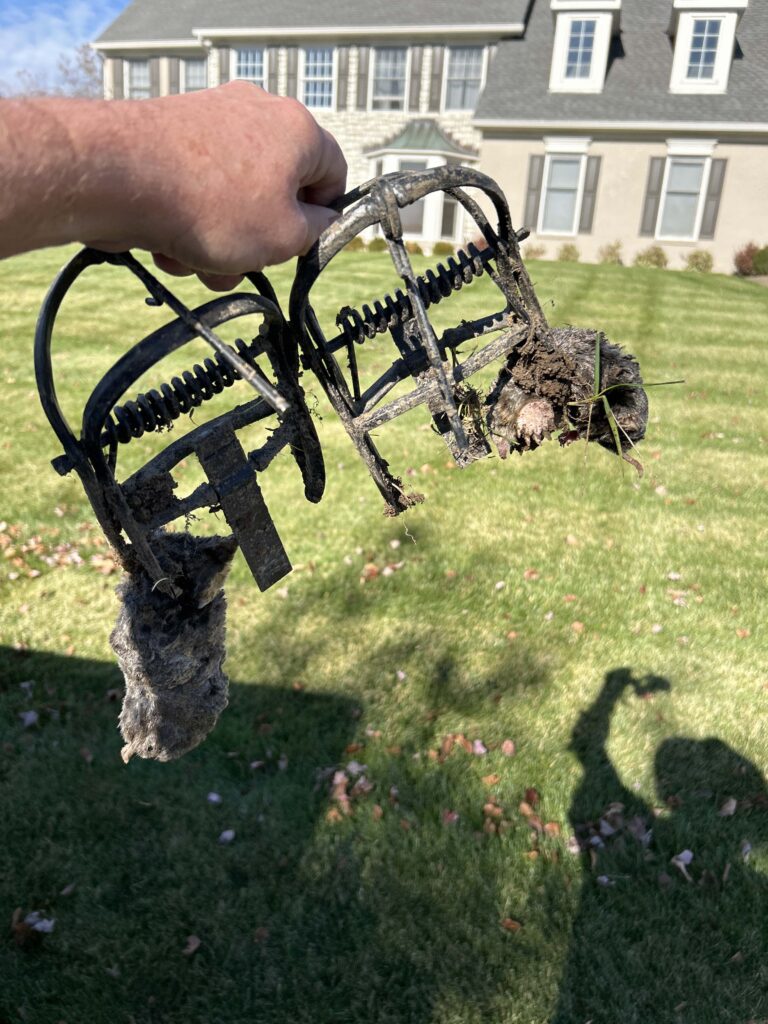
A trap doesn’t leave you guessing. When a scissor-jaw trap triggers in an active run, you have a captured animal. That’s the proof: the damage source has been physically removed from your property.
Trapping is the most effective long-term solution for mole control, and the Ohio State University Extension confirms it: home remedies and chemical treatments have little value and allow animals time to establish and become real problems.
What Professional Trapping Actually Delivers
I’ve spent my career in the green industry in Greater Cincinnati. I trained at Rutgers University, hold a Golf Turf Management certification, and first developed precision trapping techniques managing turf at a local country club where missed calls weren’t an option.
I’ve watched hundreds of homeowners cycle through castor oil, ultrasonic stakes, grub treatments, and every home remedy in between before calling for actual removal. The story is almost always the same: weeks of false hope, ongoing damage, and eventually the same conclusion the research reached decades ago.
How I Confirm Active Runs Before Setting a Trap
Active runs are confirmed using the stomp test: I press down a surface ridge and check whether it rebuilds within 24 to 48 hours. A rebuilt ridge confirms a live, active run worth trapping. A flat ridge means the mole may have moved on.
Traps go into verified active tunnels only. Results are checked weekly, and every captured animal is documented with photos. You know exactly what was removed, when, and where.
Hardware cloth buried eight to ten inches deep can protect specific raised beds and flower beds from burrowing access, but it won’t rid the broader yard of the problem. If mole activity spans your lawn and garden, trapping is the essential step to fully protect your property.
If you’re done with the repellent cycle, call (513) 875-7067 or schedule a removal visit with me and get proof instead of hope.
Frequently Asked Questions
Does castor oil repel moles, or does it just move them around?
It moves them around, temporarily. Moles navigate by touch, not smell, so castor oil’s scent-based mechanism doesn’t disrupt their foraging at all.
When the product washes away after rain, which happens fast in Greater Cincinnati’s wet springs, the mole returns via its existing deep tunnel network. You’ve bought a few dry days, not a solution.
What tips can help me protect garden beds and flower beds from moles?
Hardware cloth buried eight to ten inches below the soil surface is the most reliable physical barrier for raised beds and garden areas. It blocks burrowing access without chemicals and doesn’t require reapplication.
That said, it only protects a defined area. If mole activity is visible across the broader lawn, trapping is the only method that addresses the infestation at its source rather than redirecting it.
How do I know whether a mole is still active before setting traps?
I use the stomp test: press down a surface ridge, mark the spot, and come back in 24 to 48 hours. A rebuilt ridge means the mole is still using that run. A flat one means it may have moved on.
As Ryan Hanson, a homeowner I assessed in the Cincinnati area, found out firsthand, sometimes the right call is no trap at all, and that’s exactly what I told him.