Most homeowners who call me have already spent money on a fix that didn’t work. Castor oil. A sonic spike. Repellent granules, reapplied every few weeks. The moles are still there, and the tunnels keep spreading.
If you’re seeing raised ridges, fresh molehills, or dying grass patches across your Cincinnati-area lawn, moles are almost certainly the cause. Here’s what 30 years of trapping in Greater Cincinnati has taught me: one method works. The rest don’t.
Trapping Is the Most Effective Method for Mole Control
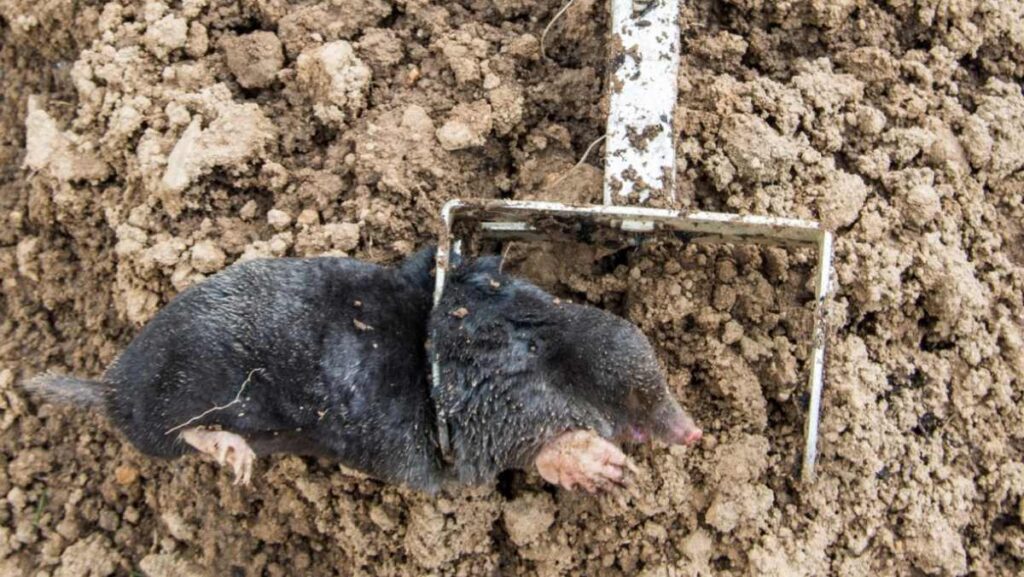
According to a Rutgers Cooperative Extension fact sheet on mole management in turf and gardens, trapping is the most effective method to eliminate moles. No repellent, no poison, no home remedy comes close.
A trap targets the mole itself, not its food source or scent trail. A properly set trap stops activity at the source without introducing toxins into your soil. Check traps every 24 hours, reset as needed, and repeat until activity stops.
If you want to see exactly what that process looks like from start to finish, here’s a full walkthrough of how professional mole trapping works.
What this means for your lawn: Traps are the only method that removes the actual animal. Everything else delays the problem or doesn’t affect it at all.
Understanding Mole Tunnel Systems

Moles dig deep tunnel systems and nest below the frost line, repairing any damaged section within one to two days. Cone-shaped piles of excavated soil pushed up from below signal deep tunnel networks underneath. Raised surface ridges mean a mole is actively feeding near the top.
Scissor Traps vs. Harpoon Traps
Two trap designs cover most situations. Scissor traps work best in deep mole runs, triggering as the mole pushes through. Harpoon traps are easier to set and suit surface tunnels, driving downward when the mole disturbs the trigger plate.
Not sure which design fits your situation? This breakdown of the different trap types walks through when each one makes sense.
Use scissor traps where you see cone-shaped excavated soil mounds. Use harpoon traps along shallower surface ridges closer to the turf.
How to Identify Active Tunnels
Finding the right spot matters more than which trap you use. Press any tunnel flat with your foot and mark the spot. Check it 24 hours later. If it’s raised again, the tunnel is active. That’s where your trap goes.
Look for the following signs of active mole feeding: fresh molehills, raised ridges, soft or spongy turf, and small holes or dirt mounds at the surface. If you’re not certain whether you’re dealing with mole damage or something else entirely, a closer look at what mole holes actually look like can help you confirm before you set a trap.
Active tunnels tend to run straight along fence rows, garden borders, or walkway edges. In Greater Cincinnati, mole pressure peaks in early spring and fall, when Ohio’s freeze-thaw cycles push earthworms toward the surface, and moles follow. Knowing when moles are most active in your region lets you time your trapping for the two windows where you’ll see the fastest results.
Why Mole Repellents and Home Remedies Don’t Work

Castor oil. Ultrasonic devices. Vinegar. Chewing gum. Most people have heard at least one of these touted as a fix. Moles don’t care about any of them.
Vinegar evaporates too fast to affect soil chemistry, and chewing gum pushed into tunnels is a folk remedy with no scientific basis. The rest need a closer look.
Castor Oil and Chemical Repellents
Castor oil is the one I get asked about most. It’s sold on the idea that its active ingredient disrupts mole scent trails or makes the soil unpleasant to feed in.
What I’ve seen in practice: it shifts the mole. The tunneling moves a few feet over, sometimes toward a neighbor’s yard, and resumes within a week or two. You haven’t solved the problem. You’ve redirected it.
Granular and spray repellents follow the same pattern. Some hold for a few weeks if conditions are dry, but Greater Cincinnati’s wet springs and clay-heavy soils flush them quickly. By the time you reapply, the mole has already extended the tunnel system.
Ultrasonic Devices and Poison Bait
Moles are essentially blind and navigate almost entirely by vibration and smell. A device pulsing in the ground is a nuisance at best. Moles habituate or route around it, usually within the same yard. The science behind why ultrasonic repellent devices consistently underperform is worth reading before spending money on one.
Some brands sell mole bait laced with poison as an alternative to trapping. The problem: moles are highly sensitive to anything in their tunnel that doesn’t belong. They’ll push foreign objects aside or backfill around them. I’ve shown up to inspections where mole bait was sitting untouched in a tunnel the mole was actively using. Beyond the reliability issue, the toxins stay in the soil and put pets and kids at real risk.
Grub Control and Nematodes
Nematodes (microscopic worms used to kill soil grubs) attack the wrong target entirely. Moles don’t eat grubs as their main meal. Earthworms make up the bulk of a mole’s diet, which is why eliminating grubs does nothing to reduce mole activity in your yard. Grub control products leave the real food supply completely untouched.
Poisons carry the same problem: toxic residues in your soil, real risks to pets and children, and still no reliable path to reaching a mole in its deep tunnel system. Everything else is a gamble. Trapping is the only method with a consistent track record.
How to Prevent Moles From Coming Back
Trapping removes the moles currently in your yard. Prevention makes your property less attractive to the next ones.
Why Southwest Ohio Yards Are Especially Vulnerable
Greater Cincinnati’s clay-loam soils hold moisture well after rain, keeping earthworm populations near the surface year-round. Irrigated lawns in places like Indian Hill, Mason, and West Chester make it worse. Consistent soil moisture is prime mole territory even during dry stretches.
This is part of why I get calls every spring from the same neighborhoods. The better your lawn looks, the more attractive it is to moles. Unlike voles or mice that feed on seeds, bulbs, and plants, moles eat exclusively below ground.
The differences between moles and voles go well beyond diet, which matters when you’re trying to figure out what’s actually damaging your lawn. The structural tunneling damage moles cause is distinctive once you know what to look for.
Practical Deterrents That Help
| Prevention Method | Why It Helps |
|---|---|
|
Reduce irrigation frequency
|
Less surface moisture means fewer earthworms near the top |
|
Improve yard drainage
|
Standing moisture after rain creates ideal mole feeding conditions |
|
Coordinate with neighbors
|
Moles cross property lines freely in connected Ohio subdivisions |
|
Install underground mesh barriers
|
Galvanized hardware cloth buried 18 to 24 inches deep blocks moles from the garden beds |
Routine mowing and periodic soil aeration (pulling small plugs to loosen compaction) also reduce the soft, loose soil that moles prefer. Neither eliminates an active infestation, but both reduce the conditions that draw new moles in.
When to Call Me at The Mole Hunter

If new tunnels keep forming despite consistent trapping, the infestation is more established than a solo approach can handle. Moles returning season after season mean the conditions in your yard keep drawing them in, and it’s worth having someone figure out why.
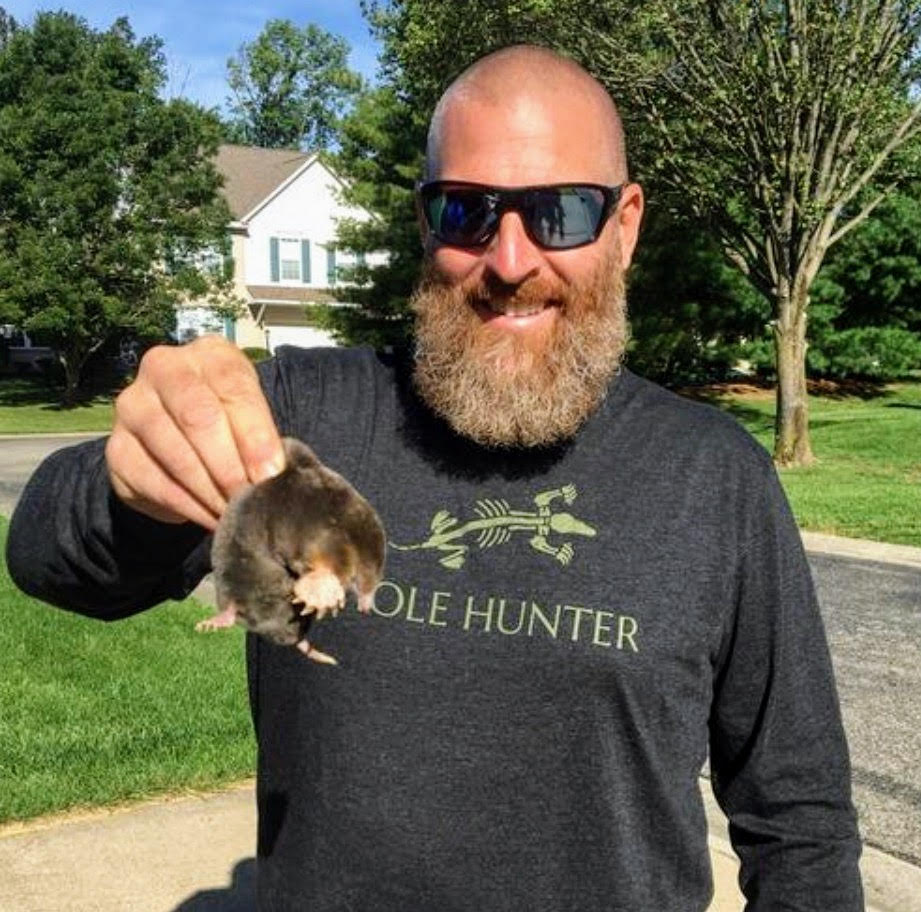
I’m Jeff Cooper, owner of The Mole Hunter, and I’ve been doing this work since 1995. I first learned to locate and catch moles while maintaining the grounds at a local country club in Greater Cincinnati. Every yard has a pattern. Moles follow the earthworms, and earthworms follow the moisture. Once I understand that map in your specific yard, I know exactly where the traps go and what’s been keeping the moles coming back.
A professional inspection means identifying your active tunnels, mapping nest locations, and building a plan to remove moles based on what’s actually happening in your lawn, not a generic checklist.
Schedule a Free Inspection
If tunnels are still forming or the damage has spread beyond a section or two, it’s worth having me walk the yard with you. Most inspections take less than an hour. I’ll tell you what I’m seeing, whether it’s actually moles, and what a realistic plan looks like, including whether you even need a professional involved.
I’ve worked with homeowners across Cincinnati, Lebanon, Milford, and Loveland, and the first step is always the same: figure out exactly what you’re dealing with. I always give a thorough and honest assessment, even if moles turn out not to be the culprit. Here is a recent review from a homeowner who reached out:
⭐⭐⭐⭐⭐
All I can say is “WOW” on the quick response from my request to Jeff arriving at my home in less than 48 hours. Jeff walked my entire yard, explained the damage that I was seeing which was a lot. Fortunately, it was not moles but another rodent that definitely did time on my property. He gave me information, suggestions and ways to prevent this from happening in the future. I would highly recommend The Mole Hunter to anyone having mole issues. Their expertise, how they explain how the moles work, does damage and then how they can eliminate them from your property is precise and very thorough. I have already recommended them to my neighbors and relatives.
I wish I could have rated them higher than 5 stars!!!!!!
If you suspect a mole problem, I offer a free on-site inspection. We will just walk your yard together with absolutely no commitment. Call me at (513) 875-7067 today.
Frequently Asked Questions About Getting Rid of Moles
What is the fastest way to get rid of moles in your yard?
Set a trap in a confirmed active tunnel, one you’ve pressed flat, marked, and verified has been re-raised within 24 hours. That’s where the mole is moving right now. A properly set trap in an active run can stop activity within a day or two.
Everything else (repellents, ultrasonic devices, mole bait) works on the theory that you can make your yard unpleasant enough that the mole leaves. In a Southwest Ohio yard with good soil moisture and a healthy earthworm population, that’s not a realistic outcome. The mole has no reason to leave.
Why do Cincinnati-area yards seem to have worse mole problems?
Greater Cincinnati’s wet springs and clay-heavy soils keep earthworms concentrated near the surface year-round, and routine lawn irrigation extends that window through summer. Mature neighborhoods like Indian Hill, Loveland, and Mason see the most persistent activity because healthy irrigated turf is exactly what moles look for.
Are moles dangerous or harmful to people?
Moles are completely harmless to people. They don’t bite, and they aren’t rodents like rats or mice. Most people never see the animal itself, only the tunneling damage left behind.
That said, mole activity causes real structural damage to turf, roots, and soil. The harm is to your yard, not your household.