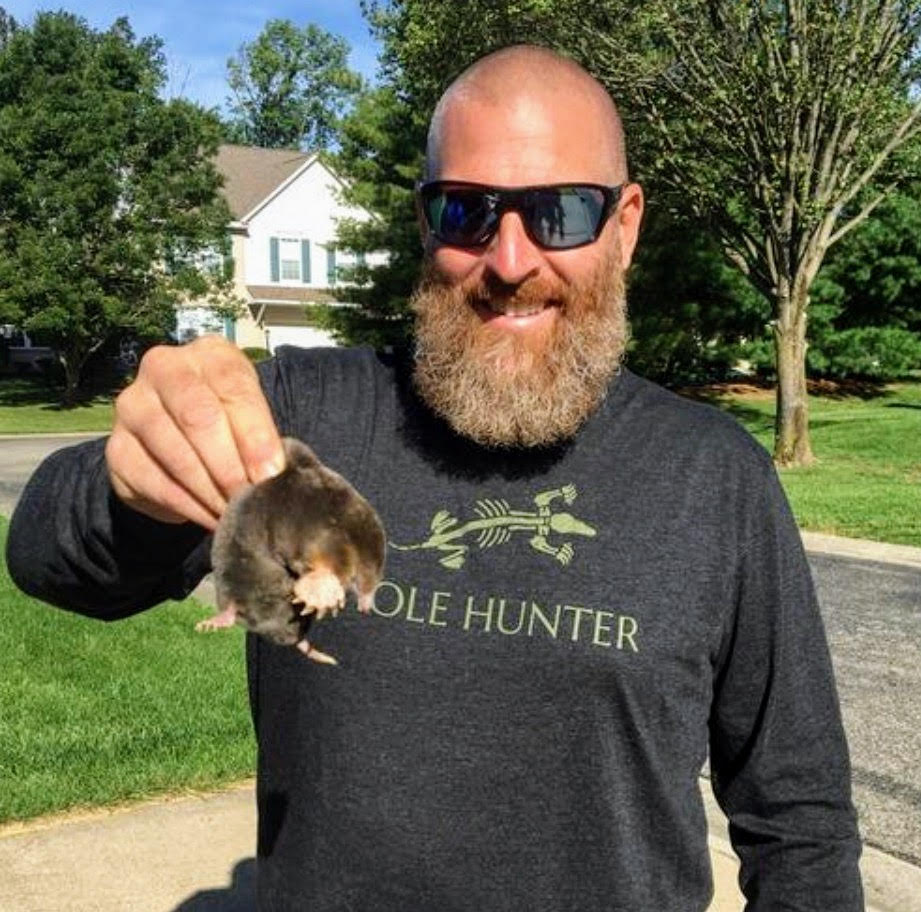
I’ve pulled thousands of moles out of Cincinnati-area yards over 25 years, and this is the question I hear most. The eastern mole, the species behind almost every molehill in this region, lives three to six years in the wild.
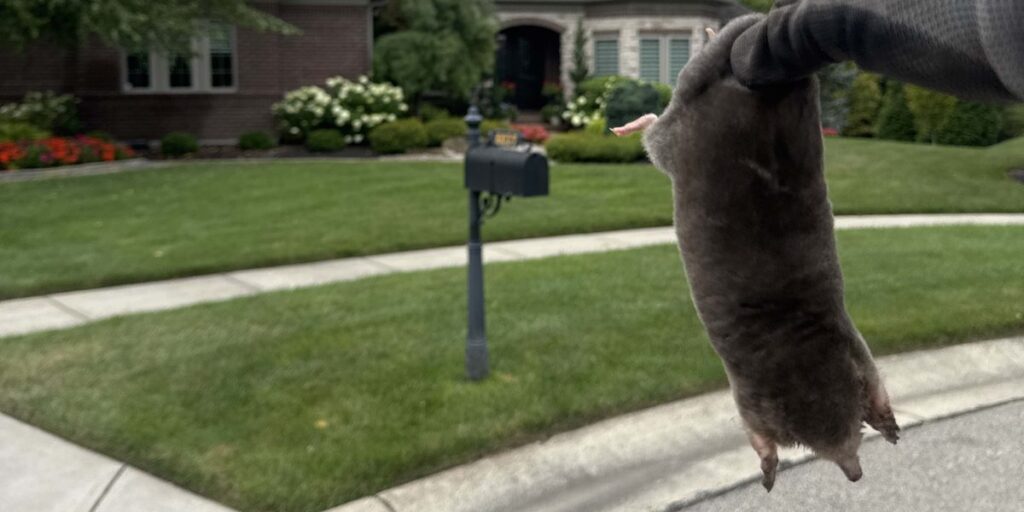
Most moles don’t make it past three. A mole that clears its first year can push all the way to six. That range means a mole already in your yard isn’t a problem that fixes itself next month.
Why the Lifespan Numbers Don’t Match
Search this, and you’ll see two different answers before you click a result: one box says six years, another says three to six. Neither explains why.
| Where you’ll see it | The number it gives | What it’s actually measuring |
|---|---|---|
| Google answer box | 6 years | A maximum, shown as if it were typical |
| Google AI Overview | 3 to 6 years | The honest span, but with no hint that 3 is the average and 6 the maximum |
| Washington DFW | 4 to 6 years | Correctly called a maximum |
| Georgia DNR | More than 6 years | What a mole that survives its first year can reach |
| UK sources | 2 to 3 years | The European mole, a different animal in a milder climate |
Half of all eastern moles die within their first six months, wildlife researchers who tracked wild mole populations have found. Young moles leave the nest at four to five weeks old and have to find their own territory, traveling above ground to do it. That’s when predators or bad conditions catch up with most of them. The early die-off is what drags the average down to about three years.
A mole that survives that first year is a different animal. The same research that pins down that early die-off also aged the survivors by their teeth: tooth wear leaves growth rings, much like the rings in a tree stump, and the long-lived ones stand out, females out to 6.2 years and males to 5.2. Six years isn’t a fluke. It’s what a mole that clears the dangerous stretch goes on to do.
If you’re seeing a fresh mound this spring, the mole behind it has already survived its riskiest year and isn’t going anywhere soon.
How Long a Mole Stays in Your Yard
A mole stays in your yard for as long as it lives, which means years. Once it secures a territory with loose soil and a steady worm supply, it has no reason to move on.
I’ve watched the exact same tunnel system get reworked spring after spring in one Loveland backyard, three seasons running, before the homeowner finally called.
Moles are solitary animals, so what looks like a mole infestation is usually one long-lived mole extending its tunnels. Washington’s wildlife agency puts it plainly: an average city lot rarely holds more than one male or two females. Those widening mounds are one animal working its own network over time, not a colony multiplying.
The Eastern Mole’s Breeding Clock
Sexual maturity hits at about ten months for both male moles and female moles, so a mole can breed during its first winter. The breeding season, sometimes called mating season, runs from late winter into early spring, followed by five to six weeks of gestation. Ohio litters show up from mid-April through May.
Ohio is home to three of the seven mole species found in North America: the eastern mole, the hairy-tailed mole, and the star-nosed mole. OSU Extension calls the eastern mole far more common than the other two, and it does most of the yard damage you’ll ever actually see.
How Fast Do Moles Reproduce?
Moles reproduce slowly: one litter a year. The Ohio Department of Natural Resources puts that litter at four or five baby moles for this region, out of the nest in about a month. They stay solitary from then on.
What Kills a Mole Underground
Underground, an adult mole has almost nothing to worry about. It’s insulated from weather and hidden from predators until it’s forced to the surface. Moles surface on their own schedule, and that surfacing is the window a predator gets to work with.
Owls, hawks, foxes, snakes, and the occasional cat or dog, the domestic animals that catch one by chance, will take a mole that breaches the surface or gets caught when a shallow tunnel collapses underfoot. Flooding can drown a mole in its deeper underground burrows, and it drops deeper still to ride out extreme heat and cold. Drought sends it digging through hardened clay to reach earthworms retreating from the dry topsoil, burning energy it can’t easily replace.
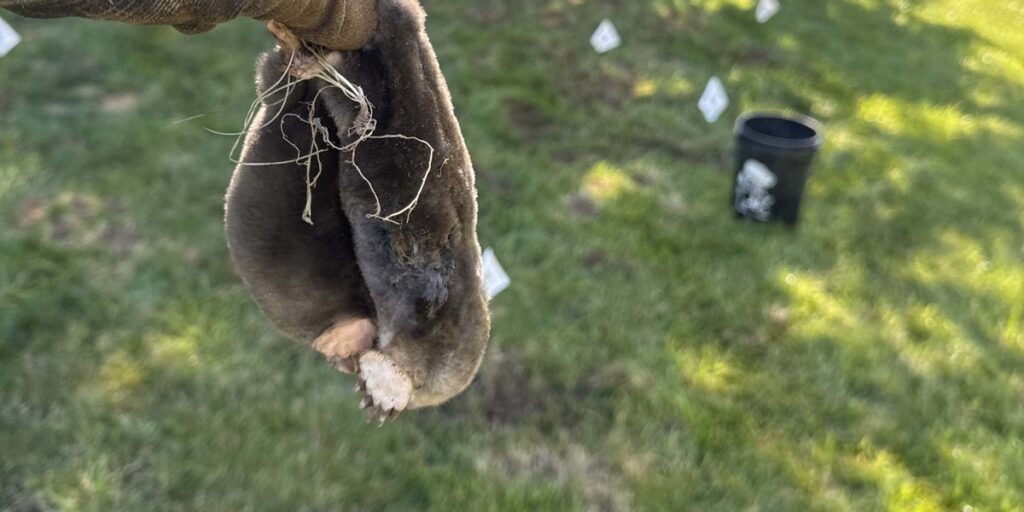
Eastern moles are small mammals with cylindrical bodies, velvety fur, small hind feet, and no visible external ears, all built for a secluded life underground. Built like that, a mole rarely gives a predator the chance to catch it above ground.
The Tunnels and the Starvation Clock
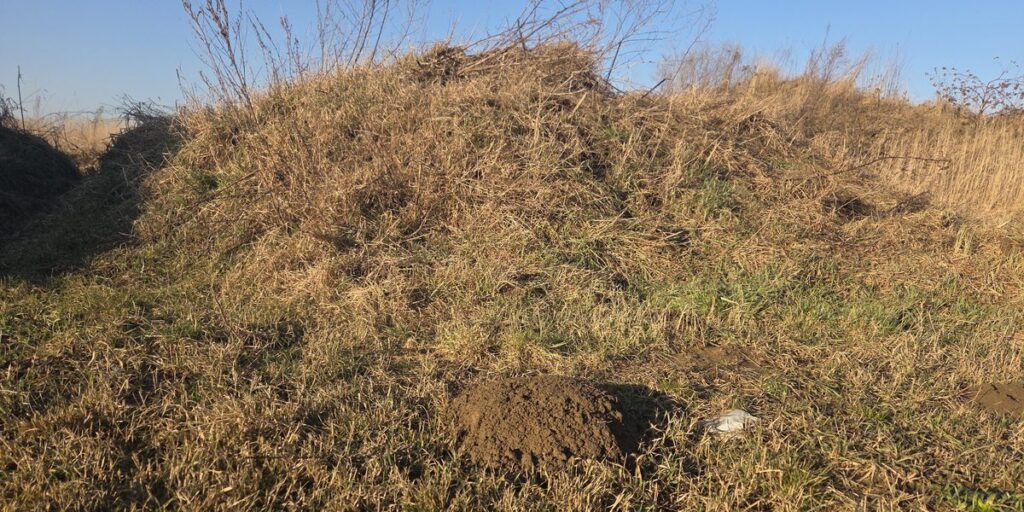
Mole tunnels run in two systems beneath the surface ridges you see. Shallow feeding tunnels are where moles eat, and they’re what raise those ridges. Deep tunnels, the mole’s underground burrows, serve as permanent living quarters and don’t disturb the soil surface at all. Main runways often follow property edges like fence lines or foundations. Soil particles pushed up from the deeper digging travel up through vertical tunnels and pile into the cone-shaped mounds, the molehills, by each entrance.
Moles eat earthworms and grubs and little else, yet their tunneling still tears through a lawn’s grass roots and plant roots along the way, even though the mole isn’t after them. What moles actually eat covers that feeding routine in more depth.
To survive, a mole has to eat 25 to 40 percent or more of its body weight every day, a figure Georgia’s state wildlife agency has documented in the field. It can’t store fat and doesn’t hibernate, so it’s constantly digging toward fresh food, 365 days a year. In loose dirt, that means up to 18 feet of new tunnel an hour.
An eastern mole can live six years and still die if it goes without food for 12 hours. A six-year lifespan and a 12-hour starvation window belong to the same animal. Wait one out and you lose.
The digging never lets up, for the same reason. A mole can’t take a season off, so the damage under your feet keeps compounding for as long as it’s there.
Why Do Moles Die in Captivity?
Moles die in captivity because they can’t replicate the constant foraging their metabolism demands, and the stress of confinement makes it worse. Even under careful care, captive eastern moles rarely last past two years, well short of their wild potential.
Winter Digging Moves Below the Frost Line
A quiet yard in December doesn’t mean the mole is gone. Mole activity just moves below the frost line as the ground freezes, the mole trailing the worms down into soil that’s still warm enough to work. See how mole activity shifts through the colder months for the full picture. It’s simply out of sight for a while.
Why Mole Control Means Watching for Other Moles
When a mole is caught by a predator or trapped, it leaves behind a compacted tunnel network that stays sound for years. Those leftover tunnels are what keep mole control from ending the day a trap goes off.
The Washington Department of Fish and Wildlife states plainly that other moles will move into that territory if the habitat stays attractive.
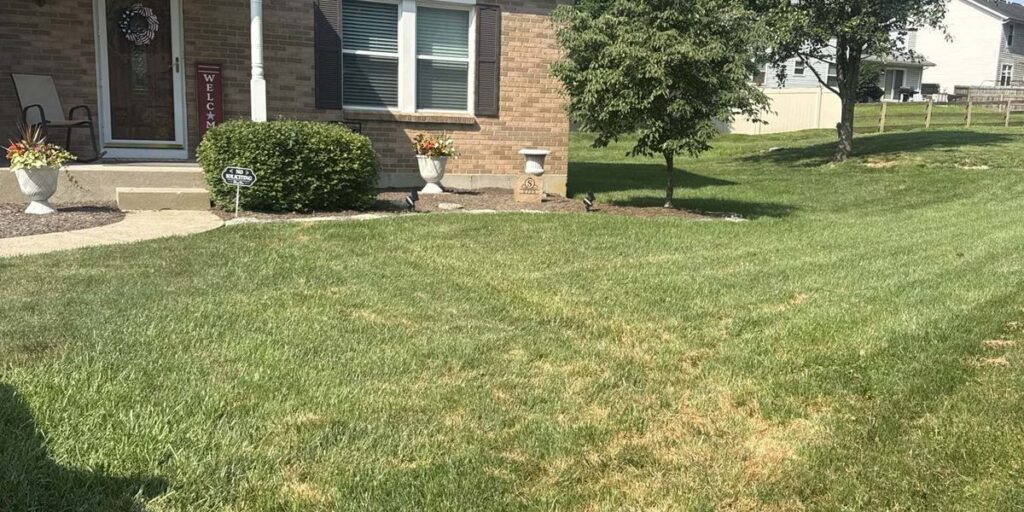
Researchers at the Ohio State University Extension describe the same pattern: a disturbed mole goes quiet, then comes back when you least expect it.
Mole traps still work. They stop the active damage immediately. What keeps this from being a one-and-done job is that leftover burrow system, so ongoing trapping is about catching the next mole before it gets its own multi-year head start.
Comparing Lifespans Across Mole Species
Eastern moles are native to North America, but not every mole matches this profile. The star-nosed mole turns up in wetter parts of Ohio without ever working a lawn the way the eastern mole does, while western species like the shrew mole and the coast mole never reach the state at all.
| Species | Average wild lifespan | Maximum wild lifespan |
|---|---|---|
| Eastern mole | About 3 years | 6.2 years (female) / 5.2 years (male) |
| Star-nosed mole | 3 to 4 years | About 4 years (limited data) |
| Naked mole-rat | 10+ years | 32 to 37 years |
That naked mole-rat figure shows up in search results for this exact question, but it’s a colony rodent from East Africa, nothing like anything digging in a Cincinnati lawn.
A Wet Summer Means a Longer-Lived Mole
Ohio just logged its highest statewide precipitation total on record for August. The state averaged 6.88 inches of rain, 3.41 inches above normal and nearly double the typical monthly amount, per the State Climate Office of Ohio’s August 2026 summary. Cincinnati ran unusually warm through that stretch too, with average temperatures reaching the upper 70s.
Saturated, warm soil keeps earthworms near the surface, so a mole spends less energy chasing food and more extending its tunnels. The same digging that wrecks a lawn helps soil aeration elsewhere. Small comfort when it’s your yard doing the aerating.
"We used the service and they solved our mole problem. Brad was our technician and he was awesome friendly, professional and very knowledgeable!"
The Cost of Ignoring Mole Damage
One mole can dig for as many as six years, and all that time adds up to serious lawn damage. Waiting it out just buys you more seasons of mounds and dead patches. Ongoing mole control protects the lawn far better than a single visit ever could.
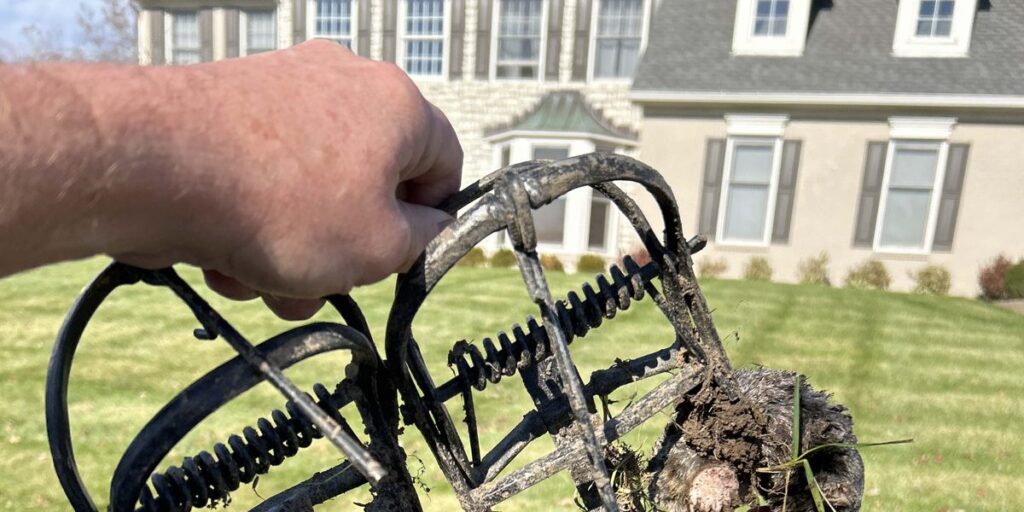
Trapping is still the most reliable way to stop moles from doing more damage to your lawn. If you're seeing fresh ridges, book a free on-site inspection and I'll walk the property myself, or call (513) 613-2289.