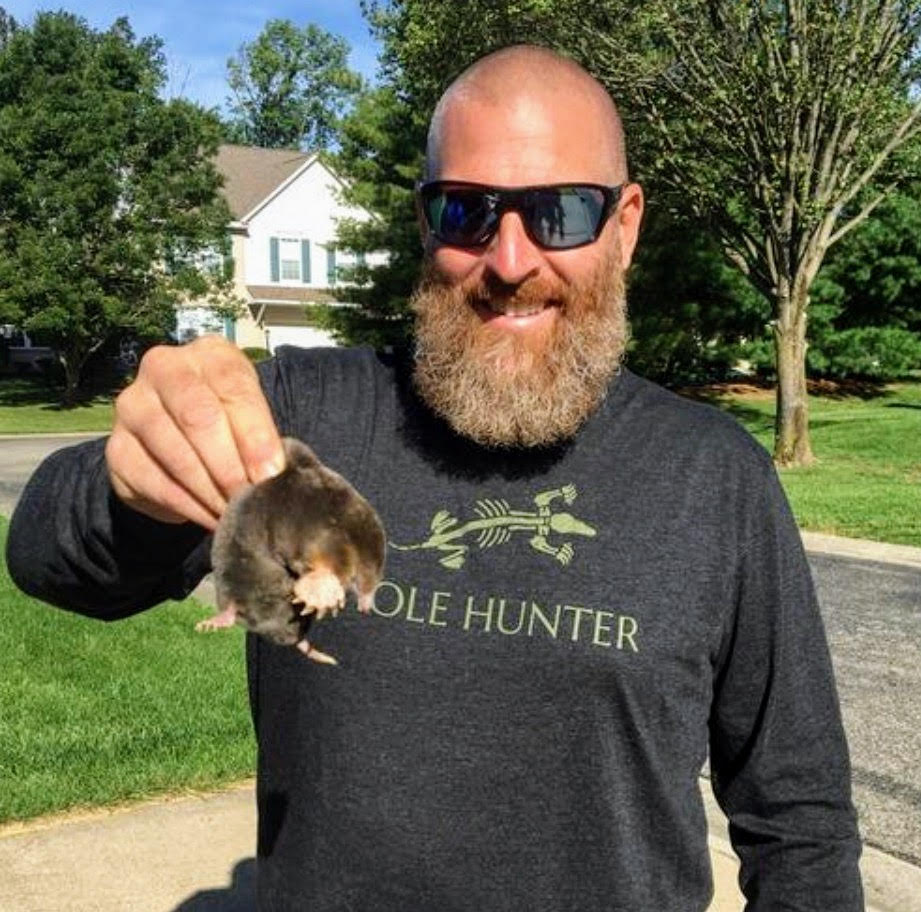
If you’re standing over a fresh mound wondering whether a mole or a gopher made it, I’ll save you some trouble: around here, it’s a mole. I’ve walked enough Cincinnati yards to know pocket gophers don’t live in southwest Ohio, so most of the guesswork is settled already, no close look at the dirt needed. The big national pest control sites won’t tell you that, because they’re writing for the whole country, where either animal is on the table.
Are There Pocket Gophers in Ohio?
No, they don’t. Pocket gophers aren’t an Ohio animal, and their range runs out well west of here.
The Ohio Department of Natural Resources backs this up: the Eastern mole is native here, and it does well in the moist, sandy loam we’ve got all over the area. It aerates the soil and eats insects, which sounds helpful right up until its tunneling chews through your turf.
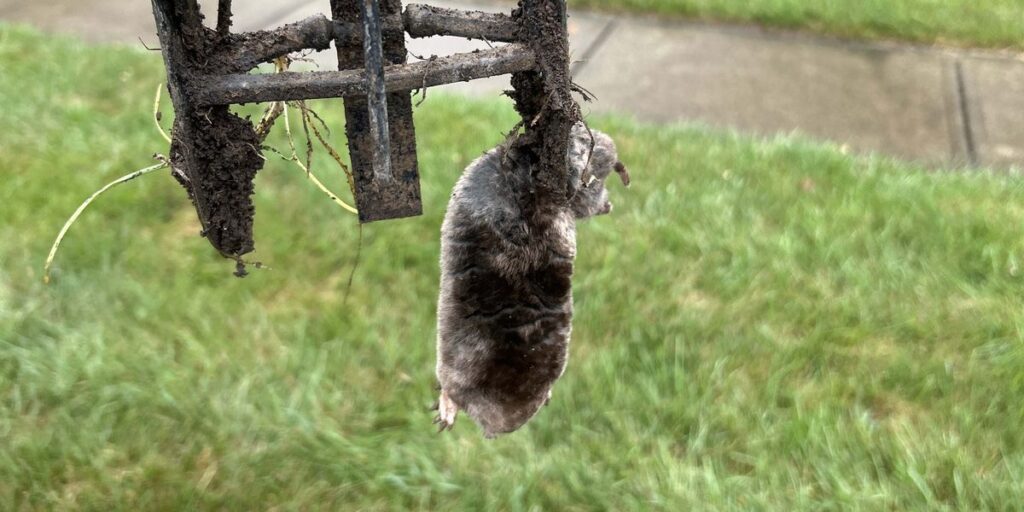
We’ve also got the star-nosed mole, a semiaquatic one that swims and hunts earthworms and aquatic insects near streams and lakes, plus the hairy-tailed mole. That’s the state’s whole lineup of native burrowers, and not one of them is a pocket gopher.
The closest pocket gophers to us live out in the prairies of Illinois and northwest Indiana, and that’s still a long way west of any Cincinnati yard. University of Illinois Extension traces how shifting river channels carved up the plains pocket gopher’s range over the years, leaving Illinois populations scattered. Over in Indiana it hangs on in a patchy strip of the northwest, where the state lists it as a species of special concern.
I still see folks on the local forums asking how to get rid of a “gopher” leaving volcano-shaped mounds of fresh dirt. Those mounds already identify the animal: it’s a mole.
Why “Gopher” Still Gets Used for Everything in the Yard
It’s geography more than anatomy that keeps this going. Around the Midwest, “gopher” is the word people slap on anything that burrows. Take the thirteen-lined ground squirrel, which some folks here call a “striped gopher”: it digs open holes and runs around aboveground in daylight, which no mole ever does.
Groundhogs dig burrows with more than one entrance and several passages, sometimes over 45 feet of tunnel five feet down, with a big mound of dirt at each opening. Chipmunks are the opposite: small, mound-free holes by your porch or foundation, because they haul the dirt off in their cheek pouches instead of pushing it up top. Any of these turn up in a Cincinnati yard far more often than a gopher will.
Is It a Mole or a Ground Squirrel?
If you’re actually watching the animal sit out by an open hole in daylight, with no mound of dirt around it, that’s a ground squirrel. A mole almost never surfaces, so with moles you’re going by what they leave behind, not by spotting the animal.
Mole Mounds vs Gopher Mounds: How to Tell Them Apart
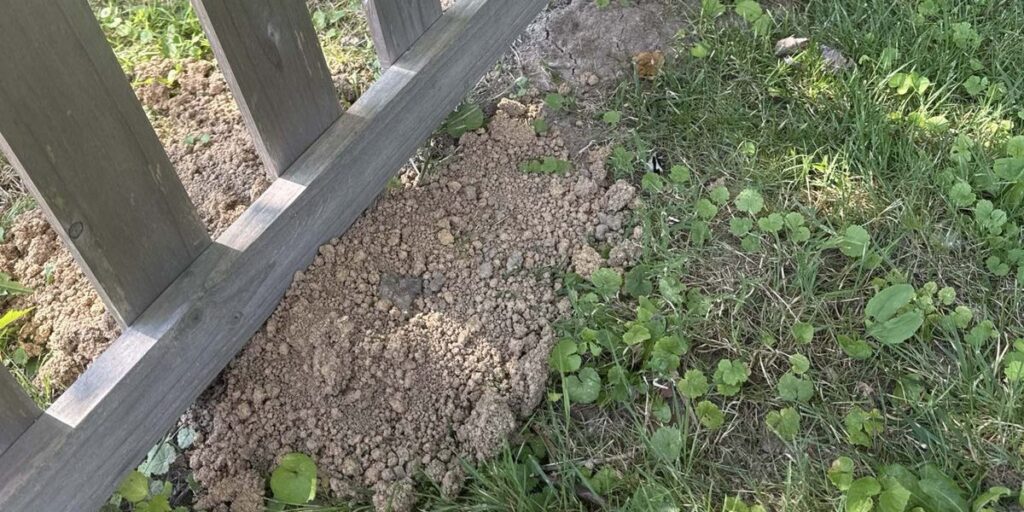
Once you know what to look for, a molehill and a gopher pile look nothing alike, and the difference comes down to how each one moves dirt. A mole shoves soil straight up a vertical shaft from its tunnel system, so you get a small, cone-shaped mound of chunky, packed dirt with the exit hole hidden right in the middle. Most people feel it before they see it: that soft, spongy give underfoot, usually before they’ve even noticed the mound.
Gophers work at an angle, so their piles come out fan-shaped or crescent-shaped, made of fine, powdery soil, and gopher holes show that telltale plug off to one side. A gopher pile runs bigger than a molehill, too. You won’t see one here, though, because Ohio doesn’t get real gopher infestations.
| Feature | Eastern Mole | Pocket Gopher |
|---|---|---|
| Mound shape | Volcano-shaped, symmetrical | Fan or crescent-shaped |
| Mound soil | Chunky, compacted chunks | Fine, powdery dirt |
| Exit hole | Hidden in the center | Visible plug, off to one side |
| Tunnels | Mole tunnels stay shallow, right beneath the turf | Gopher tunnels run deep, built around one main tunnel |
| Diet | Earthworms and grubs | Roots and tubers, plus surface vegetation |
| Plant damage | Collateral, from root drying | Direct, roots eaten or pulled under |
| Body | 6 to 8 inches, paddle-shaped feet with no visible ears | 5 to 14 inches, visible ears with fur-lined cheek pouches |
| Ohio range | Common statewide | Not established in Ohio |
Do Gophers Make Ridges in the Lawn?
Gophers leave fewer surface clues than moles, because they tunnel deeper and skip the shallow runs moles use to hunt. Those raised ridges snaking across a lawn are the mole’s surface tunnels, pushed up as it hunts earthworms and eats grubs right under the surface.
What Each Animal Eats, and Why That Explains the Damage
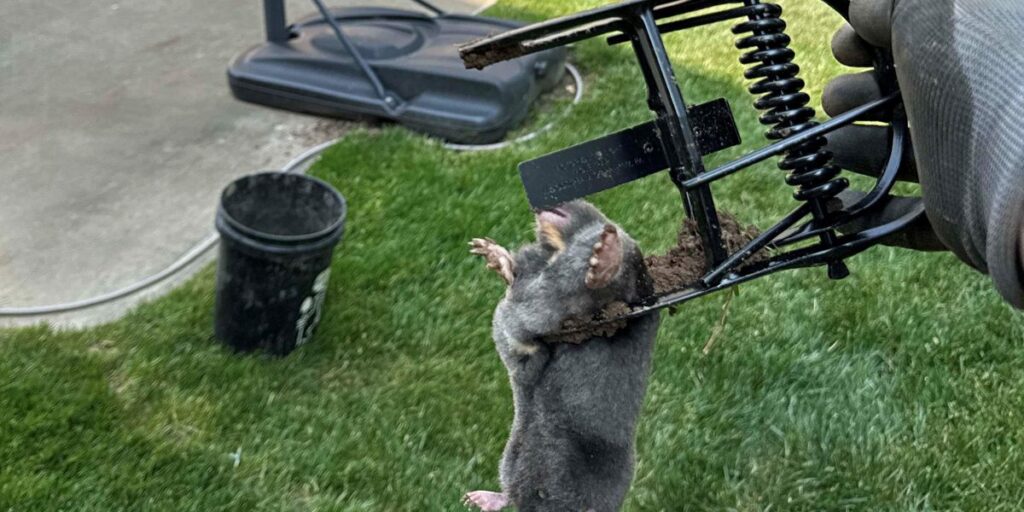
Moles are insectivores, distant cousins of shrews, and they live almost entirely on earthworms and grubs. Chasing that food means tunneling nonstop, which is how two or three moles can tear up a whole yard on their own. Here’s the part people get wrong: moles don’t eat plant material of any kind. Any damage you see is collateral, because the tunneling shears root hairs and dries out the grass and plant roots without the mole ever touching a plant.
Gophers are rodents, and that changes everything. They go after roots and tubers, plus whatever surface greenery they can reach, and since their incisors never stop growing, they’ll gnaw on underground utility cables and irrigation lines to keep them filed down. In bad cases, they drag whole plants down into the soil to eat, wrecking flower beds and vegetable gardens as they go. So if your hostas are vanishing into the ground, or a young tree gets chewed off at the root crown, you’re dealing with a rodent, not a mole, and it’ll do far more damage to your plants than a mole ever could.
Could It Be a Vole?
Voles get lumped into the same “gopher” mix, too. They’ll move into the burrow systems a mole already dug and chew shallow, trench-like runways through the grass, but they never build a mound of their own. If your plants are getting eaten rather than only wilting, and you’re seeing those shallow trenches instead of raised ridges, take a look at our mole vs vole identification guide.
How Moles or Gophers Behave in a Cincinnati Yard
Both are solitary, small mammals that spend nearly their whole lives underground. And the numbers surprise people: a typical Cincinnati yard has only two or three moles working it at a time, even when the mess looks like an army moved in. Moles don’t hibernate. They stay busy all year, following earthworms down below the frost line in winter, and they peak in spring and fall when the topsoil is moist. If your lawn goes quiet in midsummer, it just means the worms have dropped deep.
I’ve spent more than 30 years in the green industry, and back in 1995, while keeping up the grounds at a local country club, I first learned how to catch moles by hand, a skill I had down years ahead of any trap. That hands-on background is what tells me which species is responsible, so the recommendation is never a guess.
Mole Control: What to Do Once You Know It’s a Mole
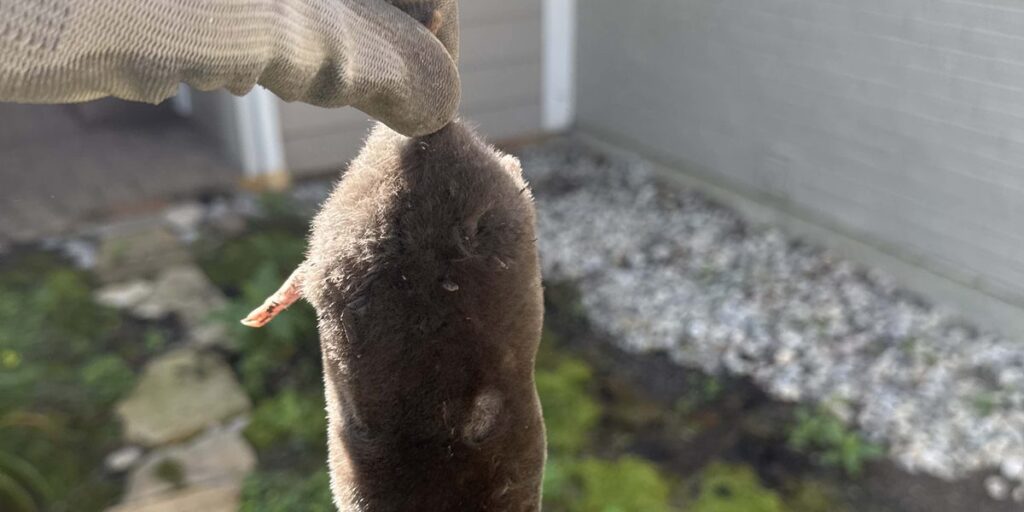
Once you know it’s a mole, trapping in the active tunnels is the only thing that actually works to control moles. Everything else only shoves the animal to another corner of the yard for a while. You’ll see castor oil, dish soap, even Juicy Fruit gum pushed as fixes online. None of them reliably moves a mole. I set traps right in the runs a mole is using that day, and the inspection’s always free, kid-safe, and pet-safe.
Poison’s not my answer for gophers, and my lane is moles and trapping, plain and simple. If it turns out you’ve got a gopher, or one of the other animals people mistake for moles, I’ll say so and point you toward the right kind of wildlife pro. Moles are all I do, which is exactly why you can trust the call I make in your yard.
"The Mole Hunter team from start to finish are all top notch! Amanda is quick to respond, the technicians are all excellent, sending pics, taking the time to chat with you and explain their findings when you happen to run into them. All in all an excellent team, will use again should the moles return!"
If fresh mounds or ridges have turned up in your yard, request a mole inspection, and I'll confirm what's actually digging down there. Nothing gets set until I do. Call (513) 613-2289 and I'll walk the yard with you myself.