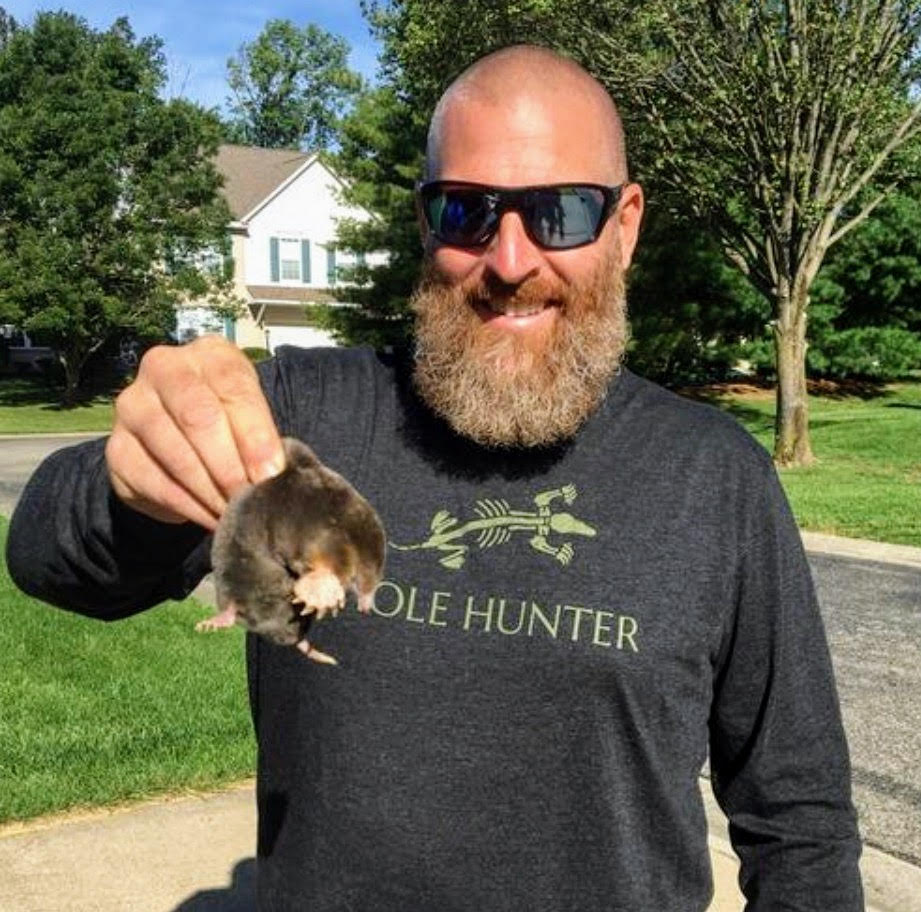
Here’s what most gardeners get wrong: moles aren’t eating your tomatoes, carrots, or tulip bulbs. Moles eat insects, grubs, and earthworms. That’s it. Their teeth and digestive systems aren’t built for plant matter.
But that doesn’t make them harmless. The plant damage moles cause in garden beds is real, it happens fast, and most gardeners misread it entirely. If you’re growing vegetables in the Greater Cincinnati area, here’s what’s actually happening underground.
Mole Tunnels Create Lethal Air Pockets Around Roots
Moles don’t chew plant roots. Their skulls and teeth are built for piercing insect exoskeletons and gripping slippery worms, not grinding fibrous roots.
What actually kills the plants is the tunnel itself.
As a mole pushes through the top few inches of soil, it shoves dirt upward and sideways to create raised tunnels along the soil surface. This opens underground voids, called air pockets, directly in the root zone.
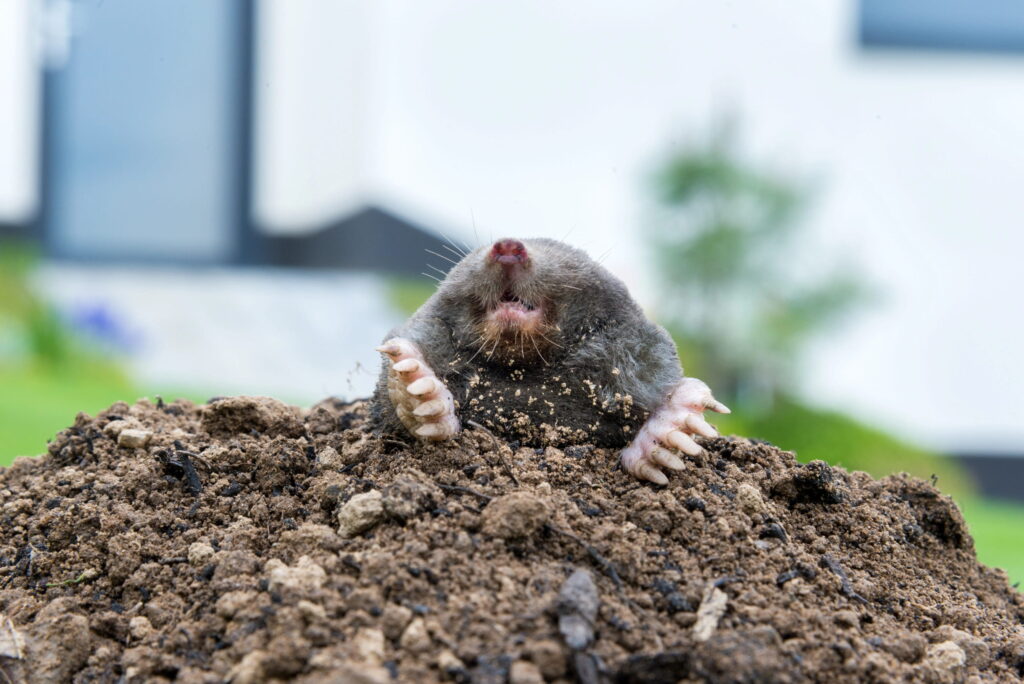
Roots need constant contact with damp soil to pull in water. When a mole tunnel disturbs roots and breaks that contact, the root system can’t absorb moisture even if the surrounding ground is still wet. The plant keeps losing water through its leaves in the sun, but the disconnected roots can’t resupply it. What follows looks like drought stress or disease: rapid wilting, yellowing, and collapse.
Shallow-rooted seedlings and fresh vegetable transplants are especially vulnerable. The force of the shifting soil can shove them entirely out of the ground, leaving root crowns exposed to open air and direct sunlight.
Voles, Not Moles, Are Eating Your Plant Roots
If you’re finding roots cleanly chewed off, bulbs missing, or whole plants yanked underground, that isn’t mole damage. It’s almost always a vole.
Voles are small rodents with prominent orange front teeth built for slicing through fibrous plant stems and roots. They’re strict herbivores, and they’re very efficient at what they do.
The frustrating part: voles routinely travel through mole tunnels to reach plant roots without ever surfacing. You see the mole’s raised ridges, the plant dies with its roots chewed off, and the mole takes the blame for something a vole did using the mole’s own infrastructure.
In Ohio’s river valley suburbs, including areas like Loveland, Mason, and Symmes Township, where well-drained clay-loam soils and heavy tree cover support dense worm populations, both pests often work the same beds at the same time.
Treating for moles when voles are the real problem won’t solve anything, and the damage signatures are different enough that you can tell them apart before you do anything else. If you’re not certain which pest you’re dealing with, our mole vs. vole identification guide walks through the exact surface evidence, root damage patterns, and the right control method for each.
Why Vegetable Garden Beds and Flower Beds Attract Mole Activity
Moles are drawn to two conditions: soft soil that’s easy to dig through and high earthworm density. A well-maintained vegetable garden or flower bed delivers both.
When you till and amend your beds, you’re creating loose, low-resistance soil that a mole can push through quickly. Regular deep watering pulls earthworms close to the surface. Every bag of compost or aged manure you add feeds a growing worm population, which is great for your soil health but makes your beds a prime target for every mole in the area.
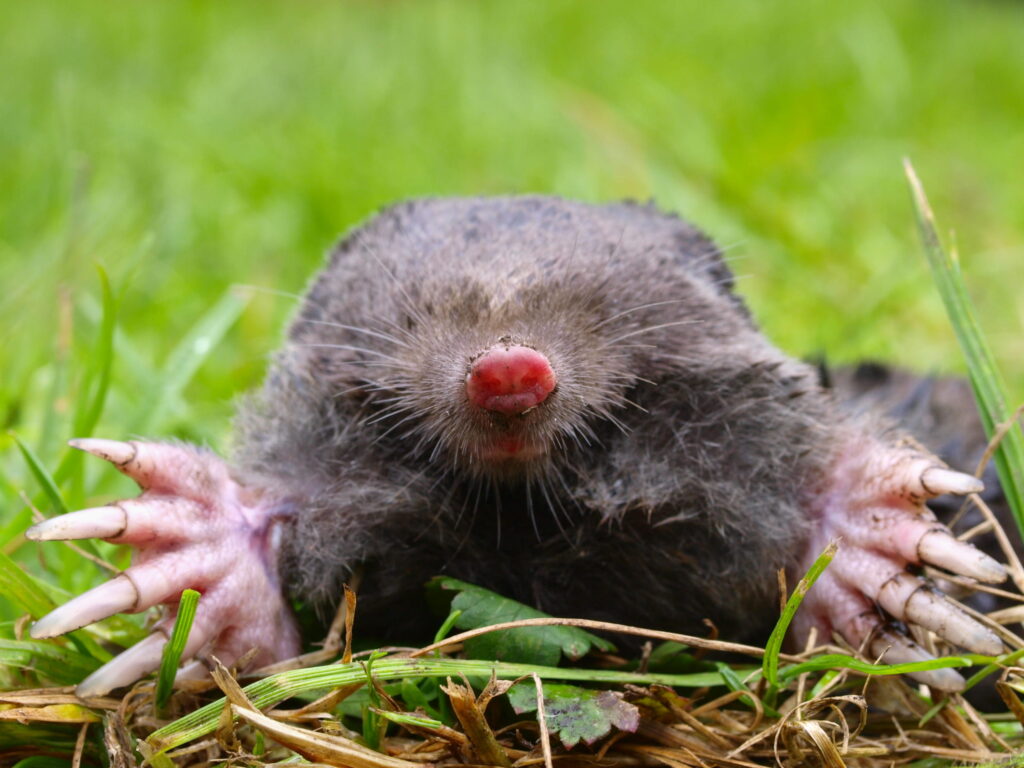
A single mole must eat roughly 70-80% of its body weight daily just to sustain that level of activity. In Greater Cincinnati, the Ohio River valley’s naturally high water table and clay-heavy subsoil already support dense earthworm populations. An irrigated raised bed on top of that becomes one of the richest feeding grounds in the neighborhood.
Mole activity spikes in early spring and late winter: when the ground thaws after Ohio’s freeze-thaw cycles and worms return to the upper soil layer, moles follow immediately, and new tunnels appear seemingly overnight.
How to Get Rid of Moles in Garden Beds
Hardware Cloth: The Most Effective Method
The most reliable way to keep moles out of a raised bed is to exclude them physically before the soil goes in.
Use galvanized hardware cloth, a rigid, hot-dipped steel mesh built to hold up in buried, wet soil. Do not use chicken wire. Chicken wire corrodes quickly underground, and the gaps are wide enough for voles and juvenile moles to pass through.
Go with 1/4-inch galvanized hardware cloth for raised vegetable beds. It’s the only size that reliably stops moles and closes off the gaps that voles use to follow mole tunnels straight into your root zone. Line the entire bottom of the raised bed frame, run the mesh at least 6 inches up the interior walls, and secure it with galvanized staples.
Humanely Deter Moles: Why Mole Repellents Backfire
Treating your lawn with milky spore or seasonal grub control to kill Japanese beetle larvae might seem like a smart way to humanely deter moles by cutting off their food supply. It isn’t.
Grubs are only a seasonal portion of what moles eat. As Ohio State University Extension makes clear in its research on effective mole control for Ohio homeowners, the mole’s primary food source is earthworms, not grubs. A mole that runs low on grubs simply shifts its focus to worms and keeps eating. Milky spore has value for general lawn care, but it won’t move a mole out of your garden.
Castor oil mole repellents, coffee grounds, beneficial nematodes (microscopic soil organisms sometimes marketed as a natural deterrent), and sonic stakes fare no better. Castor oil leaches out of fast-draining vegetable beds almost immediately. Coffee grounds and nematodes don’t affect mammals. Sonic spikes get ignored within days.
Even on flat turf, the best any of these does is push the mole to the edge of the treated area, where it moves straight toward the nearest flower bed. For a thorough look at why common deterrents fail at the biology level, see our full breakdown of what moles actually eat and why that matters.
Mole Traps: The Only Reliable Way to Eliminate Moles
Once moles have established active runs through your garden, catching moles with correctly placed mechanical traps is the only method that actually removes them. Ohio State University Extension and wildlife specialists agree: harpoon and scissor-jaw mole traps set directly in confirmed active tunnels are the most effective and most humane approach.
The single most important factor is trap placement. To find an active tunnel, gently collapse a short section of a surface ridge, mark the spot, and come back in 12 to 24 hours. Soil pushed back up means an active run worth trapping. Still flat means move on.
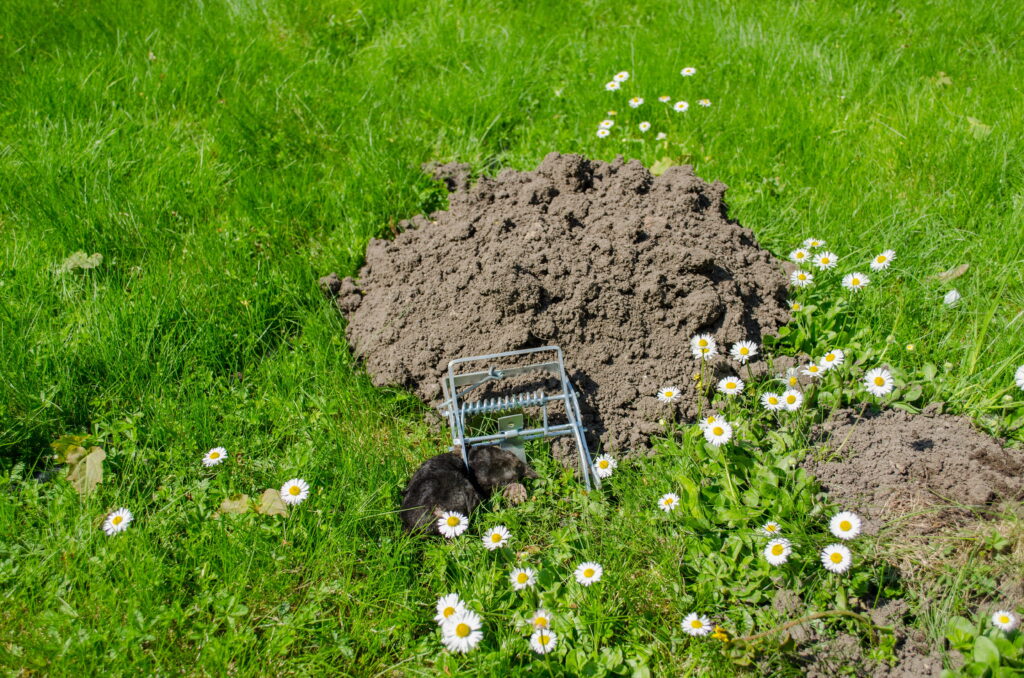
Right after a soaking rain is your best trapping window. Earthworms migrate toward the surface when soil becomes saturated, moles follow them into their shallow feeding runs, and those runs become highly predictable.
As the lead of The Mole Hunter’s trapping program with over 25 years of experience in turf and grounds management across Greater Cincinnati, I make it a point to check and reset my traps within 24 to 48 hours of significant rainfall events, specifically for this reason.
When you’re ready to stop guessing and get the problem solved, my professional trapping service covers the full removal process, from confirming active runs to trap selection and follow-up checks.
Quick Reference: Mole Damage vs. Vole Damage
| Sign | Moles | Voles |
|---|---|---|
| Roots look… | Dried out but structurally intact | Cleanly chewed off, teeth marks visible |
| Surface evidence | Raised ridges, volcano-shaped mounds | Small open holes, no significant dirt piles |
| Whole plants disappear | Rarely | Frequently |
| Bulbs missing | No | Yes |
| Best control method | Physical exclusion, lethal trapping | Vole-specific traps, rodent bait stations |
When to Call a Professional to Control Moles
While a minor mole issue is usually manageable with a few well-placed traps, you should call a professional when new holes and active mounds start appearing daily. If your property is too large for DIY trapping or your high-value plants are at risk, it’s time to bring in an expert.
As a licensed operator, I know exactly which nuisance wildlife methods are permitted and effective in Ohio. I’ve spent years saving lawns for homeowners all over the region, including Cincinnati, Lebanon, and Loveland.
Don’t just take my word for it, though:
⭐⭐⭐⭐⭐
“I’d recommend the mole hunter to anyone! When Jeff first arrived we were standing in the front yard talking when he saw the ground start to move. All of a sudden he reached down in the yard with his bare hands and pulled a live mole out of the ground. I couldn’t believe it. Needless to say, he was hired on the spot. Knowledgeable and experienced experts that provide tangible results.”
As The Mole Hunter, I proudly serve southwest Ohio. If your yard is starting to look like a minefield, give me a call at (513) 654-5079 or schedule an assessment online. Let me get eyes on the problem so I can give you a straight answer about what it’s going to take to solve it.
Frequently Asked Questions
How fast can a mole destroy a vegetable garden?
Faster than most gardeners expect. A single mole working through a raised bed can sever root contact across a wide area in a single overnight session. Seedlings and recent transplants often show wilt within 24 to 48 hours. Established plants last longer but will decline steadily if mole activity continues and air pockets keep forming around their roots.
Is there a time of year when moles are less of a problem in Cincinnati gardens?
Mole activity quiets down in the hottest, driest stretches of mid-summer, when earthworms retreat deep into the subsoil. But if you’re irrigating your garden during that period, you’re creating an isolated pocket of moist, worm-rich soil in an otherwise dry landscape, which cancels out the seasonal slowdown. Early spring and late winter are the periods of highest surface tunneling activity in Ohio.
Can I just move the mole rather than trap it lethally?
Live trapping and relocation come with real drawbacks. Moles are highly territorial, deeply stressed by capture, and struggle to establish themselves in unfamiliar territory where other moles may already occupy the tunnel networks. Ohio State University Extension and wildlife specialists consistently recommend lethal mechanical trapping as both the more effective and more humane outcome for garden mole problems.