The moles are gone, or nearly gone, and the yard looks wrecked. Raised ridges snake across the surface, volcano-shaped dirt piles sit on the grass, and certain patches sink underfoot. The damage looks more permanent than it is. Grass recovers well, and lawn repair after moles is more straightforward than it looks once you know which type of damage you’re dealing with.
Deal With the Active Mole Threat First
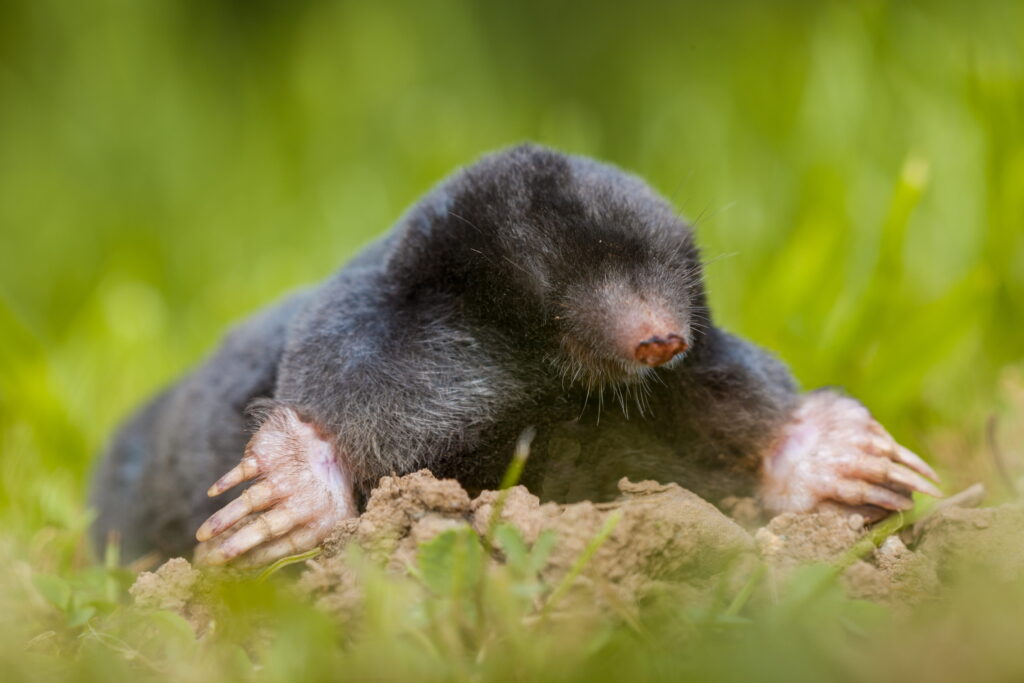
Before you can fix mole damage in your lawn, the moles need to be gone. A single mole can excavate a 10-foot tunnel in under an hour and cover more than 100 feet of surface runway in a day. Fill a tunnel in the morning, and another may open by evening.
Starting repair over an active pest infestation is wasted effort. Once we’ve confirmed the moles are fully removed, see how we handle removal before any soil gets moved.
Types of Damage: Mole Hills, Tunnels, and Spongy Ground
The hills and tunnels moles leave behind fall into four distinct patterns, and each one calls for a different fix. Knowing which type you’re looking at before you pick up a tool saves a lot of wasted effort.
| Damage Type | What It Looks Like | How to Fix It |
|---|---|---|
| Raised surface tunnels | Vein-like ridges pushed above the soil surface | Press flat by hand, heel-to-toe, or roller; water in thoroughly |
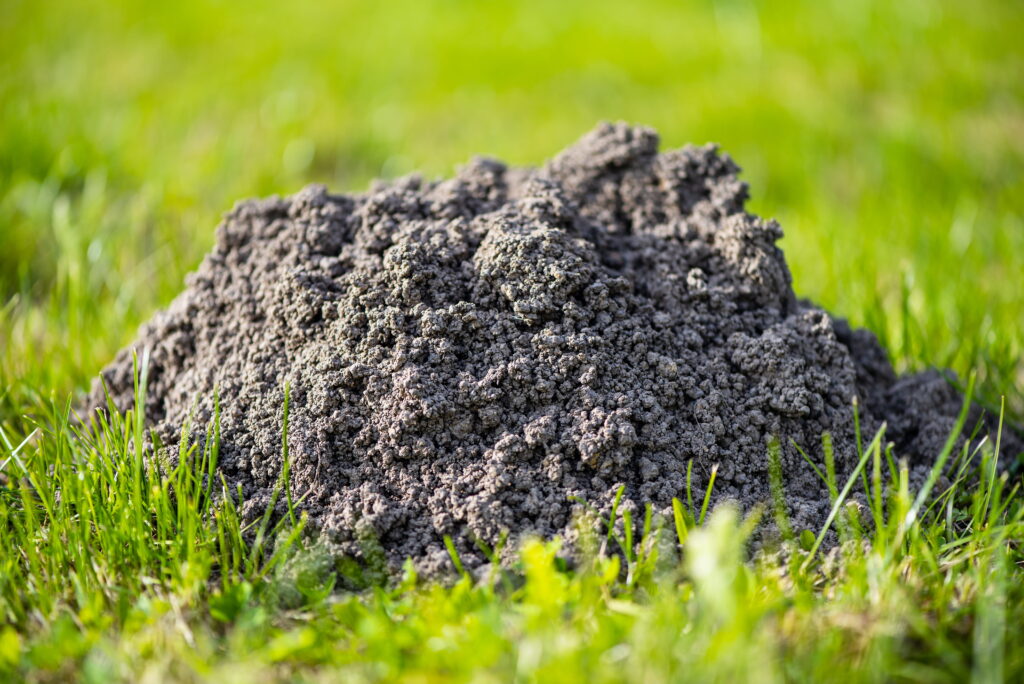
| Molehills | Volcano-shaped mounds of loose soil on the grass | Rake it flat and thin; fill vertical holes with topsoil/compost mix |
| Sunken or spongy patches | Sinks below original ground level; compresses underfoot | Fill with sandy loam mix; overseed after leveling |
| Dead grass patches | Bare dirt where turf has died completely | Overseed after filling; keep moist with adequate water daily |
Mole damage is also commonly mistaken for damage from voles. According to Purdue University Extension’s breakdown of moles and voles, voles form two-inch-wide surface runways chewed down into the grass rather than pushed up above it, and those runways can go unnoticed until winter snow melts and exposes them. Voles also gnaw the trunks and roots of trees and ornamental plants, which is damage that moles don’t cause.
The full guide to recognizing mole signs in your yard covers how to tell them apart before you start any repair work.
How to Flatten Raised Tunnels
Raised surface tunnels are usually the easiest to fix. When a mole forages just below the thatch layer, the thin layer of organic matter sitting between the soil and living grass, it heaves the turf upward and opens an air gap between the roots and the soil below. Roots suspended in that void can’t absorb moisture or nutrients. The grass turns yellow and brown, but the plant may not be dead.
Moles don’t eat grass roots. They’re after earthworms, grubs, and soil insects. What kills the grass is those roots drying out in the air pocket, not anything the mole consumed. In our experience working on Southwest Ohio lawns, most of this damage is reversible once the tunnel is addressed promptly.
Run the Tug Test First
Pull gently upward on the discolored grass above a tunnel. Resistance and white-looking roots mean the plant is alive and stressed, not dead. It will recover once the tunnel is pressed flat and watered in. If the grass lifts cleanly with no resistance, the roots are gone, and that section needs reseeding.
Roll or Press the Ridges Down
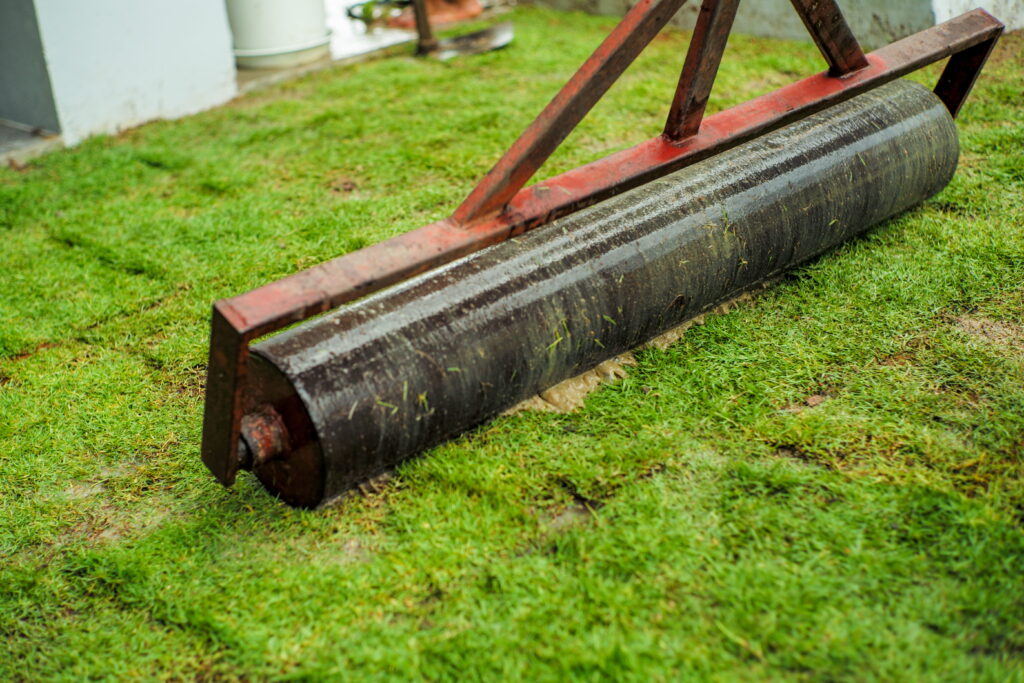
Press raised ridges down firmly by hand, walk heel-to-toe across them, or run a water-filled lawn roller over larger sections. Do not slice the tunnels open or dig them up. The root system beneath is often still intact, and digging destroys whatever survives.
Work when the soil is slightly damp. Bone-dry soil shatters under a roller. Waterlogged soil compacts and smothers the roots. Water the area thoroughly right after rolling. Raised ridges left unflattened also become a mowing hazard: the peaks catch mower blades, scalp the turf down to bare dirt, and dull cutting equipment fast.
Fixing Mole Hills
A molehill sitting on grass blocks sunlight and air exchange. Left long enough, it smothers the turf beneath it.
Break up each mound with a rigid metal rake and spread the loose soil evenly across the surrounding grass, no more than about half an inch deep at any point. Any deeper and you’re burying healthy grass rather than amending it. If there’s excess soil, shovel it off and use it to fill low spots elsewhere on the property. After flattening, water the area. If sunken spots appear once the soil settles, lightly rake the surface and cover with topsoil before overseeding.
Many lawns in Greater Cincinnati and the Dayton area sit on Miamian series soils, known for heavy clay content in the subsoil, the dense layer sitting just a few inches below your grass roots. When moles excavate deep nesting chambers, the material pushed to the surface is subsoil clay, not the lighter topsoil your grass grows in. Pressing a thick layer of that clay flat creates a compacted cap that can choke drainage and root growth long after the moles are gone. Rake it out thinly, mix in compost where you can, and don’t pack it down.
Filling Sunken Areas and Spongy Ground
Spongy lawn areas from moles won’t resolve on their own. Where tunnel networks have collapsed, the ground sinks below its original level, and the soil volume is simply gone. It has to be physically replaced by spreading a thin layer of fill mix across the surface to rebuild the grade.
Use a sandy loam mix as your fill material, a blend of coarse sand and compost or screened topsoil. One important note for clay-heavy Miamian soil areas: adding coarse sand at low concentrations to an existing clay profile can worsen drainage rather than improve it. Match the mix proportions to your existing soil texture, or consult your local OSU Extension office if you’re unsure. The goal is a material that holds its shape, drains reasonably, and gives new roots something to anchor into.
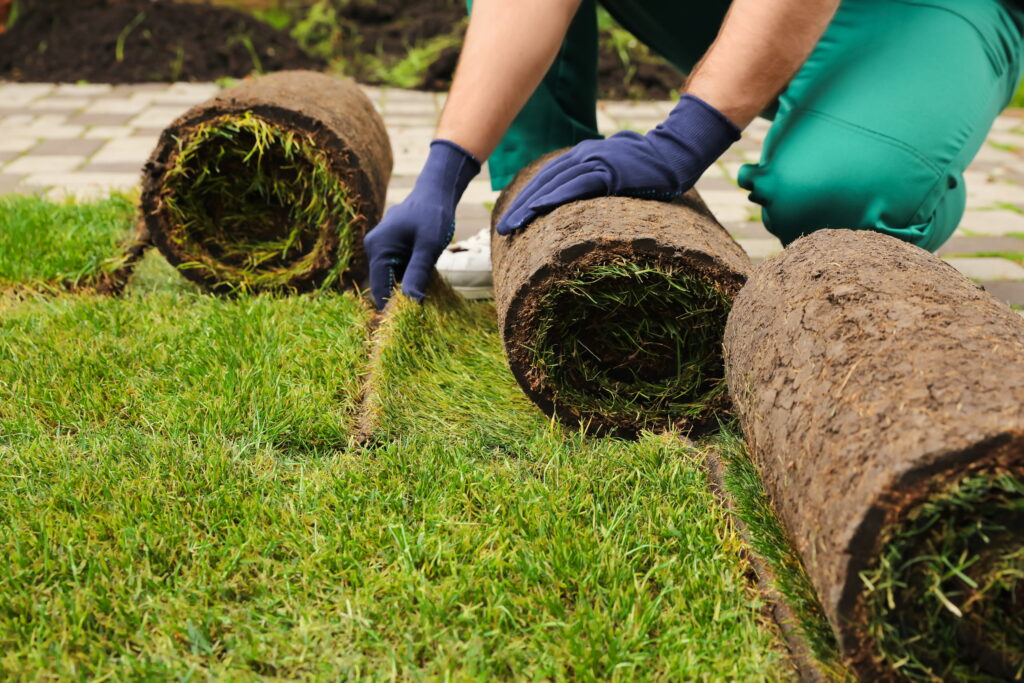
Keep individual applications under an inch thick. For areas with extensive damage, plan on multiple thin passes over several weeks, letting any surviving grass push through each layer before adding the next. Where large sections have died off entirely, laying sod is faster than overseeding. Walk across it after placement to press it firmly against the prepared soil below.
Overseeding to Get Rid of Dead Patches
Once the ground is leveled, lightly rake bare patches to create shallow grooves. A seed needs direct contact with soil to germinate. Apply at the label rate, then press the seeded area down by hand or roller to seat it firmly.
Water two to three times per day. Keep the surface consistently moist but never saturated. If the seed coat dries out mid-germination, the seedling dies. Skip pre-emergent herbicides and weed-and-feed fertilizers during the repair period. Both products kill young grass seedlings just as readily as they kill weeds.
The Right Repair Window in Southwest Ohio
The best overseeding window in Southwest Ohio runs from late August through mid-September. Soil is still warm from summer, which speeds germination, while cooler evenings protect new seedlings before winter arrives.
Spring is the secondary repair window. Mid-April through early May is workable, but it brings heavy competition from crabgrass and dandelion seeds germinating at the same time.
Once repairs are complete, run a core aerator over any areas that still feel dense underfoot. A core aerator pulls small plugs of soil from the ground to relieve compaction, and in the clay-heavy soils common across Southwest Ohio, that compaction from heavy tunnel networks doesn’t always clear on its own, even after the surface looks repaired.
Before You Start: Make Sure the Moles Are Gone
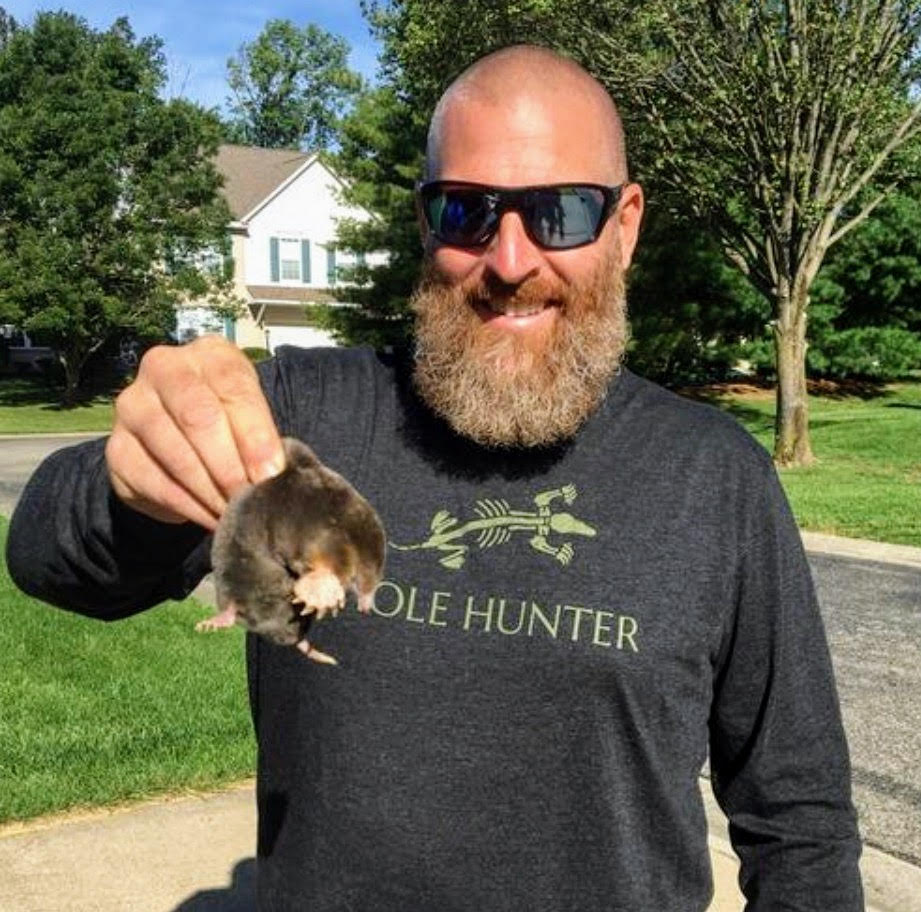
Your lawn repair work will only stick if we have fully cleared the infestation first. I see it all the time across Cincinnati, Lebanon, Milford, and Loveland. Homeowners spend hours fixing their yards only to have new tunnels pop up the very next day. You have to make sure the moles are completely removed before you spend time and money fixing the turf.
I love being able to provide that peace of mind for my clients. Here is what one homeowner had to say after I cleared out their yard:
⭐⭐⭐⭐⭐
Susan Brengle
We feel like we won the lottery when we called The Mole Hunter. Jeff, who couldn’t be nicer, arrived within 2 business days of my contacting him to survey the damage & numerous tunnels & mounds of dirt that riddled our yard. Within the first week and a half, he had trapped 4 BIG moles and caught by hand 4 young, live moles that were churning up the lawn next to our front door. That’s more moles than we caught in the previous 2 years combined. We highly recommend The Mole Hunter!
Reach out to get started with professional trapping across the Greater Cincinnati area. You can call me directly at (513) 654-5079. Let’s make sure your property is clear before you start your repairs so the job gets done right the first time.
Frequently Asked Questions
How long does it take for grass to recover after mole damage?
For surface tunnels where the roots survived, most grass shows visible green-up within 7 to 14 days once tunnels are pressed flat and watered in. Reseeded bare patches take longer: expect germination in 10 to 21 days for cool-season turf varieties common in Southwest Ohio, such as tall fescue and Kentucky bluegrass, with full coverage over 4 to 6 weeks when fall conditions cooperate.
Can I mow over repaired areas while the grass is coming back?
Hold off mowing directly over reseeded or sodded sections until the new grass reaches at least 3 inches tall and the roots have anchored into the soil. For areas that were filled but not seeded, wait until the fill material is thoroughly watered in and the ground feels firm. Running a mower over loose, freshly filled ground compacts the surface unevenly and displaces the fill.
Will the same spots get damaged again after the mole is removed?
New moles can move into established tunnel networks if those tunnels stay open. Once an active mole is removed, another one can discover and reuse the system within the same season, particularly during the high-moisture spring and fall periods common in this region. Having us clear and monitor the property for at least one full season is the only way to know the problem is actually resolved.