Ultrasonic mole repellents are marketed as a simple solution for yard damage. Push a device into the ground, let solar power do the rest, and wait for vibrations to drive burrowing pests away. That’s the promise. Reality is more uneven.
Homeowners who prefer DIY and natural mole deterrents usually try ultrasonic devices first because they avoid traps, chemicals, and visible disruption to the lawn and garden. The key point remains: these devices are deterrents, not removal tools. In limited cases, they irritate the animal enough to shift activity briefly. In most yards, tunnels return once it adapts or move beyond the coverage area.
Results vary widely based on soil conditions, property layout, and how established the problem already is.
How Ultrasonic Mole Repellents Are Supposed to Work
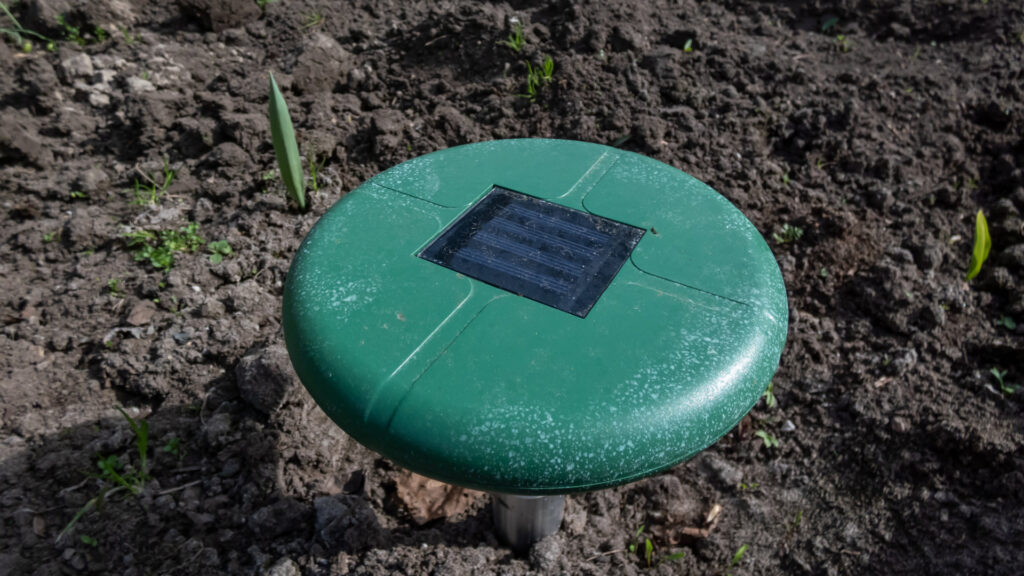
Ultrasonic mole repellents emit high-frequency ultrasonic waves and vibrations into the ground. These sounds operate above 20 kHz, making them inaudible to humans and most pets. Underground, they’re meant to irritate them and other burrowing animals.
Sound waves and vibrations underground
These animals rely on vibration sensitivity and hearing to navigate tunnels and locate food such as worms and grubs. Ultrasonic devices exploit this sensitivity by sending repeated sonic pulses through the soil, commonly every 30 seconds. The goal is to make the area uncomfortable enough that the animal leaves.
What manufacturers claim
Most ultrasonic repellents claim coverage areas up to 20,000 square feet for an entire yard. Some stakes are rated closer to 7,500 square feet. Many are solar powered, charging during direct sunlight and storing energy in internal batteries for nighttime use. They’re usually advertised as weather-resistant, pet safe, and suitable for outdoor use around lawns and gardens.
Why soil type and layout matter
Sound does not move through soil evenly. Dense clay carries vibration better than sandy or loose ground. Rocks, roots, foundations, and hardscaping absorb or block sound. As a result, the effective coverage area is far smaller than advertised.
Why Ultrasonic Repellents Often Fail in Real Yards
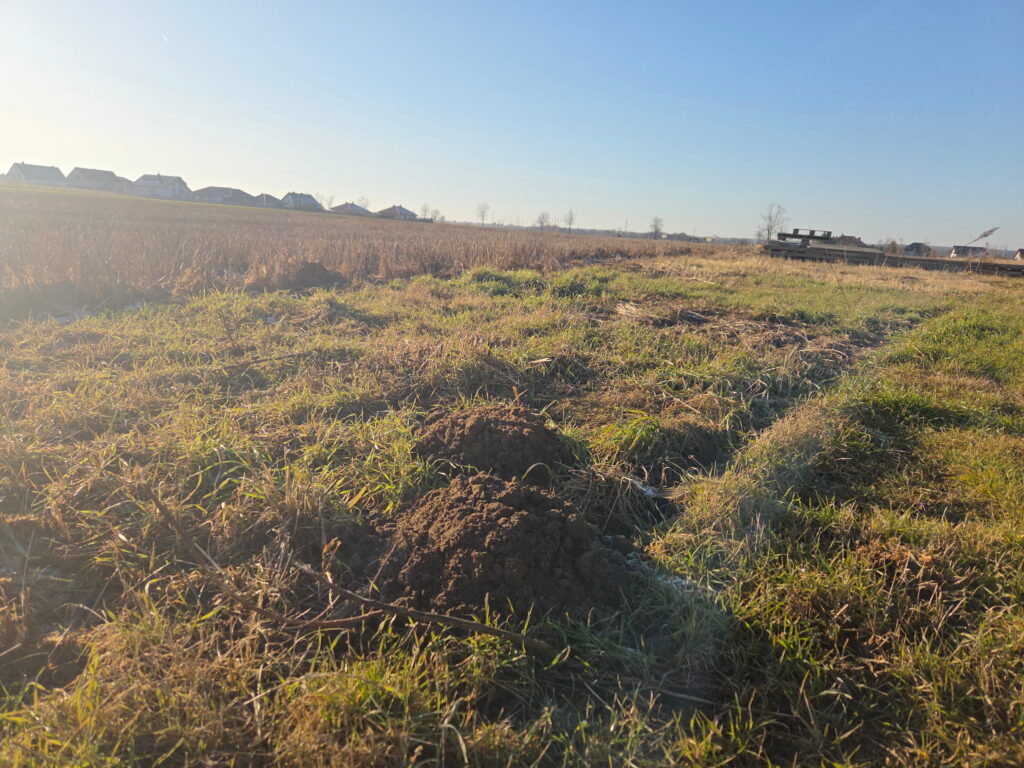
On paper, ultrasonic mole repellents sound convincing. In practice, several factors limit their effectiveness.
Limited underground range
The vibrations weaken quickly as they move through the ground. Even with multiple devices, gaps form where the sound doesn’t reach. The animal does not need to leave the entire yard, just shift their tunnels a few feet.
Uneven sound travel
Soil composition changes across a lawn. One section carries vibration well, while another absorbs it. This creates quiet zones where burrowing continues without disturbance.
Habituation over time
Users consistently report that ultrasonic repellents work briefly, then stop working. Habituation is common. If food sources like grubs and worms remain plentiful, these pests tolerate the irritation and ignore the sonic waves.
Physical obstacles
Roots, rocks, irrigation lines, patios, and foundations disrupt sound paths. These obstacles act as shields, allowing tunneling to continue unaffected.
What Studies and Field Experience Show
Research and field experience show a consistent pattern: ultrasonic repellents rarely provide long-term control on their own. Guidance from the University of California Statewide Integrated Pest Management Program states that sound- and vibration-based devices have not been shown to stop damage or drive these animals out of residential landscapes when used outdoors.
Outcomes involve temporary displacement rather than elimination. One animal moves out temporarily, but another, or the same one, returns once activity settles. Tunnels reappear because the source was never removed, and food remains available.
Users also report conflicts with neighbors due to faint buzzing or vibration traveling through the ground, especially when multiple solar devices are installed close together, further highlighting the limits of these tools in real yards.
When Ultrasonic Repellents Might Help
These devices work only in very specific, limited situations.
Small properties with early activity sometimes show brief changes. Light damage involving a single animal without an established tunnel system occasionally shifts location after several weeks of continuous exposure.
They also serve as a short experiment for homeowners who want to avoid traps initially. Proper installation matters: direct sunlight, correct spacing, and uninterrupted operation are required for any measurable effect.
When Ultrasonic Repellents Are a Waste of Time
In many common scenarios, these devices fail to produce meaningful results.
Large properties dilute coverage too much to matter. Multiple animals adapt quickly or bypass vibration zones entirely.
Long-standing damage with deep tunnel networks remains largely unaffected. In these cases, irritation does not translate into behavior change.
Do Ultrasonic Mole Repellents Actually Get Rid of Them?
No. Ultrasonic mole repellents do not get rid of them.
They do not eliminate the animal, stop reproduction, or prevent new ones from entering the yard. At best, they temporarily discourage activity.
Lasting results require methods that actually remove the animal from the tunnel system, which is why understanding how to get rid of moles using effective methods is essential once repeated tunneling appears.
Why Trapping Is Considered the Most Effective Method of Mole Control
Trapping directly targets the animal that is causing the damage. Unlike repellents, ultrasonic or natural options like castor oil, traps don’t rely on discomfort or behavior change. They remove the animal from the tunnel system entirely, which is why tunnels stop reappearing once mole trapping is done correctly.
Final Thoughts
Ultrasonic mole repellents appeal to homeowners because they’re chemical-free, solar-powered, and marketed as a humane way to deter pests. In reality, their effectiveness is mixed and often short-lived. Soil conditions, coverage gaps, and animal behavior limit what these devices can achieve.
For lasting results, learning what actually stops burrowing activity and why some methods consistently outperform others saves time, effort, and a lawn full of returning tunnels.
Frequently Asked Questions About Ultrasonic Mole Repellents
Do ultrasonic mole repellents work?
No. These devices send vibrations through the ground to irritate burrowing rodents and push them away from part of the yard. In small areas with light damage, activity sometimes decreases briefly before returning. These devices produce no lasting effect. They do not fully protect a lawn or remove the animal permanently, especially when food sources like worms remain available.
What is the most effective mole deterrent?
No deterrent is truly effective long-term. The most effective approach removes the animal rather than trying to repel it. Options such as solar-powered repellents, castor-oil-based products, or a solar pest device are temporary solutions at best. Traps are the most reliable method to protect a garden and stop new tunnels from forming. Repellents offer minimal support at best and rarely solve the problem alone.
Do those ultrasonic pest repellers really work?
Ultrasonic pest repellers, including models sold as rodent repellent or groundhog repeller devices, produce poor results. They depend on the sun for charging and send vibrations through the soil, but factors such as soil density, rain, rocks, and roots sharply limit how far those signals travel.
Some users report a faint buzzing sound and brief changes in activity from gophers or rats, yet mole tunnels often reappear in the same areas once the pests adjust. While manufacturers advertise additional features and claim benefits for quality pest control, results across an entire yard or around a house remain inconsistent. Claims that these devices control other pests, such as mice, snakes, bugs, or even deer, lack reliable, repeatable outcomes and do not deliver lasting protection.
What is the fastest way to get rid of moles in your yard?
The fastest way to stop damage is to remove the animal creating the tunnels. Repellents—ultrasonic, natural, or chemical—do not resolve the problem and rarely stop new tunnels from forming. Trapping directly targets the source of damage and prevents continued disruption to the lawn and garden. Solar-powered repellents are often tried first because they are marketed as green, safe around kids, and easy to purchase, sometimes framed as a security measure for the yard. In practice, they delay effective control rather than solve it, allowing damage to spread while the pest remains active.
For additional information about effective services and proven solutions, comparing control methods side by side helps homeowners select an approach that matches their property conditions, expectations for long-term results, and tolerance for recurring damage.