Raised ridges crisscrossing your lawn and fresh dirt mounds appearing overnight. Sound familiar? If you’re looking for effective mole control that won’t harm your pets, kids, or garden soil, natural repellents seem like the obvious answer.

Here’s what you need to know. Natural repellents work as a gradual but consistent solution that discourages mole activity in treated areas. But they don’t exterminate these animals or instantly fix your lawn. They temporarily redirect tunneling away from specific zones rather than eliminating these burrowing pests entirely or collapsing their underground networks.
Understanding what these products actually do (and don’t do) helps you set realistic expectations and decide whether natural methods make sense for your situation.
How Natural Mole Repellents Are Supposed to Work in Ohio Lawns
Natural repellents work by disrupting sensory perception rather than killing the animal. These creatures lack external ears but rely heavily on smell and touch to move through soil and locate food.
They are insectivores. While they eat grubs, earthworms make up the majority of their diet, which is why removing grubs alone rarely stops tunneling, a point consistently noted by the University of Missouri Extension. This is especially relevant in Southwest Ohio, where the region’s rich, moist clay-loam soil creates ideal earthworm habitat and keeps moles actively tunneling year-round.
Castor oil, the most studied natural repellent ingredient, acts primarily as a sensory irritant, not a coating agent. Its odor and taste make treated areas unpleasant, encouraging temporary avoidance rather than elimination.
The distinction is clear: repellents shift activity temporarily but do not remove the animal or destroy underground tunnels.
Types of Natural Mole Repellents
Castor Oil–Based Repellents
Castor oil is the only option with limited scientific backing. It irritates the digestive system and sensory pathways, disrupting feeding patterns.
Results depend heavily on soil type and moisture, and applications typically require watering about ½ inch to move the active ingredient into deeper tunnels. Even under ideal conditions, success rates are limited, with studies suggesting roughly 50% effectiveness at best.
The benefit: castor oil naturally breaks down, making it a safe alternative for lawns, flower beds, and healthy soil.
Plant-Based Repellents (Garlic, Pepper & Oils)
Garlic, cayenne pepper, and peppermint oil are common ingredients in homemade mixtures. These substances create an unattractive habitat by interfering with natural behaviors. Results are inconsistent and short-lived.
Plants Believed to Deter Activity
Marigolds and daffodils have minimal effect around borders or plant roots and do not create a long-lasting barrier. Avoid “mole plants” (Euphorbia lathyris), which are toxic and unsafe around pets and children.
Homemade Solutions
Soap-and-castor-oil sprays and granules are widely promoted, but many home remedies persist despite lacking evidence. Coffee grounds, hair, and chewing gum do not control tunneling and often worsen damage by attracting earthworms. Vinegar shows up constantly in the same searches, and the honest answer on whether it gets rid of ground moles comes down to the same tunnel-depth and rain-dilution problems every other repellent runs into.
Sound or Vibration Devices
Wind spinners, solar stakes, and ultrasonic devices are controversial. While marketed as easy fixes, they do not provide reliable or lasting pest control. Any disruption is brief, and activity often returns.
Natural repellents temporarily reduce activity, especially in early spring, but severe infestations or active tunnels usually require professional strategies for enduring protection.
Benefits and Limitations of Natural Mole Repellents
Benefits
Natural products temporarily discourage activity in limited situations and are often tried first because they are non-toxic, low risk, and simple to apply. Common home remedies, such as mixes using pure castor oil, liquid dish soap, and water, are inexpensive and easy to find.
When applied to moist soil, these treatments reduce surface activity briefly by irritating sensory systems. They only produce noticeable results in small areas with very light activity, and even then, the effect is short-lived and requires repeated application.
Limitations
Natural repellents require frequent reapplication, especially after heavy rain or irrigation. Their effects fade quickly, turning control into ongoing maintenance.
They do not remove existing moles or destroy established tunnel systems. These pests tunnel extensive distances in a single day—some sources report up to 100 feet—which makes surface treatments easy to bypass.
With multiple animals or ongoing reinvasion, repellents fail to keep pace. Activity resumes as soon as scents weaken.
Do Natural Mole Repellents Actually Get Rid of Moles?
No. Natural repellents do not eliminate them.
They cause short-term avoidance, but tunnels usually return because the animal never left. Once the sensory irritation fades, they resume using familiar tunnel systems.
This cycle is a common source of homeowner frustration. If your goal is to actually stop pest problems rather than temporarily shift where they occur, consider how to actually get rid of them through methods that remove the animals.
When Natural Repellents May Be Worth Trying
Natural repellents only work when:
-
You see one or two fresh mole tunnels
-
Activity is recent or very light
-
You want a short-term deterrent in a specific area
-
You’re testing the next steps before escalation
Monitor results within 1–2 weeks. If there’s no clear reduction, move on.
When to Move On to More Effective Solutions
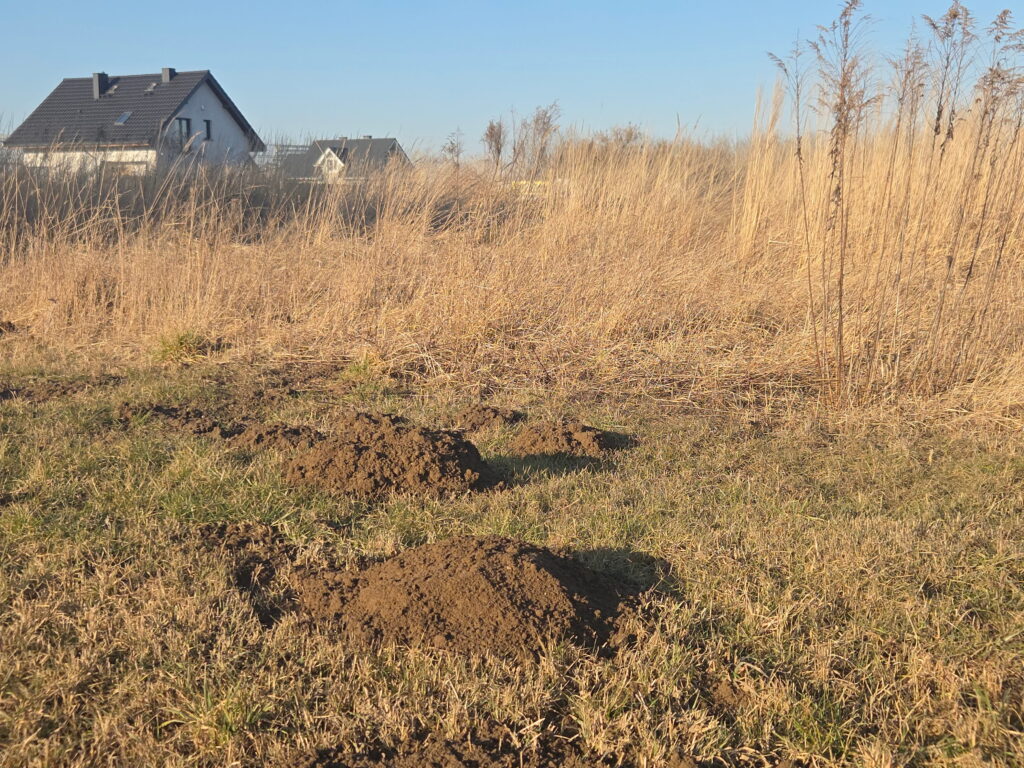
Continued tunneling, expanding mound systems, or repeated failure after weeks of application signal the end of repellent usefulness. Reinvasion and overlapping territories are common.
At that point, learning about more effective ways to get rid of moles provides a clearer path forward. For background on why this happens, understanding basic biology can help explain why surface-level deterrents fail against their natural behaviors.
Why Repellents Fail Long-Term
These animals tunnel constantly in search of food. They target earthworms and insects in the soil—not lawns themselves. Broad insect reduction damages soil health without stopping tunneling.
Territory overlap guarantees reinvasion. Even if one animal leaves, others eventually discover food-rich ground. Without removal, the cycle continues.
For more context on mole behavior and biology, understanding what drives their tunneling helps explain why surface-level deterrents struggle against their natural instincts.
Final Perspective
Natural repellents occupy a specific niche in pest management. They’re eco-friendly solutions that avoid killing moles and work well for homeowners who want to try the gentlest approach first. Castor oil and plant-based options provide gradual results in ideal conditions, light infestations, diligent reapplication, and realistic expectations.
But they don’t get rid of them. They create an ongoing maintenance requirement that many homeowners eventually find unsustainable. Unlike instant chemical alternatives that also fail to remove them while adding toxicity concerns, natural repellents keep your yard safe for kids, pets, and beneficial soil organisms.
If natural methods haven’t solved your pest problems after consistent application over several weeks, you need professional removal methods that actually work.
Frequently Asked Questions About Natural Mole Repellents
What repels moles naturally?
Natural repellents work by irritating their senses rather than harming them. Common options include castor oil–based products, garlic, and pepper extracts. These approaches offer gradual, temporary results at best, mainly discouraging activity in small areas. They don’t remove the animal and provide only short-term relief, even when populations are low.
What do moles hate the most?
They avoid strong smells and substances that bother their sensitive noses and skin. Repellents that use castor oil or strong plant extracts work because the repellent disrupts their normal movement through tunnels. This does not mean these animals leave permanently, but it temporarily pushes activity away from certain spots where they might otherwise damage plant roots.
What is the best homemade mole repellent?
The most common homemade option uses castor oil mixed with soap and water. This type of mix is popular because it avoids harmful chemicals and is easy to apply. While some formulas are marketed as uniquely formulated, the results are still temporary.
How do you make homemade mole repellent?
A typical homemade mix combines castor oil, dish soap, and water. The soap helps distribute the oil through the soil so the solution directly taps into sensory pathways. It’s usually applied with a sprayer and watered in. This approach requires consistent reapplication, not a one-time treatment.
Do coffee grounds really repel moles?
No. Coffee grounds do not reliably repel them. While they have a strong smell to people, they often ignore them. Coffee grounds attract other insects, which increases food sources for these pests and similar animals like meadow voles. This makes coffee grounds ineffective as a vole repellent or deterrent.
How do you use Dawn dish soap to get rid of moles?
Dish soap, such as Dawn, is often used in small amounts as a mixing agent in homemade repellents, not as a standalone solution. It helps oil-based ingredients spread through the soil, especially when diluted in gallon treatments of water. Soap alone will not get rid of them, as they do not eat plants and easily bypass treated areas with their tunnels and elongated heads.