Homeowners often assume moles disappear when temperatures drop. Fewer molehills appear, surface tunneling slows, and the problem seems to solve itself. This is a misconception — and it’s not the only one. Test what you really know with our quick myth vs. fact quiz below.
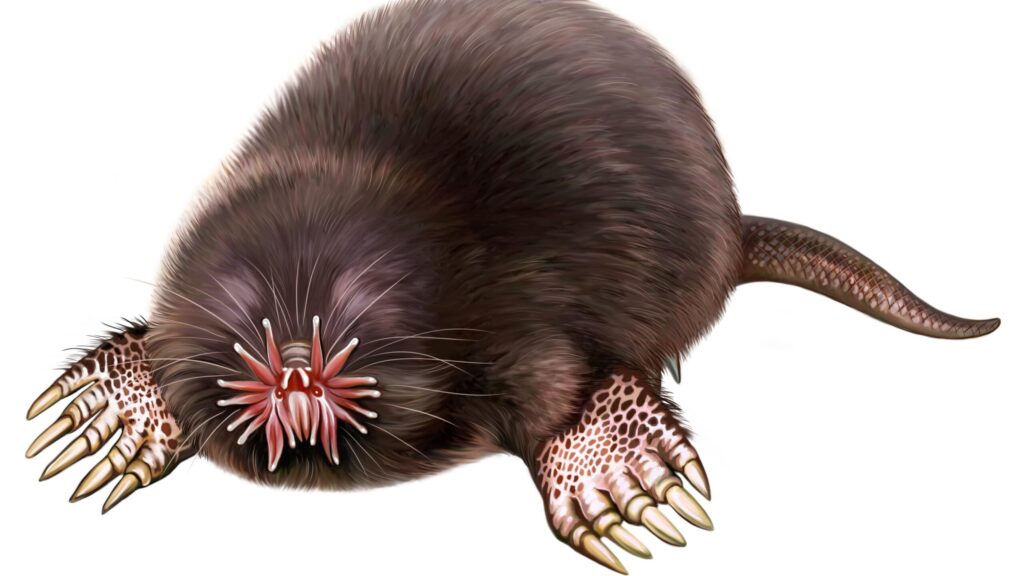
According to Penn State Extension, moles don’t hibernate; they stay active underground all winter, feeding and digging tunnels that set the stage for visible spring damage.
The belief that these animals hibernate comes from reduced visibility. When the first frost arrives, surface tunnels and fresh soil mounds become harder to spot. Grass growth slows, soil stiffens, and snow hides activity that would be obvious in spring. Below ground, they keep working, hunting for food and expanding tunnel systems throughout the snow season.
Why Moles Stay Active in Cold Weather
Stable Temperatures Below the Frost Line
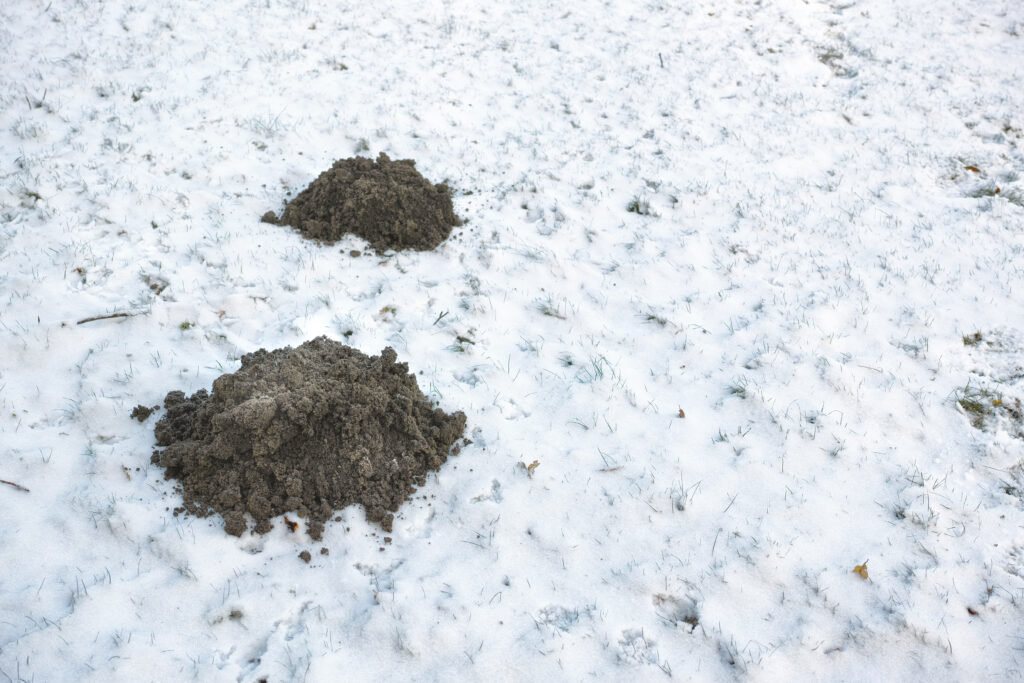
While air temperatures drop and the soil surface freezes, temperatures below the frost line stay relatively stable. Moles respond by going deeper. These tunnels provide insulation from freezing temperatures and allow normal movement and feeding.
As the soil freezes near the surface, they tunnel closer to the frost line or dig deeper into the ground where conditions stay consistent.
Continuous Access to Food Sources
These animals require a steady food supply. Their main food sources include earthworms, grubs, and other insects living in soil. These organisms also retreat deeper as cold weather sets in.
They have a biological edge: they can reportedly paralyze earthworms with their saliva and store them in underground caches for later consumption. This lets them keep eating even when food becomes harder to find.
Understanding their feeding behavior is crucial for year-round management. Effective mole removal requires strategies that account for their winter activity patterns.
Winter Depth Adaptation
Moles do not enter torpor. Instead, they move below the frost line into permanent tunnels—up to 2 feet deep—where earthworms remain active. This deep tunneling strategy allows them to maintain their voracious feeding schedule throughout the coldest months.
Late Winter Breeding Activity
While active hunters in the cold months, they also begin looking for mates from January to February. This breeding period drives increased deep tunneling activity that remains invisible on the surface.
Mating tunnels extend several feet deeper than feeding tunnels, compounding existing underground damage. A single female produces 3-5 young per litter, and by early spring, these offspring begin their own tunneling. This explains why mole damage often seems to explode overnight after the thaw.
🎯 INTERACTIVE QUIZ
Whack-a-Mole: Myth vs. Fact
Think you know what's really going on under your lawn? A mole pops up with a claim — whack it if it's TRUE, let myths escape. Every wrong swing costs your yard. How well do you know the enemy tunneling beneath your Cincinnati property?

HOW TO PLAY
Moles are active under your yard right now — even in winter. Don't wait for spring damage.
CALL (513) 613-2289 REQUEST A FREE QUOTEWhat Happens to Mole Activity in Winter?
Less Visible Surface Signs
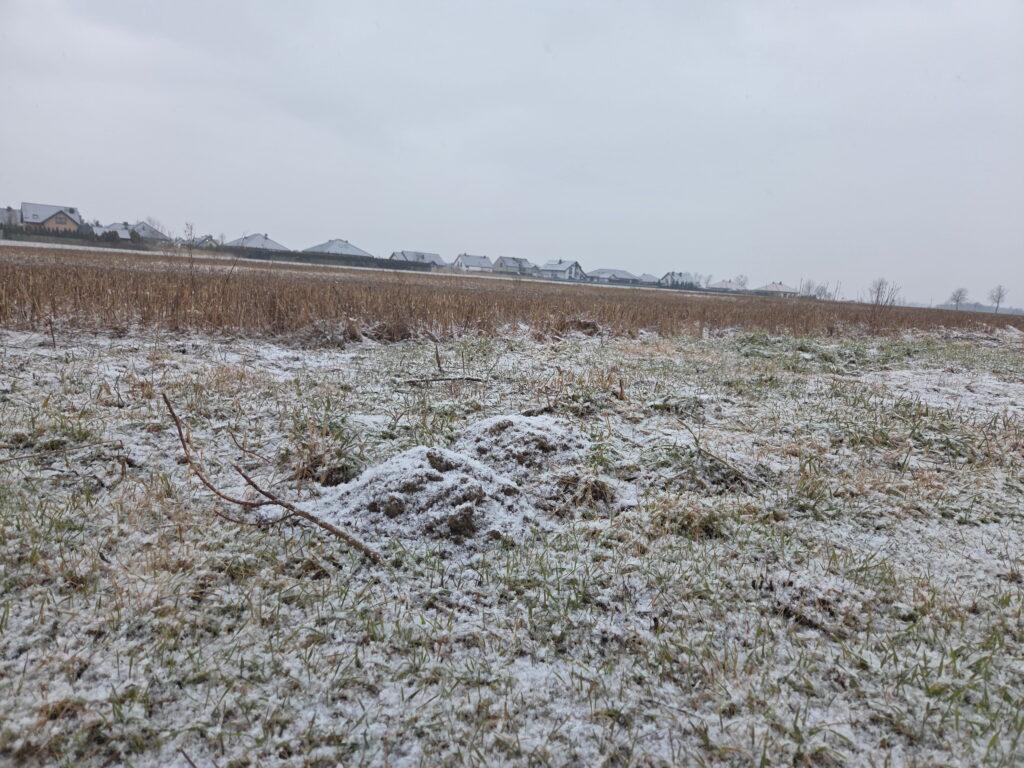
Frozen soil limits how easily these pests can push dirt upward. Molehills and signature tunnels may still form, but they’re harder to see under snow cover. Heavy rainfall before the frost season can also compact soil, masking signs of activity across your yard.
This reduced visibility is why many homeowners believe these animals are gone during the winter months.
Ongoing Underground Damage
Even when you don’t see molehills, these pests continue feeding on earthworms, grubs, and other bugs deep in the soil. As they hunt, they damage the root systems of turfgrass and plants. Over time, this creates dead grass patches that become obvious in early spring.
The tunnel networks they build while searching for grubs and worms destabilize soil structure from below. Winter mole activity often explains sudden lawn collapse once the ground thaws.
Why Mole Problems Show Up in Spring
Moles don’t suddenly arrive in spring. They were already there.
Throughout the winter months, their digging creates hidden tunnel networks. When the soil warms and grass resumes growth, those tunnels collapse. The result: visible pest damage, uneven sections across your yard, and soil ridges that make mowing difficult.
Spring is when you notice the destruction that started months earlier. By this point, trying to get rid of an established mole population becomes more challenging; their tunnel systems are already extensive, and breeding activity increases the problem.
Mole Control and Pest Control Options in Winter
Food Source Caution
Reducing grubs can help over time, but it may cause a short-term increase in digging as these underground mammals search for remaining food. Visible tunneling can temporarily worsen before activity declines.
Prioritize Trapping Over Repellents
Repellents and home remedies often produce inconsistent results. When tunnels are treated, moles prefer to simply avoid those areas rather than leave your property entirely. They relocate within their established territory, continuing to cause damage elsewhere in your yard.
Trapping remains the most reliable year-round control method, though frozen soil can make winter placement more difficult.
Traps and Professional Help
Trapping works year-round, though frozen soil makes placement harder. For persistent mole infestations, professional help can assess tunnel systems and apply targeted control strategies.
What Attracts Moles During Colder Months
-
- Loose, moist soil from overuse of sprinklers or irrigation systems
-
-
- Abundant earthworms and grubs
-
- Mulch applied too early, creating an insulated ground cover
-
- Lack of physical barriers around garden beds and trees
Mulch helps plants, but when applied before the first frost, it insulates soil and creates an ideal environment for burrowing pests.
Physical Barriers That Work
Install Barriers Before the Ground Freezes
Physical barriers are one of the most effective ways to prevent these burrowing mammals. For maximum efficacy, barriers should be L-shaped, buried 12 inches deep with a 12-inch lip facing away from the protected area to stop deep tunneling. Wire mesh is installed vertically around flowerbeds, garden edges, or tree root zones blocks digging.
Digging trenches in frozen ground is exhausting. Timing matters.
Protect Vulnerable Areas
Focus on:
-
- Garden beds
-
-
- Newly planted trees
-
- High-value lawn sections
These areas face the most risk during the snow season and early spring.
How to Prevent Winter Damage Before It Starts
Take Action in Early Fall
-
- Install L-shaped wire mesh barriers to prevent digging
-
-
- Reduce excessive watering
-
- Delay mulch until after the first frost
-
- Set traps in active tunnels before the ground freezes
Early action limits the cold-season digging and reduces spring repairs.
Monitor Lawn and Garden Conditions
Check for soft spots, sinking soil, or subtle surface tunnels. Less opportunity for damage exists when you control mole populations before the icy season arrives.
Frequently Asked Questions
What is the most effective mole deterrent?
Trapping is the most reliable way to control these pests that wreak havoc on your lawn. While many mole repellents promise quick results, they rarely work because these animals prefer stable tunnel systems and consistent food sources. Taking preventive measures like installing L-shaped wire mesh barriers helps protect plant roots and reduce digging, but lasting control comes from combining these precautionary measures with well-placed traps in active tunnels.
What time of year do moles go away?
A common misconception is that moles leave during certain seasons; they don’t. These pests remain active year-round, including throughout the cold months. When cold weather starts, surface activity slows, but these pests dig deeper and stay active underground the winter long. This is why lawns and gardens can still suffer damage even when fresh molehills aren’t visible. While natural predators like owls and foxes may reduce populations somewhat, they won’t eliminate an established mole problem.
How long will moles stay in my yard?
Moles stay as long as food and shelter are available. Lawns rich in earthworms and insects make gardens vulnerable year-round. Since these pests consume large amounts of food daily, they’re unlikely to leave on their own. To stop them from continuing to wreak havoc on your property, focus on preventive measures like L-shaped barriers and strategic trapping that limit tunneling and discourage long-term nesting