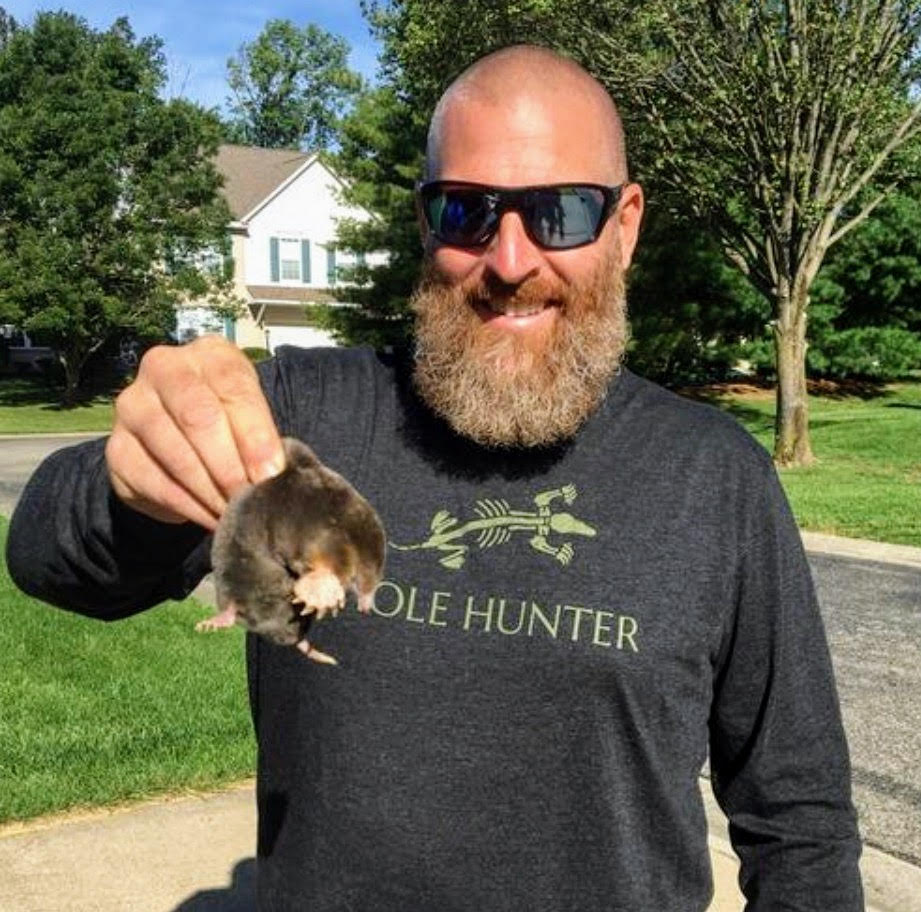
Many homeowners search their yard for mole droppings and come up empty. There is a simple reason for this: these animals defecate deep underground in dedicated tunnel chambers. If you found small pellets sitting on top of your grass, they almost certainly came from a different pest.
Correctly identifying what you actually found on the surface is the first step toward fixing the real problem and helping you get rid of these destructive pests. Let’s look at what mole scat actually looks like, why it stays hidden, and what is really tearing up your lawn.
What Do Mole Feces Look Like?
Genuine mole feces are small, pellet-like cylinders with tapered ends. They measure roughly 3 to 6 millimeters (about 0.125 to 0.25 inches long). They are very mouse-like in size. This surprises most homeowners, given that a fully grown Eastern mole (Scalopus aquaticus, the specific species responsible for most turf damage here in the Midwest) weighs significantly more than a house mouse.
These droppings are typically brown to black, hard, and dry. Sometimes they have a yellowish or greenish tint, depending on what the animal ate recently. The scat has a fibrous, rough texture. This comes from undigested chitinous exoskeletons (the hard outer shells of insects) that pass directly through the gut. It looks nothing like the softer waste of plant-eating rodents.
What Moles Eat and Why You Never See Mole Poop
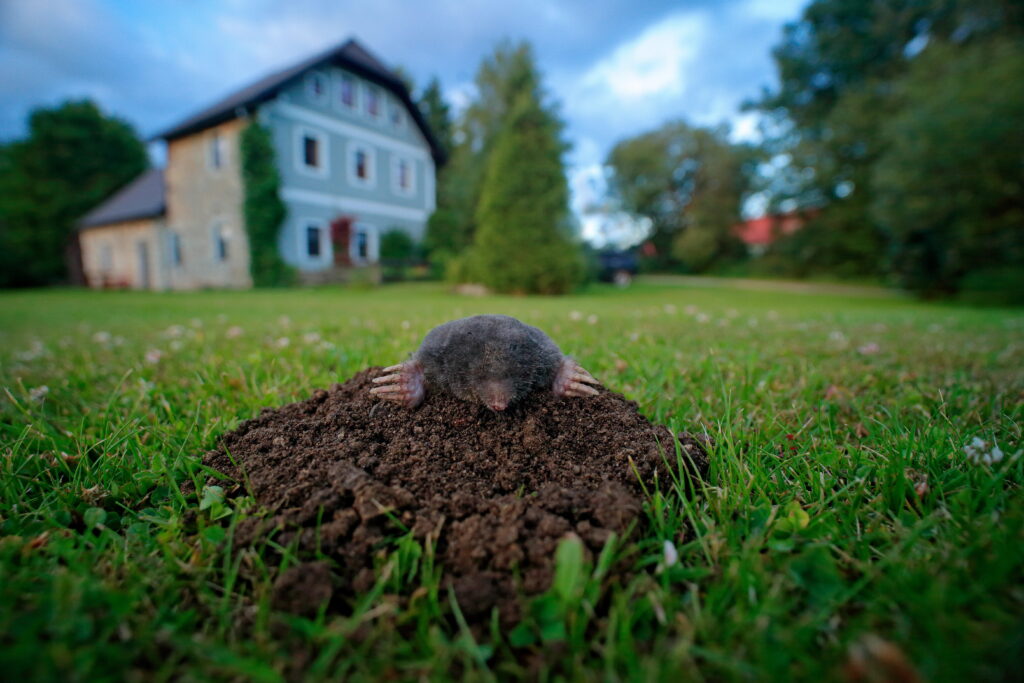
Because they are primarily insectivores (meat-eaters that only hunt insects), moles eat earthworms, grubs, beetles, ants, bugs, and worms in the soil. They do not eat plant roots, seeds, or bulbs. (However, overwatered lawns or thick mulch can attract insects, which keep them feeding nearby). Just to survive, they must consume between 70 and 100 percent of their body weight in food every single day.
Despite eating massive amounts of prey, they produce very little waste. Their digestive systems are highly efficient, extracting nearly every calorie from their food.
These animals spend the majority of their time underground in their burrows. Their bodies are built entirely for living underground. They use their large front feet and sharp claws to paddle through dense dirt, while their pointed snouts, rounded ears, and small eyes are protected from debris.
Because moles spend their entire lives hidden, they do not excrete waste randomly through their shallow tunnels. Instead, they construct designated latrine chambers (small, dead-end tunnels used exclusively for bathroom habits) well below the surface.
In my 25 years working hands-on in the green industry, I have excavated countless tunnel systems around Greater Cincinnati. You simply cannot find genuine mole poop above ground without a shovel.
What People Actually Find Instead
If it isn’t mole scat on your lawn, what is it? Here in Ohio and Kentucky, homeowners typically mistake one of three things for mole droppings.
Earthworm Castings
The most common misidentification is earthworm castings (processed soil that earthworms excrete). In Greater Cincinnati suburbs like Loveland, Mason, and Anderson, our heavy clay-loam soils hold moisture perfectly. During the wet spring months, right when mole activity peaks in our area, worms push these muddy, coiled, soft pellets to the surface of your turf to form small piles. They look alarming, but they are a sign of healthy soil biology.
Vole Droppings Along Surface Runways
The second major source of confusion is the meadow vole. Voles are rodents, not insectivores. They eat grass, seeds, and bark. Voles travel along fixed surface runways (narrow paths worn right through the grass) and leave their droppings directly on those paths. Vole scat is small, uniform, rounded at both ends, and green to brown. It looks like tiny grains of cooked rice.
Shrew Activity
Shrews are tiny insectivores that frequently hunt for bugs inside abandoned mole or vole tunnels. As research from the Ohio State University Knowledge Bank on local shrew habits notes, these tiny predators take advantage of existing mole and field mice runways to forage and conserve energy. Because they are actively using these collapsed surface entrances to hunt, any small droppings found right at the opening usually belong to a passing shrew, rather than the mole that originally dug the tunnel.
Moles vs. Voles: Same Yard, Different Fix
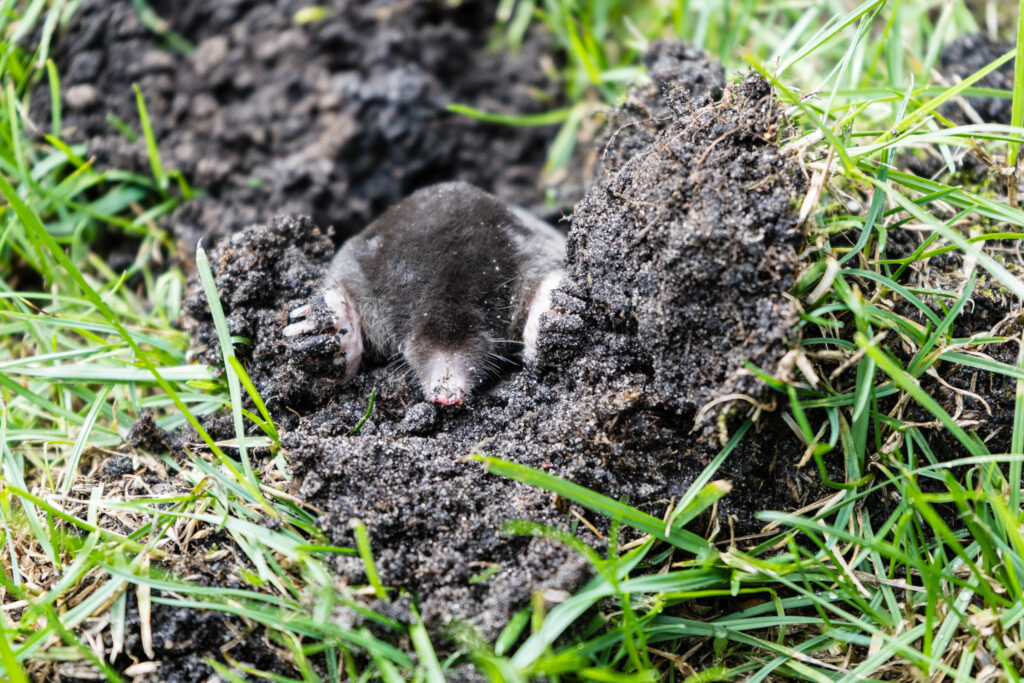
The difference between moles and voles determines what fix actually works.
| Feature | Eastern Mole | Meadow Vole |
| Classification | Insectivore | Rodent |
| Diet | Earthworms, grubs, insects | Grasses, seeds, roots, bark |
| Droppings | Hidden deep underground | Visible on surface runways |
| Lawn Damage | Raised ridges and dirt mounds | Narrow, worn trenches in the grass |
| Plant Damage | Secondary (digging disrupts roots) | Direct (gnawing roots and bark) |
What this means for your wallet: Treating a vole problem with mole traps wastes time and money while the lawn damage continues to spread.
The Sure Sign of Mole Activity
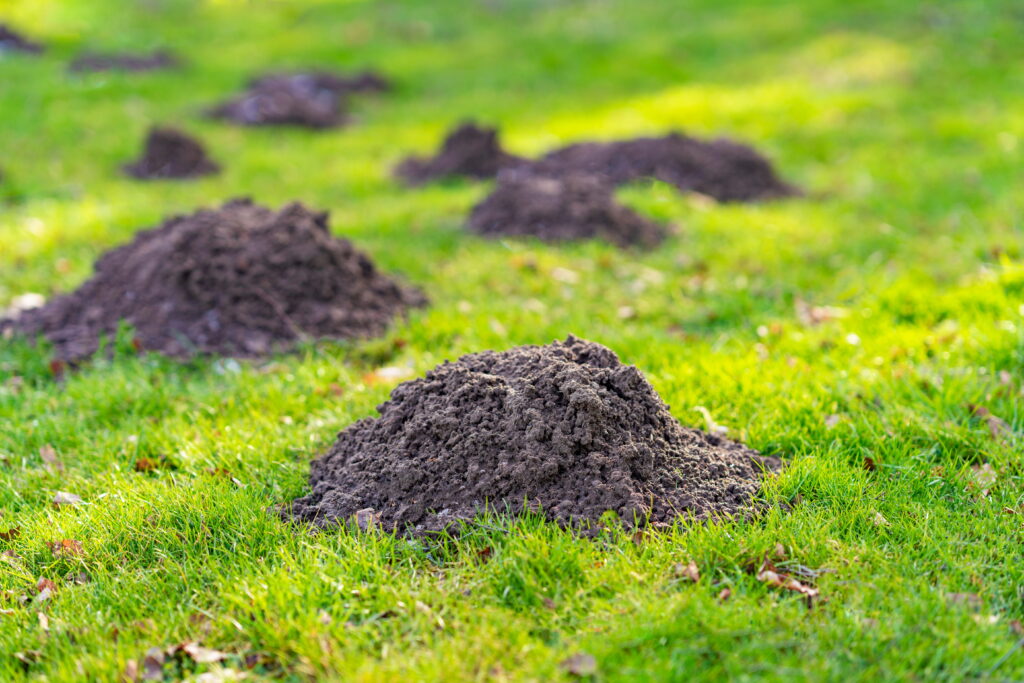
Because mole droppings will never appear on your lawn, you have to look for physical damage to identify an active infestation. These damage patterns are distinct once you know what to look for.
A sure sign of mole activity is raised, spongy ridges winding across the turf. These form when moles dig just beneath the surface to hunt for feeding worms, severing the grass roots from the soil and leaving dead strips of grass above each run.
You will also see volcano-shaped dirt mounds (with no visible open holes). These cloddy piles of dirt appear when a mole sinks a deep, permanent tunnel and pushes heavy subsoil to the surface. They look distinctly different from the large, open-hole burrows and massive dirt piles left by groundhogs, which are much more common here in Ohio and Northern Kentucky.
How to Control Moles Professionally
If you want to control moles, figuring out which tunnels are actively being used and which ones are abandoned foraging paths is difficult. Most raised ridges crossing a yard are one-time exploratory tunnels. In the field, I use a quick heel press to crush a small section of the ridge; if the mole repairs it within 24 hours, it’s a main arterial run. Without testing, traps placed in dead-end feeding runs will catch absolutely nothing.
Mole feces aren’t a health risk, but the real danger is to your property. Their tunneling severs grass roots, creates hidden tripping hazards, and builds underground highways that voles and mice use to destroy your landscaping. I see this secondary damage all the time while checking traps across Cincinnati, Lebanon, Milford, and Loveland.
I pride myself on acting quickly to stop the destruction before it gets out of hand. Here is a recent review from a customer who trusted my team to save their yard:
⭐⭐⭐⭐⭐
I highly recommend the Mole Hunter! I called and Amanda was quick to respond. Within 2 days, Jeff was on-site. They are subject matter experts and if you have a mole problem, these are the people you want to call! Professional, prompt, informative!
If you are ready to reclaim your lawn, give me a call at (513) 654-5079. I don’t do blind phone quotes. I will personally walk your property, inspect the damage, and give you a clear, honest action plan before you spend a dime.
Frequently Asked Questions
Can finding mole droppings help me place traps effectively?
No. Because moles isolate their droppings in deep, dead-end latrine chambers, finding waste does not indicate an active travel tunnel. Proper trapping relies on identifying the main, straight arterial runs that moles use daily to navigate your yard, rather than locating their waste.
Will mowing over a mole mound spread mole droppings across my lawn?
No. The volcano-shaped mounds you see in your yard are just displaced dirt pushed up from deep excavations. There is rarely any waste mixed into this soil. However, hitting these mounds with a mower will quickly dull your mower blades and create muddy bald spots in your turf.
Do moles ever leave their underground tunnels to go to the bathroom?
No. Moles are anatomically built for subterranean survival and rarely surface voluntarily. Leaving the safety of their tunnel system exposes them to owls, hawks, and foxes. They handle all of their bodily functions, sleeping, and hunting beneath the soil surface.