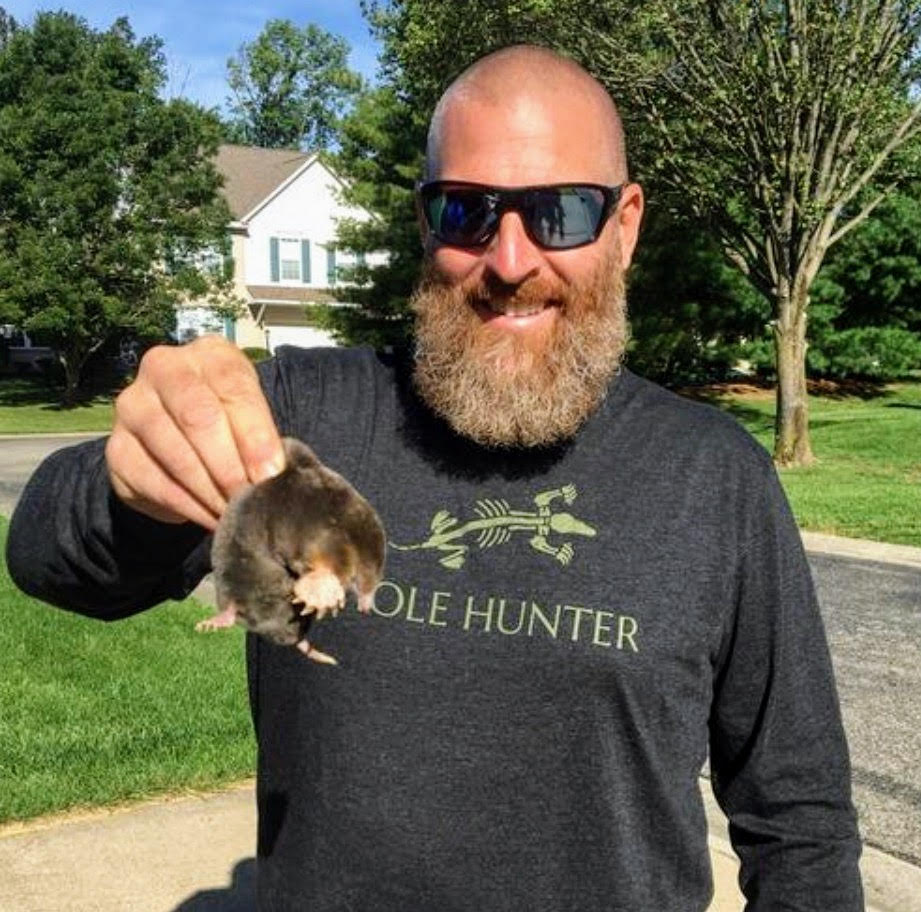
You’re out back, and the dog has gone berserk near the flower bed. You get closer, and there’s a live mole flopping around in the dirt. Your instinct is to back up. That makes sense.
Yes, moles have teeth, and they can bite. But it almost never happens, and when it does, it’s rarely serious. Moles are not aggressive. They want nothing to do with you.
Do Moles Bite People?
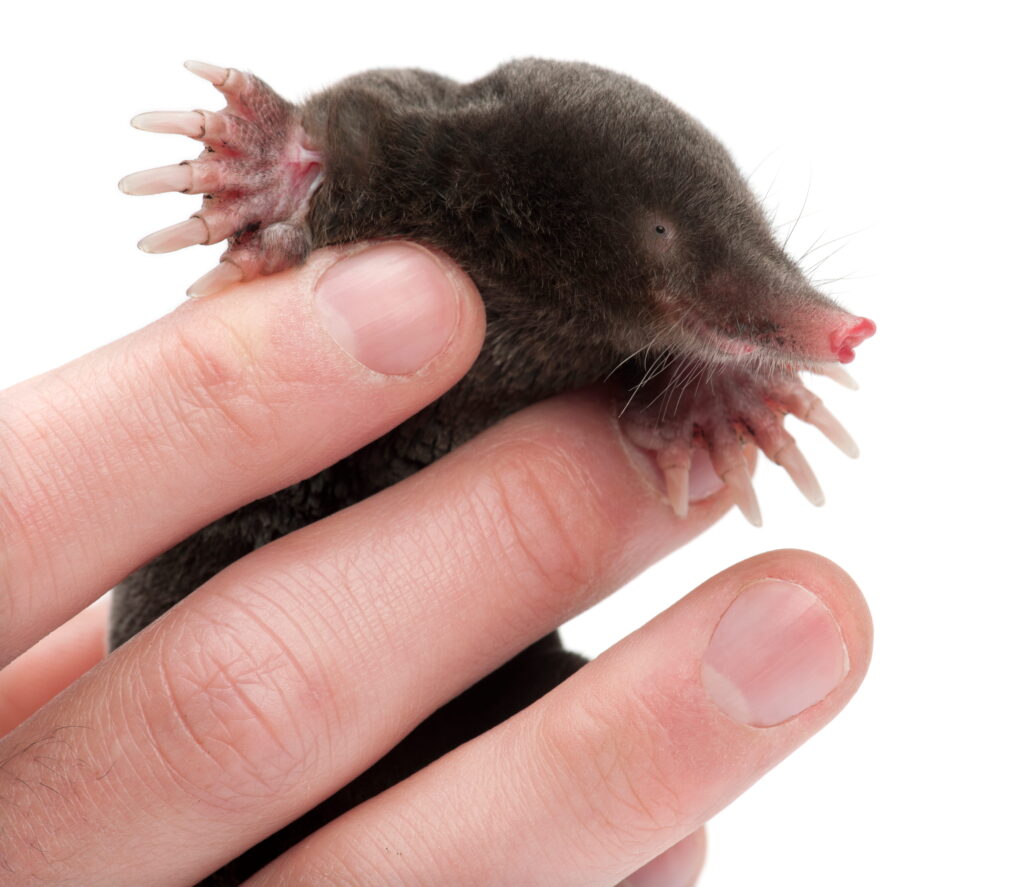
Moles are built for one thing: digging. Their broad front paws, cylindrical bodies, and velvety fur are perfectly suited for an underground lifestyle. Their world is below the surface, in loose soil and tunnel systems far from human activity.
The mole’s teeth are sharp but small, designed for gripping earthworms and other invertebrates. They are not weapons. Fighting is not part of their toolkit.
As the owner of The Mole Hunter, I regularly pull live moles out of the ground by hand during property inspections. The mole usually freezes for a second, disoriented by the light, then twists hard trying to get back underground. If moles were prone to attacking humans, I would have stopped doing that a long time ago. They just want to escape.
A mole that is cornered or held too tightly can nip defensively. Bites are the exception, not the norm. If one does bite you, clean the wound with soap and water, apply an antiseptic, and watch for redness or swelling over the next few days.
Are Mole Bites Dangerous?
For most people, a mole bite is a minor puncture wound. Like most wild animals, moles carry oral bacteria that can cause a localized infection if introduced into a wound and left untreated. Clean it, treat it, and watch it closely.
Do Moles Transmit Rabies Through Bites?
No. Small insectivores like the eastern mole are almost never found to carry rabies. You can set that concern aside entirely.
The disease questions worth paying attention to are different ones. For the full picture on what moles can and cannot pass to people and pets, read “Do moles carry diseases?” before your next yard project.
Lyme Disease and Other Health Risks
Moles themselves are not major disease carriers, but they host ticks and fleas that are. Those parasites can transmit Lyme disease, anaplasmosis, and, in some parts of the country, Rocky Mountain spotted fever. The mole doesn’t bite you and give you Lyme disease. The tick riding on the mole does.
If you’re doing yard work in areas of active mole tunneling with cuts or scrapes on your hands, gloves and a thorough wash afterward are simple precautions worth taking.
| Health Risk | Source | What to Do |
|---|---|---|
| Bacterial infection | Oral bacteria from a mole bite | Clean wound, apply antiseptic, seek medical attention if symptoms develop |
| Lyme disease and anaplasmosis | Ticks carried by moles | Keep pets on flea and tick prevention; check skin after yard work |
| Rocky Mountain spotted fever | Ticks carried by moles | Check skin and clothing for ticks after being in the yard; remove promptly |
| Rabies | Almost nonexistent in moles | No action needed |
Dogs that regularly dig in areas with mole tunnels face the highest tick exposure risk. If your dog likes to dig through areas where moles are active, parasite prevention is not optional.
Are Moles Dangerous to Dogs and Cats?

Dogs are the main reason homeowners end up face-to-face with a live mole. Terriers, especially, will dig up a mole tunnel the moment they catch the scent. If your dog corners a mole, a defensive nip is possible. It won’t inflict serious damage, but it can break the skin.
Pet Safety Warning
The mole itself is not the biggest threat to your pet. The real danger is what some homeowners reach for when they try to address mole problems on their own. Toxic DIY baits and exposed harpoon traps sold at hardware stores are a genuine danger to pets and have been linked to serious poisoning cases.
The mechanical traps we use are set below the surface inside active tunnels. They’re completely kid-safe and pet-safe. A child playing in the yard or a dog sniffing around cannot reach them. That’s one of the clearest practical reasons to call a mole trapping specialist rather than handle the problem yourself.
Understanding the Eastern Mole’s Life Cycle
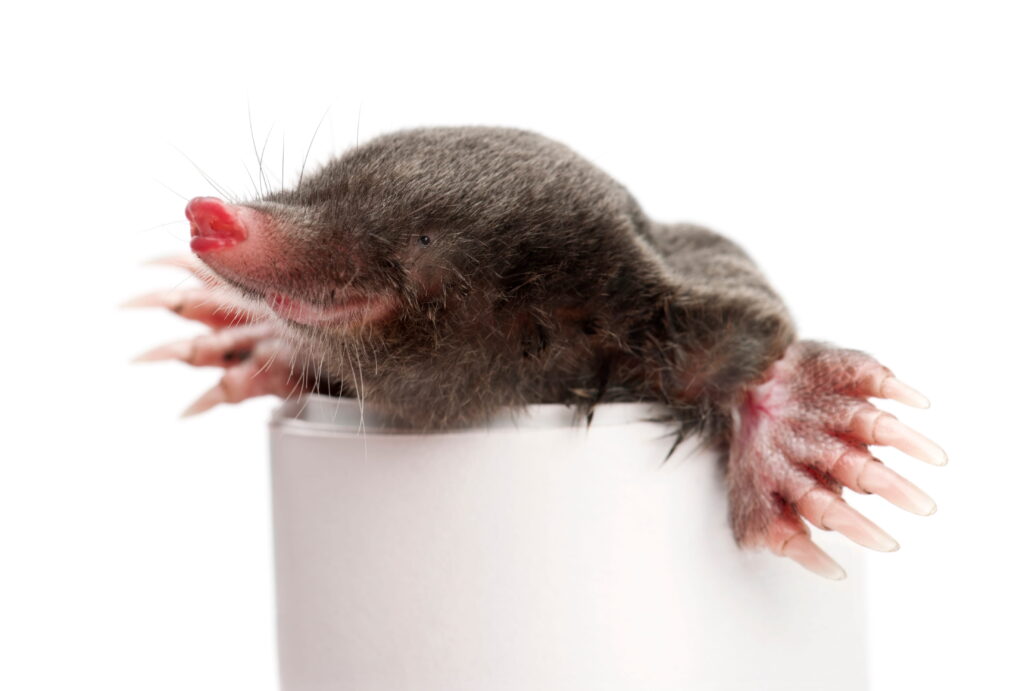
The eastern mole is the species causing lawn damage across Ohio. It’s a solitary animal and highly territorial, which is why mole populations don’t explode the way rodent populations do. Each mole claims its own tunnel system and defends it aggressively.
Breeding season falls in early spring. A single litter of two to five young is born shortly after. Baby moles are pushed out to establish their own tunnels within weeks, which is why mole activity can appear to spread across a lawn over a single season.
What Moles Love to Eat
Moles feed primarily on earthworms, grubs, and other soil invertebrates. They paralyze earthworms by biting the worm’s brain or nerve ganglion, then store them alive in deep underground chambers called larders for use when foraging conditions are poor.
A lawn with a healthy worm population is a perfect environment for moles. Insecticide treatments targeting grubs rarely discourage them because earthworms, not grubs, are the main food source. Mole infestations are not solved by lawn chemistry.
The Real Damage: Lawn and Root Systems
Mole bites are rare. Lawn damage from moles is not.
Moles create two types of tunnels. Shallow hunting tunnels run just below the surface through loose soil and show up as raised ridges that feel spongy underfoot. Deep permanent tunnels are the routes moles travel between feeding areas.
A single mole can tunnel up to 100 feet in one day under optimal conditions, tearing through grass roots and even the roots of ornamental plants across a wide stretch of lawn. Molehills, the mounds of loose dirt pushed to the surface, create tripping hazards and can redirect rainwater toward basement windows during heavy rainfall. This root damage often shows up as dead patches weeks after the mole has moved on, which is why the problem is easy to underestimate until it’s widespread.
Should You Try to Catch Moles Yourself?
I often get asked if you should try catching moles yourself. My advice is simple: don’t do it. It is not because it is dangerous. It is just genuinely difficult. Moles move fast and dig even faster.
I have seen DIY attempts fail all over Cincinnati, OH, as well as in Lebanon, Milford, and Loveland. Trying to catch them by hand or with improvised traps usually makes the problem worse. You end up disrupting tunnels that the mole will just rebuild overnight. Effective mole control comes down to mechanical trapping done by someone who knows how to read active tunnel systems.
Here is a review from a customer who decided to skip the DIY headache and let my team handle it:
⭐⭐⭐⭐⭐
“Excellent Service. Highly recommend. I knew I had moles because my yard was looking really bad with all the dirt mounds. Called Mole Hunter and they came out a couple days later. The technician walked my entire yard and confirmed that I did, in fact, have moles. I asked for a quote and received it later that day and I immediately signed up for their service. Couple days later, the technician arrived to set the traps. Each week, for 6 weeks, a technician would come to check the traps and to inspect the yard again to see if the moles had moved and if the traps had to be reset. After each inspection, I received an email report of what they found. Loved that! Every person I interacted with from Mole Hunter was professional, knowledgeable and friendly. Will definitely use again if needed. Happy to say that I am now mole free!”
If you are ready to be mole-free, schedule a free on-site inspection with me. I will make sure we get traps set exactly where they will actually work. Give me a call at (513) 654-5079 or reach out online today to get your yard back.
Frequently Asked Questions
What should I do if a mole bites me?
Wash the wound with soap and water immediately, apply an antiseptic, and monitor it for signs of infection. Because the oral bacteria a mole carries can lead to a secondary infection, prompt wound care matters. If you notice increasing redness, warmth, or swelling, seek medical attention promptly.
How do I know if I have a mole infestation?
Look for raised ridges of loose soil running across the lawn in irregular patterns that feel soft when walked on. Molehills, small mounds of disturbed dirt, are another sign. One mole can create enough tunnel damage to look like a much larger problem.
Do moles eat plants?
Moles are insectivores first. Their main diet is earthworms, grubs, and other soil invertebrates. They do not actively target plants, but their tunneling severs grass roots and plant roots, which kills vegetation indirectly. When insects are scarce, moles will consume plant material, including even the roots.