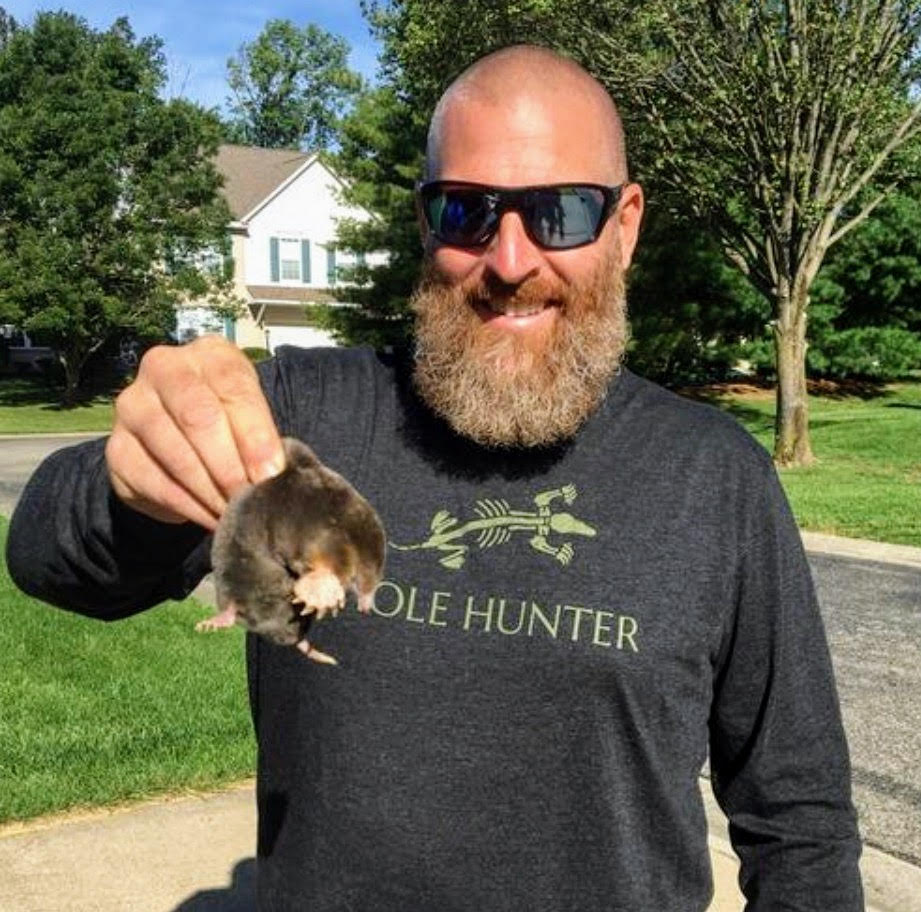
Noticing signs of moles in your yard? If your Cincinnati lawn looked fine last week and now it’s covered in raised ridges and soft patches, you’re probably dealing with the Eastern mole. The Eastern mole is behind nearly 99% of residential complaints in the Cincinnati area, and moles tend to go unnoticed until the damage is already significant.
A single mole must consume between 70% and 100% of its body weight daily in earthworms, white grubs, and other soil-dwelling insects, which means it digs tunnels constantly, sometimes moving up to 150 feet of new tunnel in a single 24-hour period.
How to Identify Moles in Your Ohio Yard
You won’t spot a mole scurrying across the patio. With their pointed snouts, no external ears, and tiny eyes hidden beneath skin, they’re built for life underground. You identify moles by the physical changes they leave in the soil, not by direct plant damage, since their diet is almost entirely earthworms, grubs, and other insects. In Southwest Ohio communities like Loveland, Cincinnati, Lebanon, and Mason, the region’s rich clay soil supports large earthworm populations that make residential yards especially attractive to moles.
1. Raised Ridges and Mole Tunnels
The most obvious sign of mole activity is a network of raised tunnels snaking across the grass. Feeding tunnels are irregular, winding, and “scribbly” in appearance, sitting just beneath the root zone of the grass. Travel tunnels are straighter, often running along sidewalks or fence lines. Moles are active throughout the day, but tunneling peaks in the early morning and late evening when the soil is cooler.
To check if a tunnel is active, press the raised ridge flat with your foot. If it’s pushed back up by the following day, the mole is still using it. Purdue University’s Plant & Pest Diagnostic Lab recommends focusing traps or baits on these confirmed active runs for the best results.
2. Dying Grass and Lawn Damage
When a mole digs through shallow tunnels, it separates the grass roots from the surrounding soil. Those roots dry out fast, and the result is strips of dying grass that trace the path of the mole runway beneath them. Left unchecked, this spreads across the lawn, around tree roots, and into flower beds.
Identifying mole activity early gives you the best chance of limiting further damage.
3. Unsightly Dirt Mounds
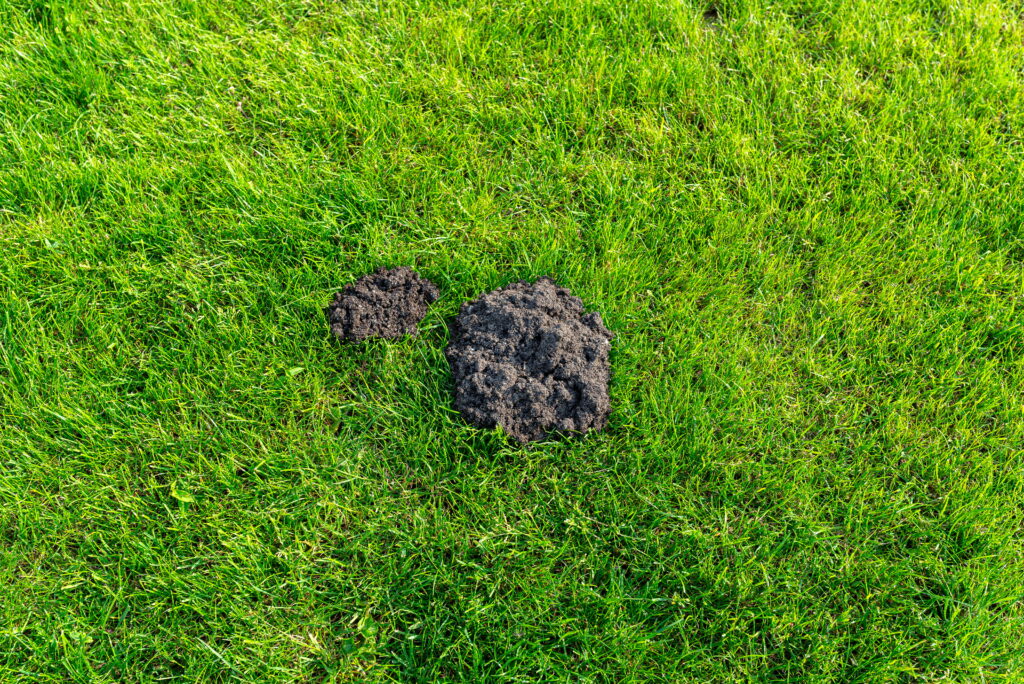
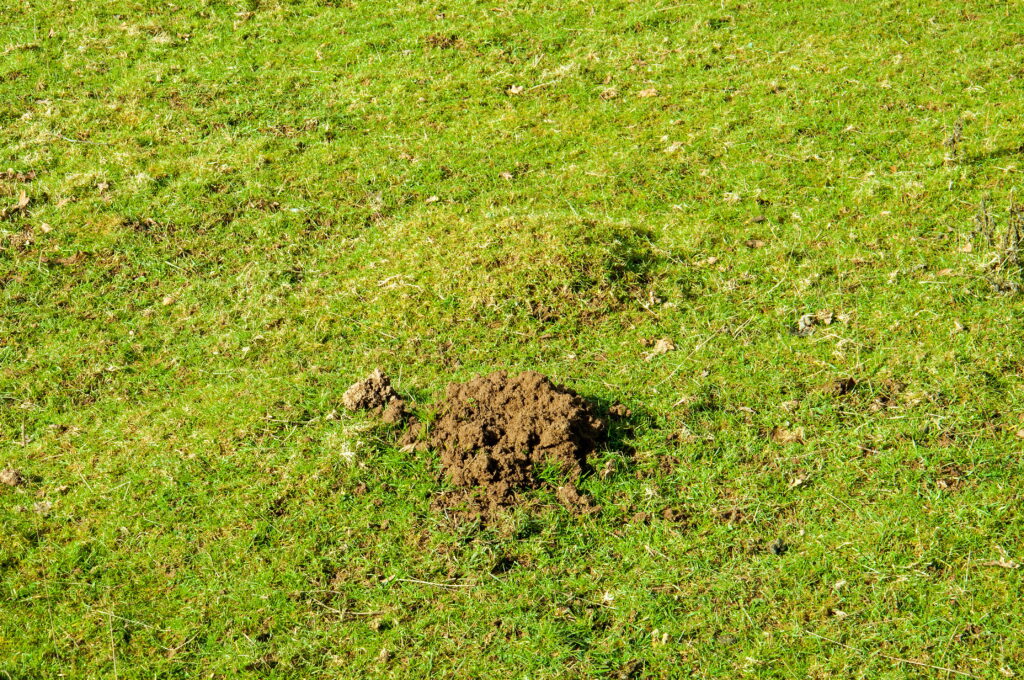
If you’re wondering what mole holes look like, they’re not open holes at all. Molehills are small, volcano-shaped mounds of dirt pushed up from deeper underground tunnels, sometimes from nesting chambers or permanent deep runs that extend several feet below the surface. Unlike the fan-shaped mounds gophers leave, molehills are conical with no visible entrance hole, and in the Cincinnati area, gophers aren’t actually the animal you’re dealing with in the first place.
These small mounds paired with surface ridges are strong confirmation that moles are present.
4. The “Spongy Lawn” Feeling
You step onto the lawn, and it feels hollow underfoot because of air pockets created by the tunnel network beneath the turf. It’s an unsettling feeling, honestly, like the ground might give way, and if you’ve got a push mower, it makes an already tedious job twice as annoying.
Is It Mole Damage or Vole Damage?
Moles are insectivores. They don't eat plants at all. Understanding mole vs vole damage is important because the two animals leave very different signs. Voles, sometimes confused with field mice, are herbivores that chew on plant roots, bulbs, and bark. Mole tunnels can attract voles and other pests who move into existing tunnel networks, compounding the problem.
| Sign | Mole | Vole |
|---|---|---|
| Primary diet | Earthworms, grubs, other insects | Grasses, roots, bulbs |
| Tunnel type | Raised ridges, deeper tunnels | Shallow surface runways |
| Dirt mounds | Volcano-shaped molehills | None |
| Plant damage | Indirect (root disturbance) | Direct (chewing and gnawing) |
| Visibility | Almost never seen | Frequently active and visible |
For a deeper breakdown, check out our guide on moles vs. voles.
How to Get Rid of Moles and Deter Them Long-Term
Don't waste time with folklore. Coffee grounds, sonic pulses, vibrating stakes, and a standard mousetrap won't solve a mole problem. Moles either ignore these or simply shift their tunneling elsewhere.
The Reality: Moles are highly adaptable. They might avoid a vibrating stake for a day or two, but they quickly realize it isn’t a real threat. It’s very common to see fresh mole tunnels dug right next to an active sonic spike.
The Reality: Moles are aggressively hunting earthworms and grubs. Even if a smell temporarily bothers them, they’ll simply shift their tunnel a few feet over. Plus, Ohio’s rainy climate washes these DIY repellents out of the soil incredibly fast.
The Reality: Moles are built like little underground bulldozers, not mice. A standard surface mousetrap isn’t triggered correctly by a mole’s tunneling behavior and isn’t strong enough to secure them. You need specialized, sub-surface mechanical traps.
Why Castor Oil Won't Solve the Problem
Castor oil-based repellents and products with castor beans can temporarily drive moles from one section of the yard to another, but the effect fades fast in Ohio's rainy climate. When grubs and earthworms remain plentiful, no repellent keeps moles away for long.
Mole Trapping for Reliable Yard Mole Control
Mechanical mole traps remain the fastest method to remove moles. Trapping gives you physical proof of removal, which matters because moles can go quiet for weeks when they've just moved to deeper tunnels.
At The Mole Hunter, we only use kid-safe and pet-safe mechanical traps. No poisons. No chemicals. Professional pest control is the most effective path because catching moles requires precise trap placement in active travel runs, something that takes experience to get right.
Grub Control and Prevention for a Healthy, Beautiful Lawn
Grub treatments are commonly marketed as mole prevention, but moles feed primarily on earthworms, so a grub-free lawn alone won't keep them out. That said, reducing grub populations lowers overall pest activity on your property and makes the yard less inviting. Pair a targeted grub treatment with well-drained soil and regular thatch removal to cut down on the insect habitat that draws moles in.
Physical barriers like hardware cloth buried around flower beds also protect specific areas from significant damage. Without intervention, even one mole can wreak havoc on a property in a matter of weeks.
Spotted these signs in your yard?
Don't wait for the damage to spread. Book a free mole control inspection today and let us take care of it safely, quickly, and without chemicals.
Frequently Asked Questions
How do I know if mole tunnels in my yard are still active?
Flatten a raised ridge with your foot and check the following day. If it's pushed back up, a mole is actively using that run. Moles can create new tunnels daily, especially in the early morning. Focus trapping efforts on confirmed active runs.
Do moles eat plant roots or flower bulbs?
No. Moles primarily eat insects, earthworms, and grubs. Their tunneling disturbs plant roots, which causes grass to dry out and die. Voles are the ones that chew on roots and bulbs, and they'll sometimes move into abandoned mole tunnels to do it.
Can I get rid of moles without using poison?
Mechanical trapping is the most effective mole control method and requires no chemicals. For active mole infestations, The Mole Hunter uses only pet-safe and kid-safe traps, making it the safest option for families in the Cincinnati area.