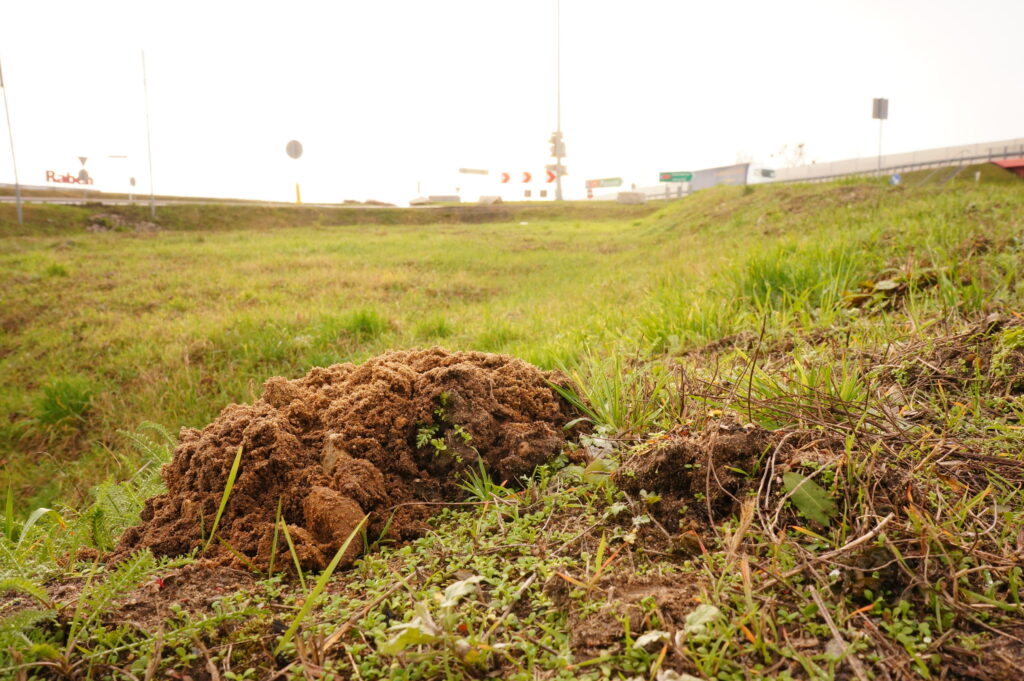
Raised ridges running along your home’s exterior wall trigger immediate concern about your home’s foundation. That reaction is understandable, but the fear most Cincinnati homeowners carry about moles chewing through structural materials is based on a biological misunderstanding worth correcting before spending money on the wrong fix.
The Short Answer
No, moles will not chew through your foundation. The University of Arkansas Cooperative Extension Service confirms that they entirely lack the dental structure to chew plant material, seeds, or hard food items, and survive strictly as insectivores. An animal without the molars to grind a seed has no mechanism to process masonry or structural wood. They are not trying to enter your house.
The real threat is indirect. Their tunneling destabilizes the soil around your home, creates voids beneath shallow concrete surfaces like patios and driveways, and channels water against foundation walls during winter freeze-thaw cycles. Treating these creatures as a harmless lawn nuisance is a different kind of mistake. The damage accumulates silently and starts the moment they begin digging.
Foundation Myths vs. Reality
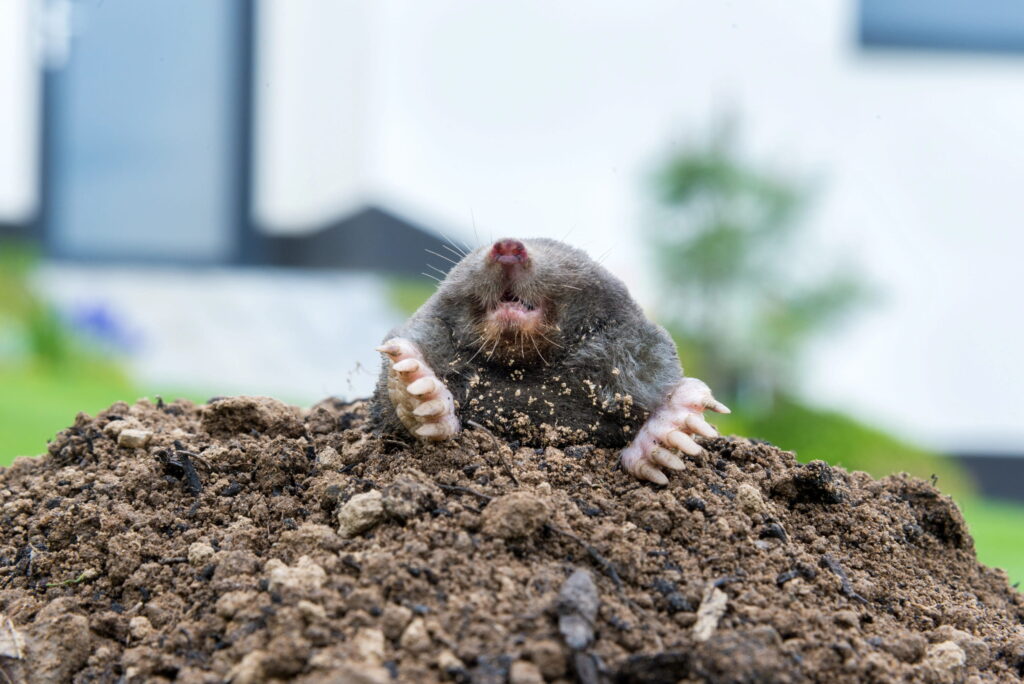
The anxiety about moles and foundations usually comes from confusing them with rats and mice. Rodents belong to the order Rodentia, defined by continuously growing incisors coated in an iron-rich enamel that lets them chew through wood, PVC piping, copper wiring, and improperly cured concrete.
The eastern mole belongs to a separate order, Eulipotyphla. Its teeth are sharp and pointed, built for piercing earthworms, grubs, and other insects. Moles have no iron enamel, no ever-growing incisors, and no drive to process hard materials. The anatomy required to breach a foundation wall does not exist in this animal.
| Characteristic | Eastern Mole | House Mouse or Rat |
|---|---|---|
| Classification | Insectivore (Eulipotyphla) | Rodent (Rodentia) |
| Primary food | Earthworms, grubs, other insects | Seeds, grains, human food |
| Structural threat | Indirect, soil voids and water pooling | Direct, chewing through wood, drywall, wiring |
| Proven control | Mechanical trapping in active tunnels | Snap traps, bait stations, and exclusion sealing |
Your home’s foundation wall is not at risk from a mole’s teeth. The real problem is what tunneling does to the surrounding soil and concrete.
What Draws Yard Moles to Your Foundation
Yard moles follow food, and the loose soil against your foundation is often the richest hunting strip on the lot.
The eastern mole must consume between 70 and 100 percent of its body weight in food every single day. Worms account for 80 to 90 percent of that diet, and they need constant soil moisture to survive. Roof runoff, downspouts, thick mulch, shaded flower beds, and irrigation systems all concentrate moisture along the foundation perimeter. Compost piles are especially attractive because they keep worm populations dense year-round right where the soil meets your slab.
Moles seek moisture-rich, loose soil and use the concrete wall as a navigation aid to burrow beneath the surface. The animal digging beneath your house is feeding, not probing for structural weakness.
The Extensive Damage Moles Create Around Your Home
Voids Under Driveways, Patios, and Walkways
Deep reinforced basement walls face no immediate threat. What is at risk is every shallow concrete surface: driveways, patios, walkways, entry steps, and HVAC pads.
Moles dig deeper tunnels beneath concrete slabs because the slab acts as a roof against natural predators like hawks, owls, and other birds that hunt in open ground. As the animal burrows beneath a patio or driveway, it removes supporting earth and creates a void beneath a surface that depends entirely on solid soil contact. Concrete cannot bridge empty space. Water enters, erodes the surrounding loose soil, and widens the gap. A hairline crack forms, then a visible dip, then eventual failure under a vehicle or the slab’s own weight.
A single mole can dig up to 18 feet of new tunnel per hour, causing extensive damage in a short time and creating underground highways that voles, mice, and rats use to reach plant roots without digging their own routes.”
Voles are commonly mistaken for moles, but they cause a distinct category of plant damage once they access an existing tunnel system, and a troubled yard frequently has both. Raised surface ridges create a tripping hazard, kill plants in nearby flower beds, and leave dead patches in the grass.
Repairing void-damaged concrete means polyurethane foam injection or full slab replacement, both costing thousands of dollars. Professional mole trapping before a void develops costs a fraction of either.
The Freeze-Thaw Risk in Cincinnati
Cincinnati sits on clay-loam soil with a restrictive subsoil layer called a fragipan that limits drainage severely. The upper soil stays saturated after rain for extended periods, sustaining dense worm populations year-round and driving persistent mole infestations throughout the region. Moles do not hibernate, and they remain active below the frost line through every month of the year, meaning the tunneling continues even when the surface appears frozen.
When mole tunnels adjacent to foundation walls fill with rainwater or snowmelt, Ohio Valley winters make them structural hazards. Water expands by roughly 9 percent when it freezes. Ice forming inside a tunnel pressed against concrete exerts lateral pressure against the masonry, and repeated freeze-thaw cycling heaves the soil and widens existing micro-fissures.
Why Common Mole Control Methods Fall Short
Most products sold for mole control share the same flaw. They target the yard, not the animal. Castor oil repellents irritate the soil but simply push tunneling to another section of the same property. Chewing gum is a persistent folk remedy that moles burrow straight past. Ultrasonic spikes promise results but have no real effect. Moles adapt to the vibrations quickly and have been found digging new runs directly beside active devices.
The grub treatment sold by many lawn care companies is the most expensive of these dead ends. It sounds logical, but moles eat far more earthworms than grubs. Treat the grubs; the moles keep feeding. Burying hardware cloth barriers requires tearing up your yard for a trench deep enough to matter, and a mole that simply digs beneath the trench line bypasses the whole investment. Every one of these approaches fails for the same reason: the mole is still in the ground.
Solving Your Mole Problem for Good
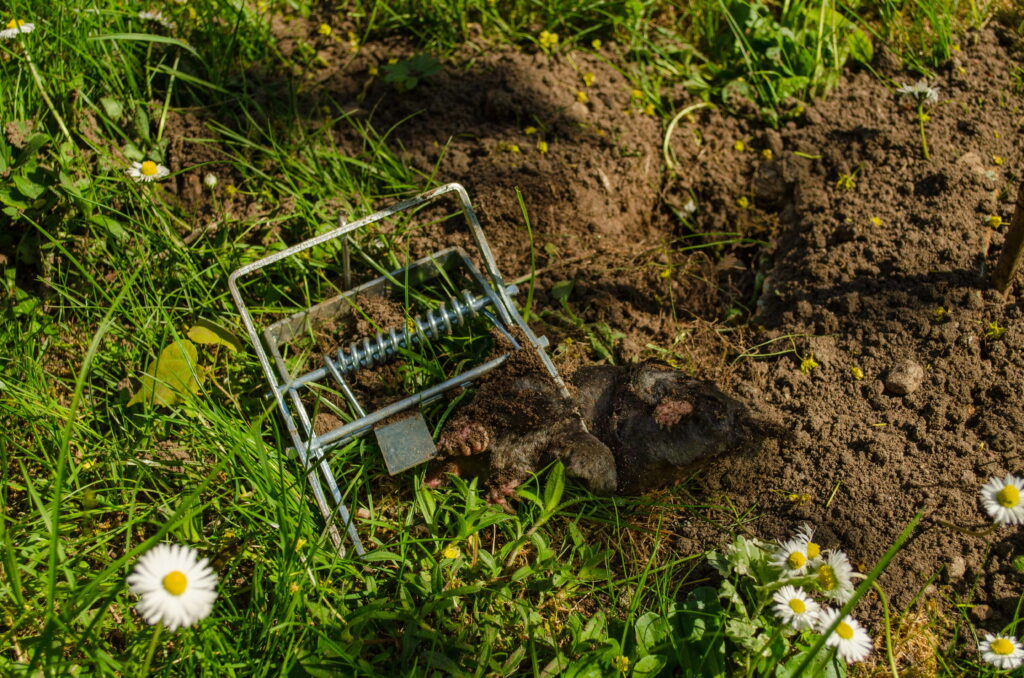
Mechanical trapping is the only guaranteed way to remove moles, but placement is where most DIY attempts fail. Visible mounds are often just temporary exit points. The main runways you actually need to target run deeper, usually parallel to your foundation, driveway, or fence lines. If a mole survives a misplaced trap, it becomes trap-shy and avoids future traps entirely. When you hire me, you get the right trap in the exact right spot, plus physical proof that the animal is gone.
I always love stepping in to solve a frustrating problem right out of the gate. Here’s a review from a customer who had been battling moles for months before I stopped by:
⭐⭐⭐⭐⭐
jessica metzger
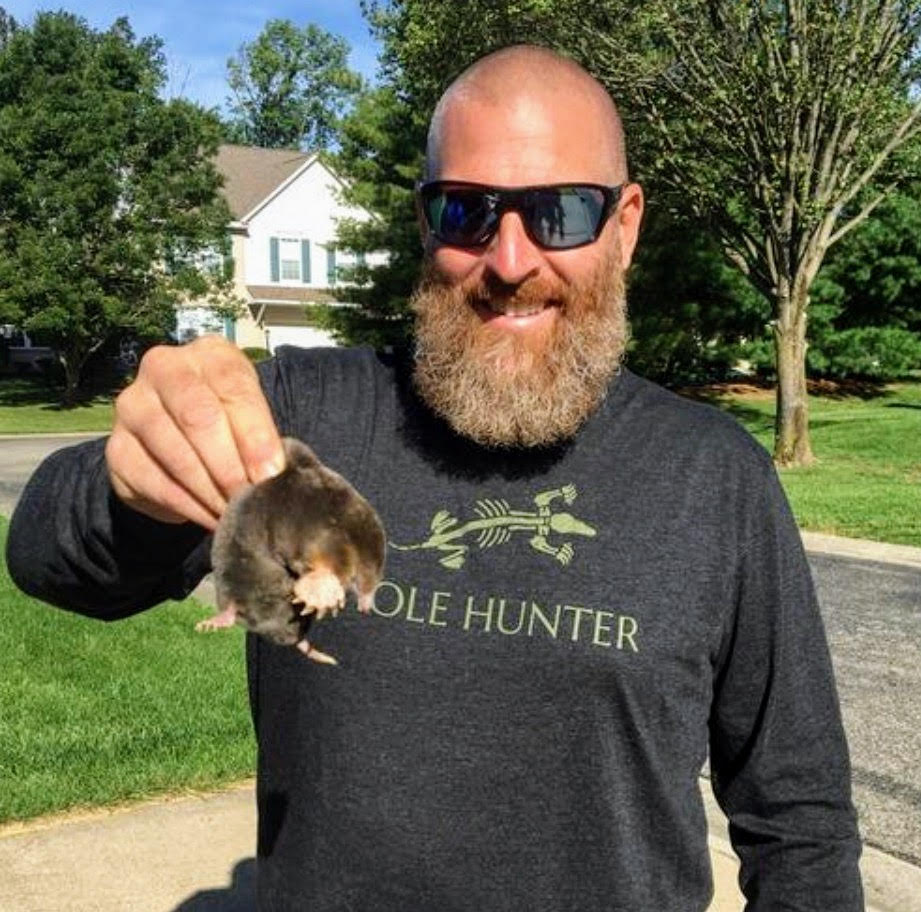
“After several months of trying to trap/rid our yard and landscaping of moles, we finally admitted defeat and filled out a “Request for Quote” from The Mole Hunter website. Less than 24 hours after contact from the office, Jeff came out to assess our yard and activity. While talking with, him he saw the ground moving just a few feet away. He immediately stood over the moving dirt, scooped his hand from both directions of the tunnel and pulled out the biggest mole I’ve ever seen BY HAND! Needless to say, I immediately said “You’re Hired!” He wasn’t even here 5 minutes! I’m looking forward to ridding our yard of these moles as they have already done significant damage. The following photos were taking during my initial consultation with Jeff, before I decided to immediately hire him. I was impressed with his ability, his professionalism and demeanor, and the promptness of his response to my inquiry. I’m looking forward to working with Jeff!”
If ridges are forming along your foundation or your hardscape is beginning to settle, my mole-only service is ready to help. Book a free property inspection before the next freeze-thaw season makes the damage worse. Give me a call at (513) 654-5079 today, and let’s get your yard back!
Frequently Asked Questions About Mole Damage
Can moles actually enter my house through a foundation tunnel?
No. Though often treated as vermin, the eastern mole is an insectivore with no ability to chew through concrete, brick, or structural wood. The raised tunnels along your foundation are sometimes confused with gopher mounds, but they come from an animal with entirely different biology and no interest in entering your home. Moles typically dig along foundation perimeters because the soil there holds moisture and earthworms, not because they are looking for a way inside. If something is actively chewing through your home’s structure, that is a rodent problem.
Can a mole infestation affect my property value?
Yes. The presence of active mole tunnels, surface mounds, and dead grass raises immediate flags during home inspections and gives buyers grounds to negotiate. Damage to gardens, flower beds, and hardscape compounds the issue. Mole tunneling beneath driveways and patios creates subsurface voids that lead to cracking and sinking concrete, a structural liability that only worsens the longer it goes unaddressed.
What can I do to prevent moles from targeting my yard?
What attracts moles to a yard is straightforward: moisture concentrates earthworms, and moles follow the food. Redirecting downspouts, reducing overwatering, and pulling mulch away from the foundation perimeter reduce that appeal. The home remedies and supposed deterrents marketed for this problem, including mole repellents with active ingredients and ultrasonic transmitters that claim to deter moles, will not eliminate moles from your property. They shift activity temporarily, but the animal stays. Only mechanical trapping gets rid of moles for good.