You walk outside, and your lawn looks like a battlefield. Mounds of dirt scattered across the grass, soft ridges running in random directions, and patches of turf that feel spongy underfoot. These are classic signs of burrowing pests, and among all the critters that dig through residential yards, moles are the most likely culprits.
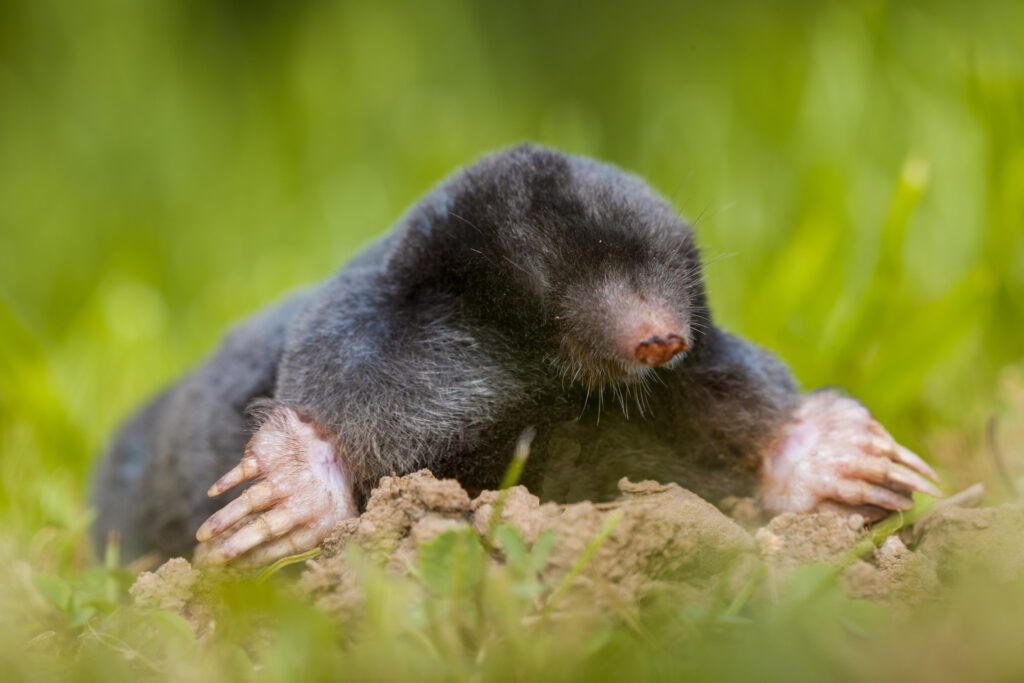
Here’s the first thing you need to know. If you’re staring at an open hole in the ground, you don’t have a mole. They live their entire lives underground, and their digging creates underground burrows with no exposed entrances and no exit points.
What they leave behind is a specific pattern of soil mounds and raised ridges that homeowners confuse with gopher or vole damage. Knowing what mole holes actually look like is key to solving the problem.
What Do Mole Holes Actually Look Like in an Ohio Yard?
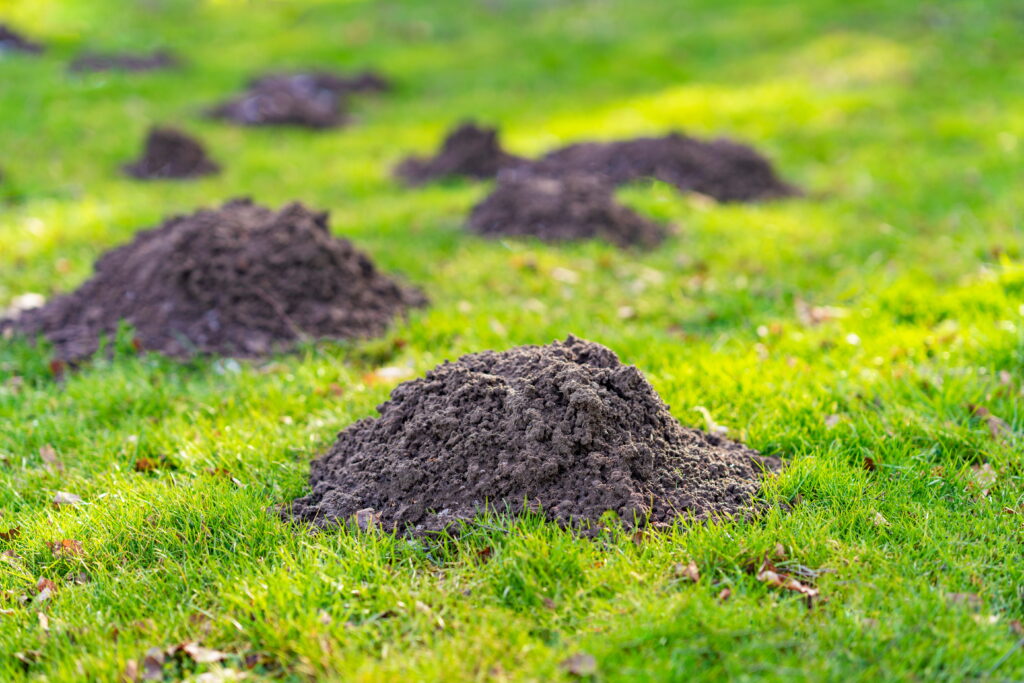
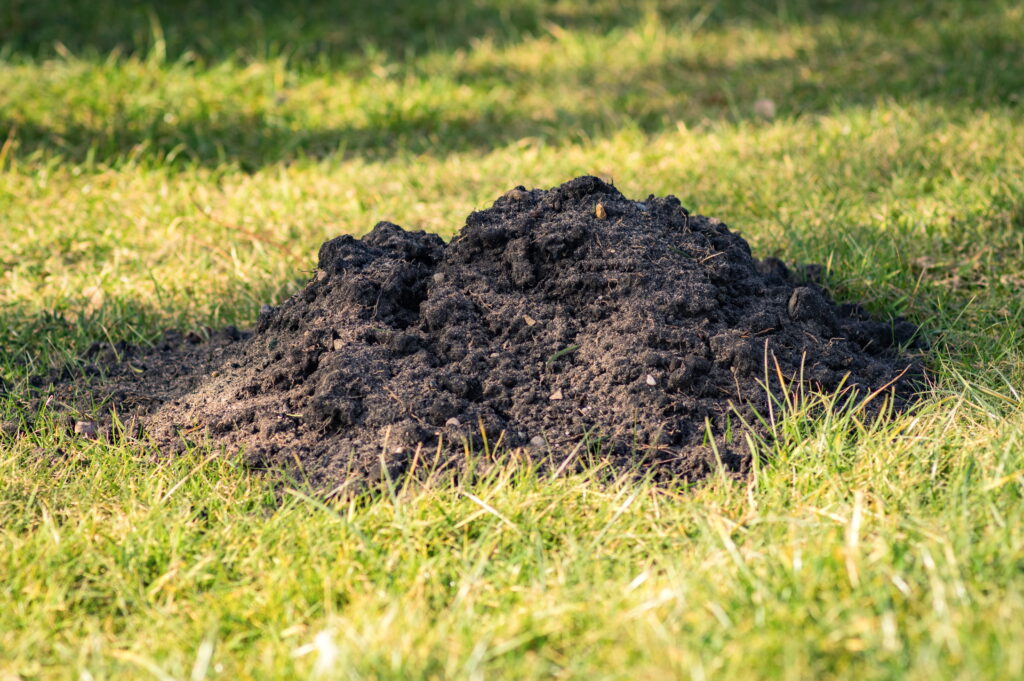
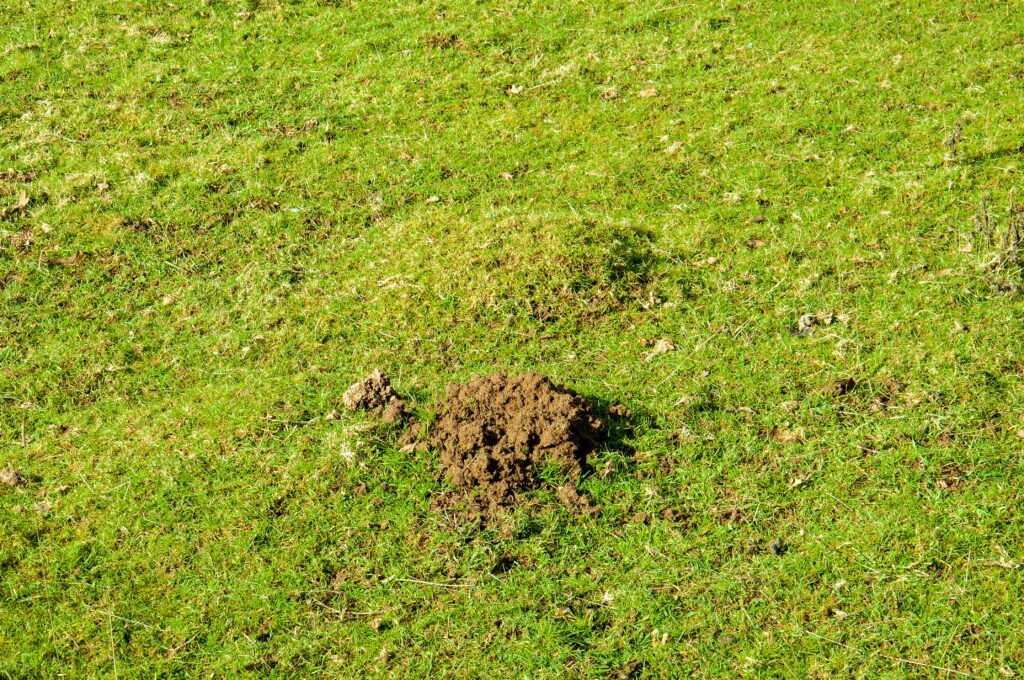
Mole holes, more accurately called molehills, are conical mounds of loose, cloddy soil pushed up to the surface. They’re round or oval, ranging from a few inches to a foot high and 6 to 24 inches across. Think of a small volcano made of dirt, roughly symmetrical, with soil radiating from the center. In Southwest Ohio, these mounds are especially visible in the region’s dense, dark clay-loam soil — making them stand out sharply against a well-maintained lawn in Loveland, Mason, or Cincinnati.
There’s no hole at the top. No plug, no opening. The creature pushes soil straight up through a vertical shaft from below, and the dirt clumps roll down the sides, sealing everything shut. That sealed design is also what makes gassing a tunnel such a losing bet, since any fumes you pump in have nowhere to go but back out through the soil. If you see an opening or a soil plug off to one side, you’re looking at something else.
Mole mounds rarely show up alone. They often appear in a rough line across your yard, tracing the path of a deeper tunnel running 8 to 12 inches below the surface.
Raised Ridges and Loose Soil
The other major sign of mole activity is surface runways, those snake-like trails of pushed-up soil running across your lawn. These shallow feeding tunnels are roughly 3 inches wide and a couple of inches tall. The soft soil along these ridges feels spongy and collapses under your foot.
According to the Washington Department of Fish & Wildlife, moles can tunnel at a rate of 15 feet per hour. In favorable areas, shallow tunnels can be built at speeds reaching 12 inches per minute.
Types of Mole Tunnels and What They Mean
Moles build two distinct tunnel systems.
Surface tunnels are the shallow, winding ridges visible across your lawn, sitting within the top two to four inches of soil. Moles dig these feeding runways quickly, and many are used only once before being abandoned. These shallow runways form a network of galleries that function as hunting grounds.
Deep burrows run 8 to 12 inches below the surface, sometimes deeper. These underground tunnels are permanent travel routes connecting nesting areas to foraging zones. You won’t see them from above, but they’re the reason molehills appear, as excess soil gets pushed to the surface as these characteristic mounds.
How to Test for Active Mole Tunnels
Press down a short section of a raised ridge with your foot and mark the spot. Check it in 24 to 48 hours. If the ridge has been pushed back up, that tunnel is part of the mole’s regular route.
There’s something oddly satisfying about stomping down a ridge and checking the next day, turning pest identification into a small backyard experiment. This matters because placing traps or bait in an abandoned tunnel is a complete waste of time.
Signs of Mole Damage in Your Lawn and Garden
The damage these burrowing pests cause goes well beyond the obvious mounds and ridges, and the secondary effects are easy to miss at first.
Winding strips of brown or yellowing grass are one of the most common indicators. As a mole tunnels through the soil, it severs fine root systems, and the grass above turns brown within days. Bare patches left behind often fill with weeds. This damage cuts through your lawn, flower beds, and garden areas.
In those beds, small plants and vegetation may wilt or get heaved out of the ground entirely. These animals don’t eat plants. They feed almost exclusively on earthworms, white grubs, and insects. That helps control pest populations, but the tunneling itself is enough to kill shallow seedlings by cutting off water and nutrients.
Left unchecked, a single animal will cause serious damage across a yard in just a few weeks. Its tunnel systems disrupt soil structure enough to cause minor erosion, though the digging does aerate the ground and benefit overall lawn health over time.
These creatures prefer moist, shaded soil rich in organic matter, exactly the kind of well-maintained lawn most homeowners work hard to create. A healthy yard with a thriving earthworm population is, unfortunately, prime territory for them.
Mole Hills vs. Gopher and Vole Damage
Misidentification is the most common reason mole control efforts fail. Using the wrong pest control method lets the real culprit wreak havoc unchecked.
| Feature | Moles | Gophers | Voles |
|---|---|---|---|
| Mound shape | Symmetrical, conical | Fan-shaped, irregular | No mounds |
| Open holes | None, closed system | Sealed with a soil plug | Small, golf-ball-sized |
| Surface ridges | Raised, 3 inches wide | None | Flat runways clipped to bare dirt |
| Diet | Insects, earthworms, grubs | Roots, tubers, plants | Roots, bark, plant foliage |
Gopher Mounds vs. Mole Hills
Gopher mounds are larger and irregularly shaped, often fan-shaped or crescent-shaped rather than conical. The defining difference is the soil plug. Gophers seal their tunnel entrance with a visible, off-center circle of packed dirt, while molehills have no plug. Gophers actively eat plants, so if a shrub gets pulled underground, that’s a gopher.
Vole Damage vs. Mole Activity
Unlike voles, moles dig visibly raised tunnel ridges. Voles, sometimes called meadow mice, are small rodents that chew open runways through grass at ground level. Their paths are 1 to 2 inches wide, clipped to bare dirt, and they leave small open holes about the size of a golf ball.
Voles are vegetarians that eat bark, so gnaw marks at the base of trees indicate their presence. They’ll also move into abandoned tunnels to access plant roots, which is why homeowners sometimes blame moles for vole damage. If the mounds in your yard don’t quite match either description, a closer side-by-side look at voles versus moles covers the damage differences in more depth.
Mole Control Measures and What to Do Next
Once you’ve confirmed mole activity through mounds, raised ridges, and no open holes, you have a few options to protect your lawn and garden.
For mild activity, castor oil-based repellents make the soil less appealing to moles. The tradeoff is that the application must be repeated every few weeks or after heavy rainfall, as the oil dilutes and loses effectiveness over time.
The fastest route to mole control is direct intervention. Traps, gummy worm-shaped baits, and targeted repellents placed in verified active tunnels are the most effective control measures.
For a detailed walkthrough, see our guide on effective mole removal methods.
When to Seek Professional Help
For severe infestations, professional help from mole removal services will make a real difference. Experts use targeted traps to protect your property and manage populations humanely. It’s worth considering if you’ve been chasing a pest problem for weeks without results.
These burrowing insectivores are active year-round, but surface damage peaks in early spring and fall when the soil is moist, driving earthworms and the moles that hunt them closer to the surface. Spotting the signs early and acting fast is the best way to keep a small problem from becoming a yard-wide disaster.
Frequently Asked Questions
What do mole holes look like vs. gopher holes?
Molehills are symmetrical, conical mounds of loose soil with no opening at the top. Gopher mounds are larger, irregularly shaped, and sealed with an off-center soil plug. These pests also leave surface runways across the lawn, which gophers do not create.
How do I know if a mole tunnel is still active?
Flatten a short section of a surface runway with your foot and mark it. If the tunnel is pushed back up within 24 to 48 hours, it’s an active runway and the best place to target with traps or bait.
What does mole damage look like in a lawn or garden?
Look for winding streaks of brown or yellowing grass where roots have been severed underground. In garden beds, wilting or uprooted plants from root disruption are common. The ground along tunnel paths will feel soft and spongy.